


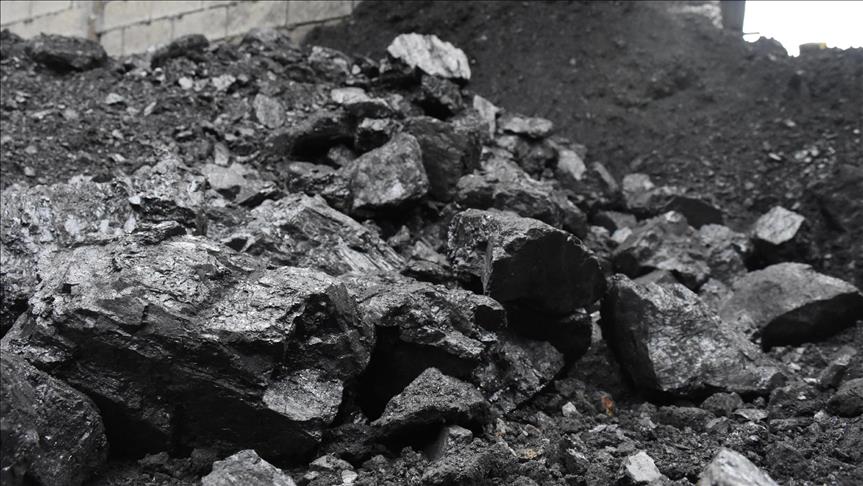
The global economic recovery anticipated in 2021 is expected to drive a short-lived rebound in coal demand following the biggest drop this year in more than 70 years triggered by the COVID-19 pandemic, according to a new report by the International Energy Agency (IEA) on Friday.
The past two years have seen major falls in global coal demand, led by the unprecedented drops in the US and Europe, the IEA’s Coal 2020 report said.
In 2019, global coal demand declined by 1.8%, resulting mainly from weak growth in electricity demand and low natural gas prices.
This year, the world's coal demand will fall by 5%, marking the largest drop since the Second World War as a result of slower economic activity due to the COVID-19 crisis, the report forecasted.
"The COVID-19 crisis has completely reshaped global coal markets. Before the pandemic, we expected a small rebound in coal demand in 2020," said Keisuke Sadamori, the IEA’s director of Energy Markets and Security. "The decline would have been even steeper without the strong economic rebound in China – the world’s largest coal consumer – in the second half of the year."
This drop will be followed by 2.6% growth in coal demand next year in parallel with an estimated global economic recovery.
China, India and Southeast Asian economies account for most of the growth, although the US and Europe may also see their first increases in coal consumption in nearly a decade, according to the IEA.
"However, global coal demand in 2021 is still forecast to remain below 2019 levels. The rebound in coal demand in 2021 is set to be short-lived, with coal use forecast to flatten out by 2025 at around 7.4 billion tons. This would make 2013, when global coal demand reached 8 billion tonnes, coal’s all-time peak," it said in the report.
- Future of coal to be decided in Asia
The IEA forecasts that although the share of coal in electricity generation and overall energy mix is in steady decline, coal use in absolute terms is not set for a rapid decline in the immediate future with rising demand in some Asian economies offsetting declines elsewhere.
"Renewables are on track to surpass coal as the largest source of electricity in the world by 2025. And by that time, natural gas will likely have taken over coal as the second-largest source of primary energy after oil," Sadamori noted, adding that coal demand is still expected to remain steady or grow in key Asian economies.
"There is no sign that coal is going to fade away quickly," he said.
Today, China and India account for 65% of global coal demand but with Japan, Korea, Taiwan and Southeast Asia included, this percentage rises to 75%, according to the report.
China, which currently accounts for half of the world’s coal consumption, will be especially influential.
"By 2025, the European Union and United States will account for less than 10% of global coal demand, down from 37% in 2000. This will make the impacts of any further changes in demand in these markets very limited," the report said.
However, as the largest source of global-energy related emissions, the increasing or steady coal demand risks the fight against the climate crisis.
"The trends outlined in the report pose a major challenge to efforts to put those emissions on a path compatible with reaching climate and sustainable energy goals," the IEA warned.
By Nuran Erkul Kaya
Anadolu Agency
energy@aa.com.tr
