



Brazil sees the 31st session of the conference of parties to the United Nations Framework Convention on Climate Change (UNFCCC- COP31) as an opportunity to build on the implementation-focused progress made at COP30 and advance the global fight against climate change, Brazil's Ambassador to Ankara said on Friday.
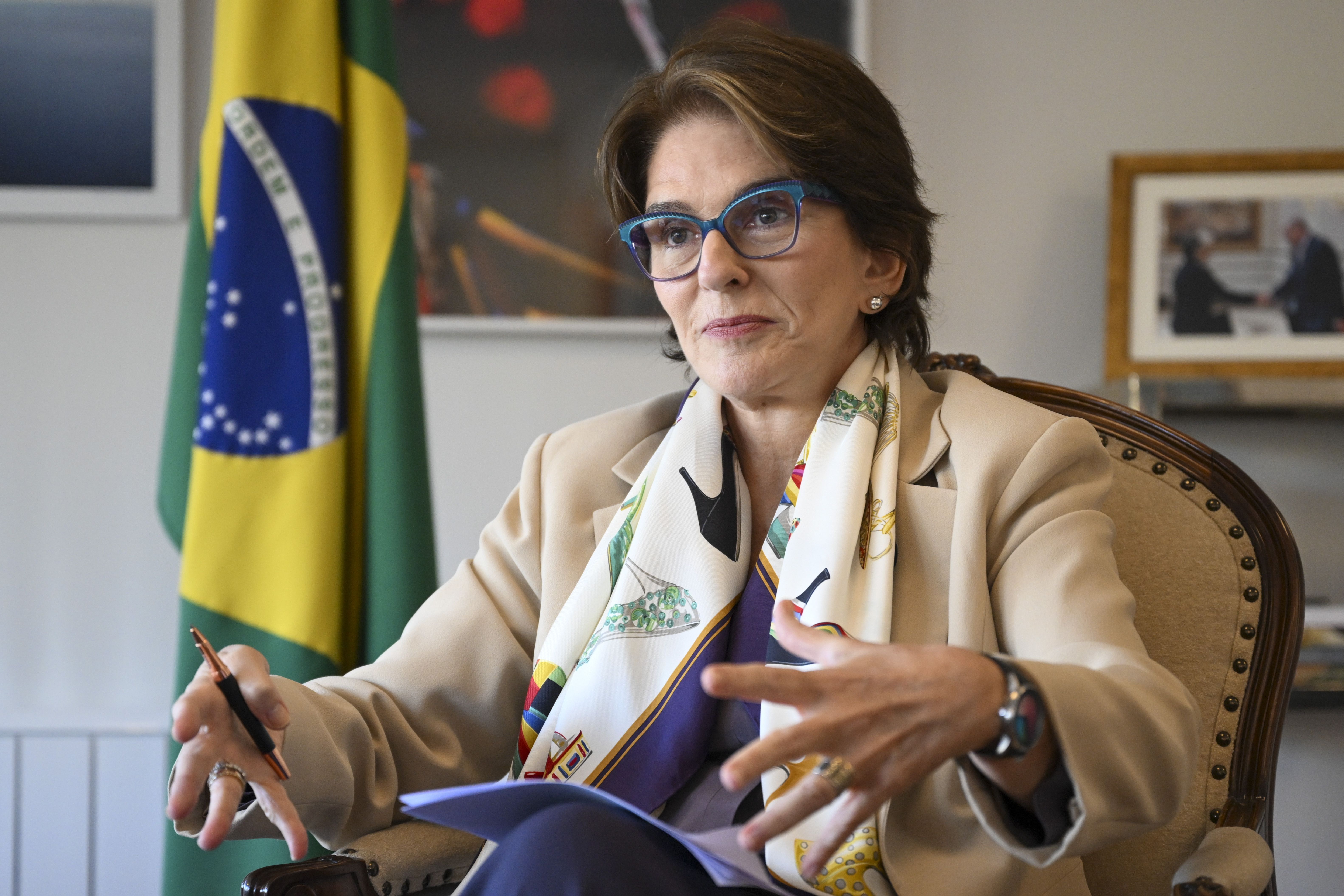
Speaking to Anadolu, Ambassador Gilda Motta Santos Neves said that reaching consensus on 56 decisions at COP30, hosted by Brazil last year, was a major achievement given the challenging international situation.
She said the "action agenda" launched at COP30 in Belem, Brazil, was important and added that Türkiye's COP31 presidency could build on decisions made at previous climate conferences and turn them into concrete action.
Neves said COP31 could strengthen Türkiye-Brazil cooperation, particularly in renewable energy and climate finance, while opening up opportunities for collaboration in other areas.
Highlighting renewable energy and biofuels as key areas for bilateral energy cooperation, Neves said Brazil has been developing ethanol-powered vehicles since the 1970s and uses significant amounts of ethanol in gasoline, as well as biodiesel.
She noted that biofuels account for a smaller share of Türkiye's fuel mix, stressing the importance of sharing experience in this area.
"The two countries have the potential to work together on this," she added.
She added that Türkiye and Brazil could also explore joint initiatives in industries related to wind, solar and hydropower, given their significant potential in these energy sources.
Neves said research into the industrial applications of solar, wind and hydropower could also create opportunities for cooperation between the two countries.
- Joint action necessary for climate finance
Neves said access to finance must be strengthened to enable developing countries to combat climate change, adding that Türkiye and Brazil could work together to advance this goal.
She said the Baku-to-Belem Roadmap, discussed during the COP30 process, aims to scale up global climate finance to $1.3 trillion annually by 2035.
"Through their G20 membership and support for multilateralism, the two countries can encourage international organizations, countries and the private sector to contribute more effectively to climate finance," she explained.
She said economic ties between the two countries also provide a foundation for expanding cooperation on sustainability.
Brazilian companies operate in Türkiye in sectors including cement, electric motors, poultry farming and automotive components, while Turkish investments in Brazil also cover the energy sector, she said.
Neves highlighted the importance of involving companies in the COP31 process, particularly on climate finance and improving the sustainability of their own operations.
- Inclusivity, dialogue and implementation emphasized at COP31
Neves said she supported Türkiye's approach to COP31, centered on "dialogue, consensus and action."
"Governments cannot tackle climate change on their own. Local communities, regional administrations, farmers, universities, civil society organizations and the private sector need to be involved in the process," Neves stated.
She added that the Brazilian concept of "mutirão," which describes communities coming together and working collectively toward a common goal, had also been carried over to COP31.
COP30 was described as an "implementation COP," Neves said, emphasizing that COP31 would be important for building on decisions made at previous conferences and achieving tangible progress.
"Türkiye and Australia are taking on different but complementary roles," she said, wishing Türkiye success in its COP31 presidency.
By Gulsen Cagatay
Anadolu Agency
energy@aa.com.tr
