By Francis Maingaila
LUSAKA
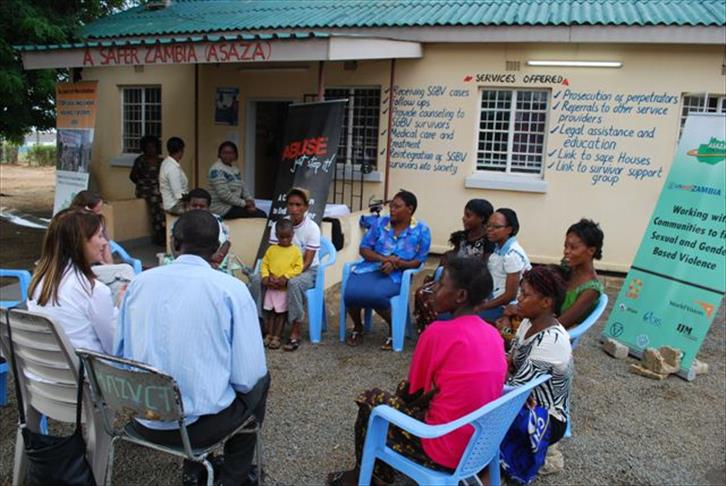
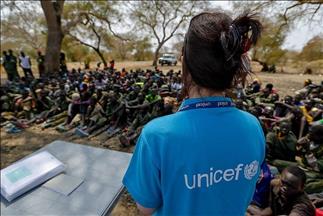
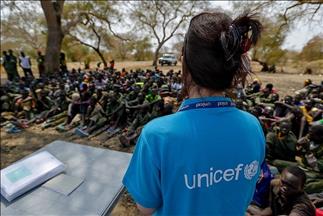
The United Nations Children's Fund (UNICEF) is providing training for Zambian law enforcement agents – with plans to eventually do the same for community leaders – as part of efforts aimed at addressing the scourge of gender-based violence, including rape and spousal abuse.
"Victims of rape have not only the enormous problem of persuading the police that they have been raped, but also to prove that they did not consent to the act, or that the agreement was obtained through threats," UNICEF country representative Hamid El Bashir Ibrahim told Anadolu Agency.
He regretted that many women were subject to emotional stress when being questioned by "insensitive police officers, who operate with cultural biases that condone rape."
"As a starting point to correct the situation, UNICEF has embarked on a series of sensitivity-training workshops, beginning with police officers who are being trained in management of gender-based violence survivors and in the collection of forensic evidence material," said Ibrahim.
A UNICEF-funded training program is already underway, with instructors drawn from various disciplines, including security, law and social science.
The five-day exercise, attended by about 50 police officers, will wrap up on Thursday.
"Thereafter, the training will be extended to traditional leaders across the country who will work with the authority to control the escalating crime of gender-based violence," said Ibrahim.
According to official figures, a total of 15,701 cases of gender-based violence were reported since the beginning of 2014.
These figures, which are expected to rise further by year's end, are already higher than last year's numbers.
At least 14,097 cases of gender-based violence were reported last year in Zambia, of which 3,410 ended in conviction, 203 in acquittal, 5,481 were withdrawn, while the rest remain in court.
-Stigma-
The UNICEF official noted that, while Zambia had enacted many laws aimed at curbing gender-based violence, there were no laws specifically prohibiting spousal rape, while many cultures in Zambia condone wife beating.
He regretted that many victims of sexual and domestic violence were usually too frightened to report abuse to the relevant authorities due to the stigma attached to the crime.
"Stigma is such a big issue in many cultures," Ibrahim told AA.
He blamed prevailing cultural practices and police attitudes for the fact that victims often failed to report the crime to the authorities.
"Women and girls blame themselves and fear they will be detested by society if they admit to being raped; they are often considered outcasts if they do so," he asserted.
Zambian Police Inspector-General Stella Libongani said the authorities recognized gender-based violence as a crime.
"It is for this reason that we welcome the help our officers will receive from our cooperating partners, such as UNICEF," she told AA.
"This kind of training could not have come at a better time, because our officers need intensified training on gender-based violence, which is backed up by legislation," added Libongani.
"That is why I am calling on other international aid agencies to step up efforts to combat gender-based violence," she said.
www.aa.com.tr/en