by Nancy Caouette
MEXICO CITY
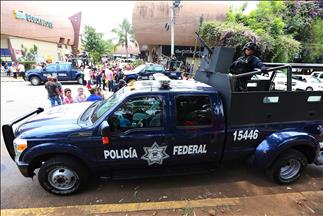
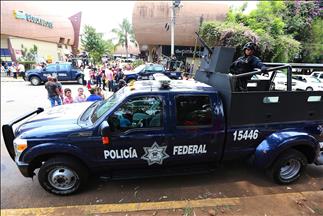
Millions of Mexicans voted Sunday in midterms elections amid violence in southern states where federal police and soldiers were deployed to guard polling stations.
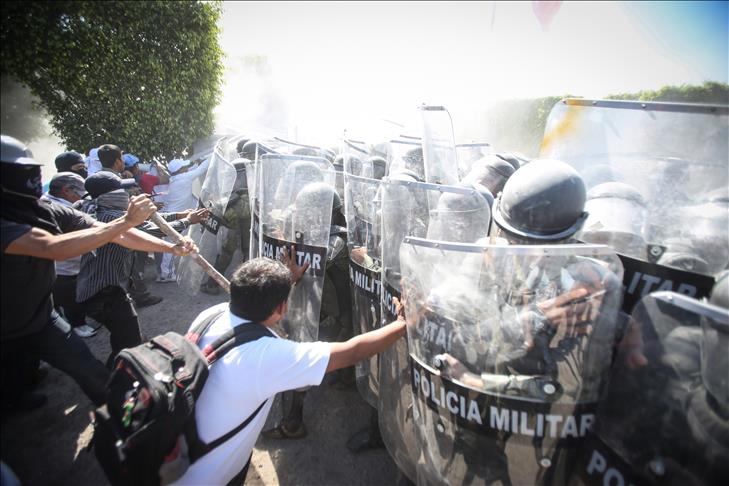
Protests have erupted in recent days in Oaxaca, Chiapas and Guerrero states in an effort to disrupt the vote with dissident teachers voicing opposition to a public school reform law pushed by President Enrique Pena Nieto.
They torched official electoral documents and damaged the headquarters of major political parties.
The turmoil continued Sunday in Tixtla where protesters stole and burned poll boxes and ballots, which forced the closure of 17 station polling stations – as much as 60 percent of the voting offices in the state of Guerrero.
Mexican law allows for the cancelation of an election in a municipality where 20 percent of stations are not opened. The Electoral Institute of Guerrero said the vote could be voided in Tixtla.
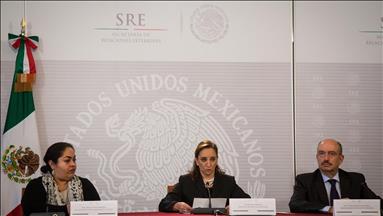
“Our agency doen’t have the authority to cancel an election … according to the data, Tixtla surpassed the percentage needed to void the vote,” said the agency’s president Marisela Reyes.
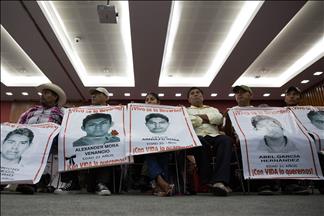
In addition to protesting the school reform law, demonstrators said they also wanted to defy Pena Nieto’s administration and demand justice in the case of 43 missing students who disappeared last September. Relatives of the victims and supporters have dismissed the official account that the students were kidnapped and their bodies burned by gang members before being discarded in a river.
Polls boxes and ballots were also torched in Oaxaca, one of Mexico’s poorest states. The Organization of American States was forced to suspend its observation mission there to ensure the security of its representatives.
The midterm will decide the fate of 500 members of the lower house of Congress, nine state governors and hundred of mayors.
Pena Nieto hopes to maintain a congressional majority in order to continue to impose constitutional changes that will among other things put an end to the monopoly of the public oil industry and reform the public education, telecommunication, financial law and electoral systems.
Despite the protests and a series of political scandals that have caused the president’s approval ratings to sink, the ruling Institutional Revolutionary Party is expected to retain about a third of the seats in Congress, while the official opposition Action National Party is projected to win about quarter of the seats.
Official results are expected Monday.