MEXICO CITY
About 80 million Mexicans are eligible to vote in Sunday’s midterm elections in a poll that has been marred by violence and corruption in one of Latin America’s strongest economies.
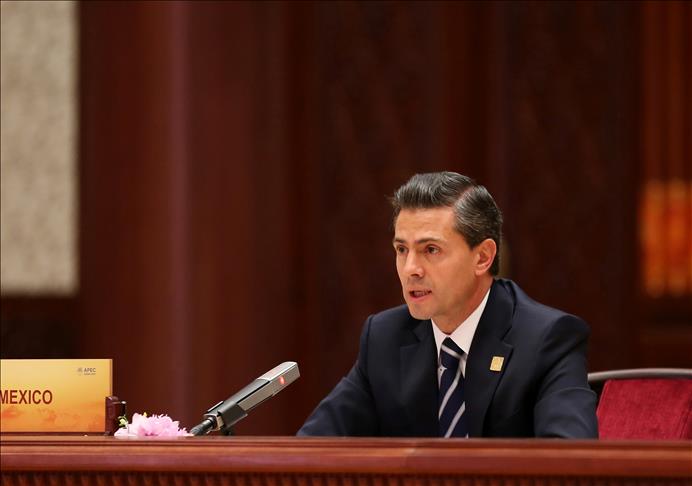
President Enrique Pena Nieto’s administration is anxiously awaiting results of the 500 congressional races, nine state governors and hundred of mayors.
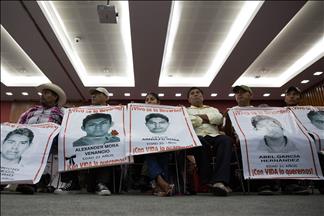
The last year has been the most difficult of Pena Nieto’s political career with the government receiving international criticism for its handling of the disappearance of 43 students in Guerrero state, and scandals involving multimillion dollar mansions owned by his wife and by ministers with strong ties to government contractors.
An electoral victory by the president’s Institutional Revolutionary Party, or PRI, will be considered as a show of support for his administration still trying to recover from political crisis.
PRI candidates have held numerous meetings across Mexico, offering gifts of food bags or money to potential voters in an attempt to gain support. In January, the party set out to distribute 10 million televisions to the country’s poorest citizens.
Several parties have denounced the move as an attempt to buy votes.
In 2012, Enrique Pena Nieto was implicated in a scheme after it was proven that PRI gave 6.8 million pesos ($437,000) to voters in Mastercard reward cards.
But buying votes in Mexico is the rule rather than the exception. Opposition’s parties have also been accused of trying to buy votes.
The conservative Green Party, closely associated with PRI, was fined 11.4 million pesos ($733,500) during its electoral campaign for, among other things, sending to voters drugstore reward cards and movie theatre tickets.
The National Electoral Institute said Thursday that it has received 400 complaints about vote buying. “Buying polls it is not only an administrative fault, it’s a crime,” said agency chief Lorenzo Cordova.
Buying votes aside, the 10 running political parties, including the ruling PRI and the official opposition National Action Party (PAN) have made essentially the same promise to voters: to fight corruption, violence, impunity and to be more transparent. But none have laid out any detailed explanation about how these goals would be accomplished.
In a debate about corruption organized by the National Electoral Institute, PRI and PAN vowed to fight corruption.
“The first proposal of our electoral program is to establish the total combat of corruption as the fundamental condition to reinforce the participation of citizens,'' said PAN president, Gustavo Modera.
The national chief of PRI, Cesar Camacho, promised essentially the same. “The party, in the context of the elections, wants to strengthen the country project borne by the government. We are conscious of the urgency to respond to the problems of insecurity, impunity, corruption. In others words, problems linked to the culture of legality and state of law,” he said.
The National Regeneration Movement (MORENA), a left-wing party created in 2014 by Andrés Manuel Lopez Obrador who has twice previously ran for president, is the only party to qualify its claims by promising that if elected, its representatives would make public income tax refunds, property deeds and any possible conflicts of interest.
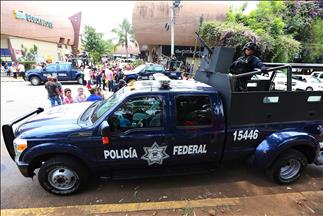
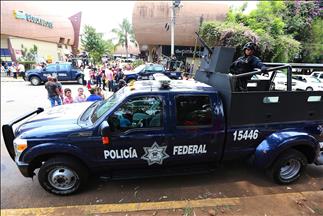
The midterm campaign has also been marred by violence. At least five candidates have been killed and dozens of have been forced to withdraw from races after they received threats.
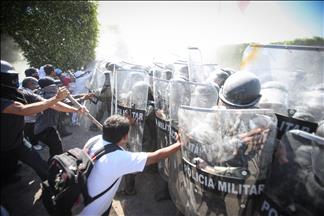
In the southern states of Guerrero, Oaxaca and Chiapas, protesters affiliated with a teacher union that is challenging measures in the a public school reform law have promised to disturb the poll.
Some polling stations are under the control of the teachers and ballot papers were torched in recent days.
Despite all corruption and negative public sentiment against Pena Nieto and his ruling party, PRI is expected to retain about a third of seats in Congress, while the PAN is projected to win about quarter of the seats.