ISTANBUL
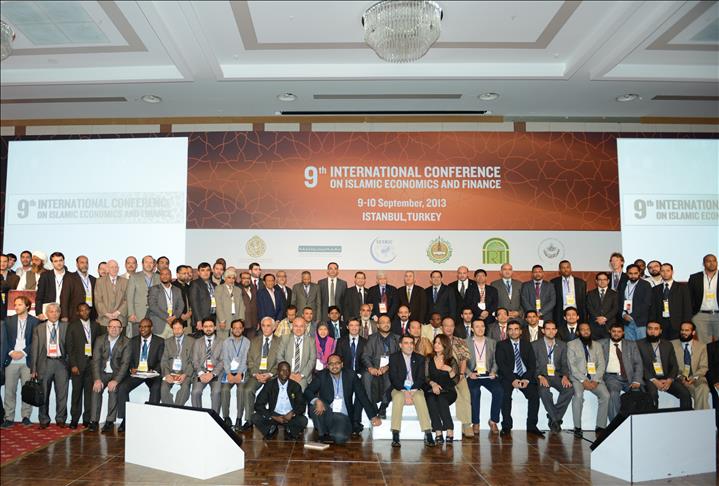
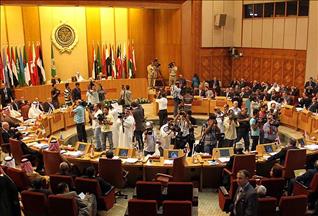
9th International Conference on Islamic Economies and Finance on the theme "Growth, Equity and Stability: An Islamic Perspective" held in Istanbul ended on Tuesday.
Director General of Islamic Research and Training Institute (IRTI) Azmi Omar said the two-day conference provided a distinct opportunity to discuss many and various pressing issues in Islamic economies and finance through plenary sessions as well as parallel sessions.
32 sessions were held in the conference, ten of which were in Arabic.
More than 200 academics from 33 countries attended the forum sponsored by the Anadolu Agency.
"The participants believe that Islamic economics and finance as a modern scientific discipline has recently showed a high potential as a new paradigm, particularly in the aftermath of the latest global financial crisis and given the current economic and political changing environment in Muslim countries," said Omar.
He said that the conference contributed significantly to the process of mobilizing quality policy- oriented and basic research in the field of Islamic economic, banking and finance with a focus on issues related to inclusive economic growth, equity, poverty alleviation and macroeconomic stability.
"The conference plays a signifant role in enriching the literature and the agenda for contemporary research in Islamic economics and finance and thus promotes the official global recognition of Islamic economics and finance as a modern scientific discipline," he added.
He noted that there was a need to highlight the role of Islamic finance in economic development and the potential of zakat and awkaf and voluntary sectors in promoting financial inclusion and contributing to policy discourse on poverty alleviation.
There is a currently growing demand for significant reforms in the global economic and finanical system, Omar said, adding that the participants believed that a financial based on Islamic principles could avoid the fundamental problems and shortcomings of the conventional financial system that led the world into crisis.
Transformation of Islamic banking
Omar said although the contemporary practice of Islamic finance and banking has rapidly transformed in the last decade to become internationally recognized and accepted as a competitive and robust form of financial intermediation by all communities, the expansion of Islamic finance, industry and its integration into the global financial system, are still to be tested by the risks and developments in the international financial system.
Muslim world offers more aid than UN: Malaysian scholar
Prof. M. Aslam Haneef said, "The total amount of charities and gifts that are coming from the Muslim world is 15 times more than the total of the UN aid package."
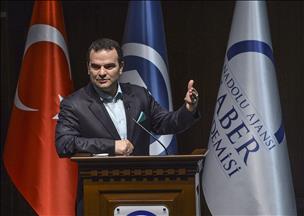
Speaking at the 9th International Conference on Islamic Economies and Finance which began in Istanbul on Monday, Haneef emphasized the role of Islamic finance in the world.
Dr. Mohammed Obaidullah made a presentation about empowerment and inclusive economic development in a bid to answer the question of "How can Islamic and market driven finance help make policies work in the Organization of Islamic Cooperation (OIC) region?"
He presented the key findings of a report which was the first on Islamic microfinance, with a focus on zakat and awkaf in Singapore, Malaysia, Indonesia, Pakistan, Bangladesh and Brunei Darussalam.
Dr. Salman Syed Ali presented a report co-penned by himself discussing the role of Islamic Finance in the Development of OIC countries with case studies of Kyrgyzstan and Tajikistan.
Ali explained the binding constraints on the two countries' economic growth citing insufficient public and private investment as the core causes, and discussed how Islamic finance can help them improve.
"It can help limit public budget deficit and rationalize government borrowing, go beyond investor protection and Supremacy of Collateral, increase financial inclusion and reduce inequalities and promote entrepreneurship and socially beneficial investment."
Zakat and Awkaf as two Islamic finance tools
Zakat is the practice of charitable giving by Muslims based on accumulated wealth, and is obligatory for all who are able to do so, while Awkaf is, under the context of 'sadaqah', an inalienable religious endowment in Islamic law, typically donating a building or plot of land or even cash for Muslim religious or charitable purposes.
Panelists emphasized the need of binding Zakat and Awkaf payment, which are already existing Islamic tools for creating social welfare, to efficient laws to facilitate socio-economic development in Muslim countries.
Prof. Volker Nienhaus defined Awkaf as well as Zakat as two non-profit microfinance and protective measures for investment and also touched on the instability in Muslim countries and said, "If there are political restrictions, these more protective Islamic instruments could come up with more comprehensive development package.
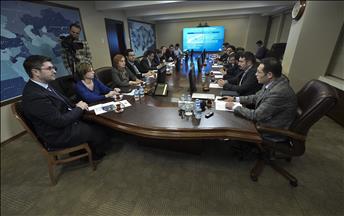
Turkish and foreign academicians and directors of related institutions attended the panel.
Anadolu Agency is the media sponsor of the Ninth ICIEF which is being jointly organized by the Statistical, Economic & Social Research and Training Centre for Islamic Countries (SESRIC), a subsidiary organ of the Organization of Islamic Cooperation (OIC), the Islamic Development Bank (IDB) Group through its Islamic Research and Training Institute (IRTI), the International Association for Islamic Economics (IAIE), and the Qatar Foundation’s Hamad Bin Khalifa University through its Qatar Faculty of Islamic Studies (QFIS) as well as with the support of other stakeholders.
The First Conference in the series was held in Makkah Al Mukaramah, Kingdom of Saudi Arabia in 1976 under the auspices of King Abdulaziz University, Jeddah and it marked the start of development of Islamic economics and finance as modern scientific disciplines.
The next conference will be held in Doha, Qatar in 2014.
englishnews@aa.com.tr