ADEN
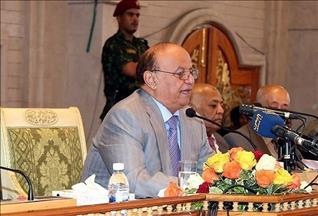
A local Yemeni official has confirmed the detention by Shiite Houthi militants of relatives of resigned President Abd Rabbuh Mansour Hadi in the central Ibb province.
"The Houthis have detained the family of Mohamed Hadi, a nephew of the resigned president along with his secretary," the official, requesting anonymity, told The Anadolu Agency on condition of anonymity.
He said the nephew's family was on route to southern city of Aden.
Eyewitnesses earlier said that three relatives of Hadi had been held at a Houthi checkpoint and taken to an undisclosed location.
Houthi leaders could not be reached for comment.
Earlier Saturday, Hadi left his home in Sanaa, where he had been under house arrest by the Shiite Houthi group, to the southern Aden city.
UN denies role in ex-Yemeni president's escape
United Nations Special Envoy to Yemen Jamal Benomar has denied any role in the escape of resigned President Abd Rabbuh Mansour Hadi from capital Sanaa to the southern Aden city.
"The United Nations had no involvement with President Hadi leaving Sanaa for Aden," Benomar said on his Facebook page.
Hadi, who was under house arrest by the Shiite Houthi group, managed to escape Sanaa earlier on Saturday to Aden.
Some media had claimed that the UN might have played a role in helping the resigned president escape.
According to sources close to the resigned president, Hadi had disguised himself and left his home without the knowledge of the Houthis.
The Yemeni leader resigned last month after the Houthis seized control of Sanaa's presidential compound, following clashes with presidential guards.
The Houthi group seized control of capital Sanaa in September and has since sought to expand its influence to other parts of the country.
Earlier this month, the Houthis issued a "constitutional declaration" dissolving Yemen's parliament and establishing a 551-member "transitional council."
The declaration was rejected by most of Yemen's political forces – along with some neighboring countries – which described it as a "coup against constitutional legitimacy."