Mohammad Sio
10 June 2026•Update: 10 June 2026
Iraq's top political and judicial leaders reaffirmed Wednesday that all weapons must remain under state control, stressing that security and military decisions should be exercised exclusively by state institutions.
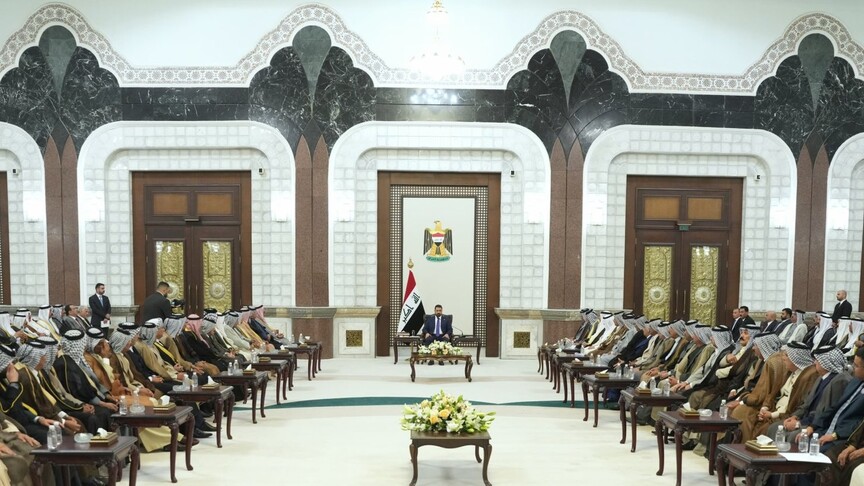
The position was announced following a meeting hosted by President Nizar Amidi at the Baghdad Palace, attended by Prime Minister Ali Alzaidy, Parliament Speaker Haibat al-Halbousi and Supreme Judicial Council President Faiq Zaidan.
They reviewed political, security and economic developments, as well as regional developments, according to the presidency.
The meeting reaffirmed the principle that weapons should be restricted to the state, describing it as “a fundamental pillar of the rule of law and state authority.”
The leaders also praised “national positions” taken by parties and groups that announced the severing of ties with the Popular Mobilization Forces (PMF) in accordance with the Constitution and the law and state-building requirements.
They stressed that security and military decisions “must remain exclusively in the hands of the Iraqi state and its constitutional institutions under the authority of the commander-in-chief of the armed forces.”
The measures would strengthen security and stability while preserving the country's unity, sovereignty and independent national decision-making, it said.
The leaders also emphasized the role of the judiciary in enforcing the law and holding accountable anyone who abuses public funds, undermines state institutions or threatens national security.
The military announced June 3 that the Joint Operations Command tasked with restricting weapons to state control had begun its work.
At the time, authorities said the committee would develop mechanisms to integrate relevant formations into the security forces and oversee the transfer of weapons, equipment and military camps to Iraqi security institutions.
The issue of weapons outside state control remains one of Iraq’s most significant security and political challenges, with some armed groups operating within the PMF framework and others functioning independently.
The PMF is a state security umbrella organization established in 2014 following a religious decree issued by Iraq’s top Shiite cleric, Ali al-Sistani, to help fight the ISIS/Daesh terror group. The force was formally incorporated into the armed forces in 2016.
Successive Iraqi governments have pledged to strengthen state authority and place all weapons under the control of official institutions.