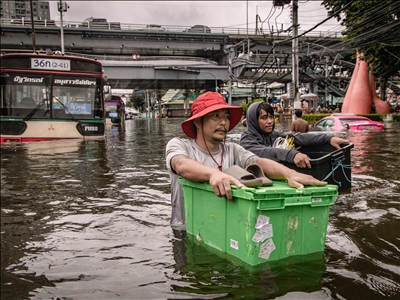
Thailand floods kill 19, affect 700,000 in Bangkok as rains ease


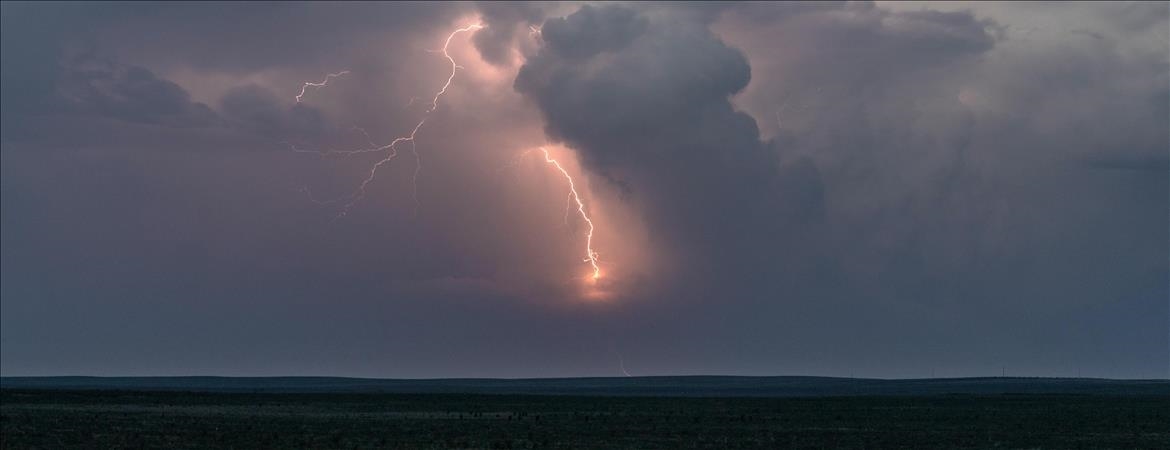
A Turkish academic has developed an early warning system designed to predict extreme weather risks and allow authorities to take precautions before damage occurs, according to a recent study.
“The system makes these hazards predictable and is of great importance in this regard,” Hasan Tatli told Anadolu in an exclusive interview. “Early warning means noticing the damage before it even occurs. Having prior knowledge about natural hazards provides a great advantage in taking necessary precautions.”
Tatli is a professor in the Department of Geography at Canakkale Onsekiz Mart University and a senior meteorological engineer.
The study, published last month in the Quarterly Journal of the Royal Meteorological Society under the title “A four-dimensional nonlinear dynamical model for an integrated early warning system of rapid-onset meteorological hazards,” aims to forecast events such as drought, convective windstorms, heat waves and cold waves days in advance.
Tatli said the research was prompted by shortcomings in current forecasting tools in detecting rapid-onset events. The Early Warning System Integrated model was developed by combining dynamical systems theory with weather forecasting to predict such hazards.
The model is designed to create a dynamic risk index to track threats, test scenarios that resemble real weather conditions and provide a scalable framework to improve early warnings and resilience.
Using atmospheric data, the model calculates four key factors: weather sensitivity, recovery capacity, threat propagation potential and a behavioral tendency index.
Alerts hours in advance
Tatli said national meteorological data are reduced to four main components within the system, which are converted into an easily interpretable risk index that generates warning signals.
He said the model can issue alerts 3 to 60 hours before rapid-onset meteorological events occur.
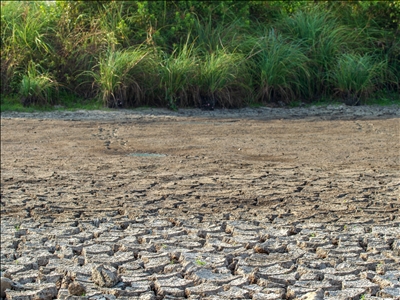
Tatli said the system enables preventive measures against sudden weather events such as heat waves, cold spells, wind shear, wildfires and flash droughts.
He added that drought, frost and heavy rainfall threaten agriculture and food security and cause fluctuations in production, making the system an early warning tool for the agricultural sector.
He also pointed to vulnerabilities in urban infrastructure, noting that heat waves and flooding strain energy and transportation systems.
Reducing economic losses
Tatli said a meteorological hazard in one region can trigger impacts in neighboring areas.
“A flood in the Black Sea Region can spread to nearby settlements. Wildfires can propagate to other locations. The system provides early warnings for such processes,” he said.
“If there is drought in a region, it can trigger wildfires; we define these as compound hazards. The system can generate signals before these processes develop.”
Such disasters can rapidly increase economic losses, Tatli said, adding that the model could help reduce insurance costs, energy demand pressures and agricultural losses.
Climate change risks
Tatli described human-induced climate change as “forced climate change,” saying it has increased the frequency and intensity of extreme precipitation, hail and tornadoes.
He said there is currently no fully reliable system that can predict exactly when events such as tornadoes or storms will occur or intensify.
Although Türkiye does not have an ocean coastline, severe weather still poses major risks, Tatli said, stressing the need for proactive risk assessment.
The model calculates a risk value between 0 and 1, he said.
“Natural events will always occur; preventing them from becoming disasters depends on preparedness through early warning systems,” Tatli added.