Thailand floods kill 19, affect 700,000 in Bangkok as rains ease


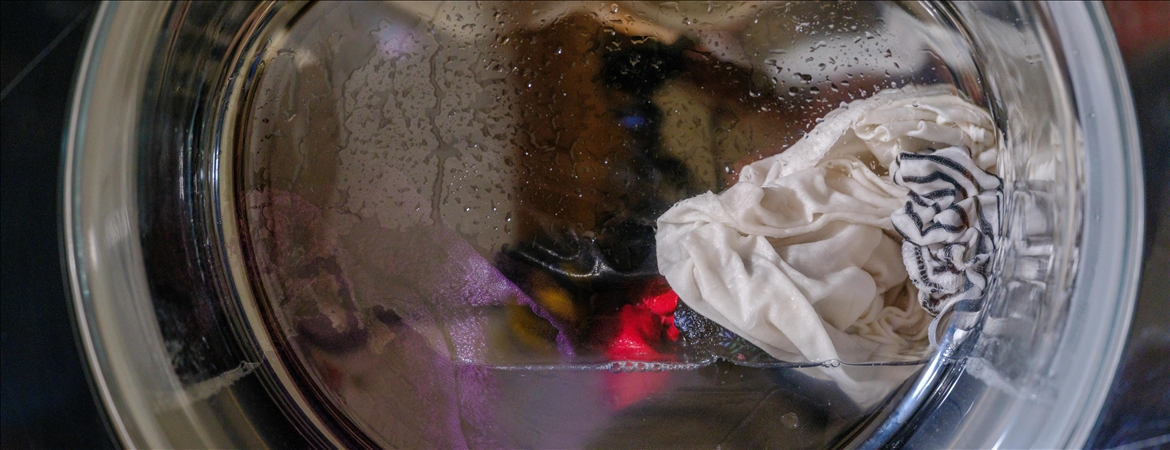
During washing, microscopic fibers breaking off from synthetic fabrics enter wastewater systems and eventually reach rivers and seas, spreading throughout ecosystems. This has intensified scientific efforts to find solutions to reduce microplastic pollution.
In this framework, a research project titled “The Use of Microplastic-Based Particles in Photovoltaic Device Production” was conducted under the leadership of Prof. Dr. Vagif Nevruzoglu, faculty member at the Department of Energy Systems Engineering at Recep Tayyip Erdogan University.
The study was carried out with contributions from Prof. Dr. Ulgen Aytan from the Department of Basic Sciences in Fisheries, Prof. Dr. Murat Tomakin and Assoc. Prof. Dr. Sait Baris Guner from the Department of Physics, faculty member Dr. Yasemen Senturk Koca from the Faculty of Fisheries, and Research Assistant Melih Manir from the Department of Energy Systems Engineering.
Speaking to Anadolu, Prof. Dr. Ulgen Aytan said microplastics are among the most significant environmental consequences of rising consumption patterns driven by fast fashion.
Aytan noted that most textile-derived fibers are released into water at very high rates during the first few wash cycles. “It is estimated that around 8 percent of microplastics reaching European seas originate from synthetic textiles, while this figure ranges between approximately 16 and 35 percent globally. In annual terms, this means between 200,000 and 500,000 tons of synthetic fibers enter marine environments as a result of washing synthetic textiles,” she said.
She added that the intensive use of low-quality, short-lived clothing accelerates wear and tear, leading to release of synthetic fibers. Aytan also stressed that textile-derived microplastic fibers have been detected even in the 50–60 micron-sized feces of organisms that form the primary food source for fish such as anchovies, highlighting the scale of the threat wastewater-derived synthetic fibers pose to marine ecosystems.
Patent obtained for microplastic recovery and technological use
Aytan said the study aimed to recover fiber-type microplastics released from synthetic textiles during washing, convert them into functional materials with semiconductor properties, and use them in photovoltaic devices that convert light energy into electrical energy.
She emphasized that capturing microplastics at the source before they enter wastewater systems not only reduces environmental pollution but also offers a solution-oriented and transformative model that brings together waste management, the circular economy and clean energy production.
“Our findings show that fiber-type microplastics originating from washing machines are not merely environmental waste when subjected to appropriate processes, but can be transformed into functional materials with semiconductor properties,” Aytan said. “The electrical and structural characteristics of the obtained microplastic-derived materials indicate their potential for use in electronic and photovoltaic devices, including solar energy systems. In line with this innovative approach, our patent for the recovery and advanced technological use of microplastics was officially registered on Dec. 13, 2025.”
Material development process
Prof. Dr. Murat Tomakin explained that the team examined the magnetic, electrical and optical properties of microplastics found in washing machine wastewater and discovered that the particles contained boron due to boron-based detergents used during washing. This led to the idea of using the material in solar cells.
Incorporating waste materials, such as microplastics, into solar cell production has also enabled researchers to reduce costs, according to Tomakin.
“First, we obtain the microplastics from washing machine wastewater. Prof. Aytan and her team filter and centrifuge this wastewater, resulting in a thicker, paint-like substance,” he explained. “This material is then prepared in liquid form so it can be coated onto a surface and delivered to us. We spread this viscous material onto silicon layers used in solar cells and dry it at approximately 150 degrees Celsius. The surface contains both boron and microplastic materials. When we irradiate this surface with ultraviolet light, a p-type conductive silicon layer, essential for solar cell operation, is formed. This allows us to produce a solar cell at laboratory scale.”
Tomakin added that the study provides a foundation for further research into the recycling of microplastics and their use in the energy sector, noting that work in this field will continue.