

History
History of Anadolu Ajansı From its Foundation to the Present
The history of Anadolu Ajansı (AA) is almost identical to that of the Republic of Turkiye. Having been founded on April 6, 1920, 17 days before the Turkish Grand National Assembly convened first time, AA helped announce the first legislation by the Assembly that established the Republic. Anadolu witnessed all stages of the National Struggle, the War of Liberation and reforms of the Republic.
After Istanbul came under occupation on March 16, 1920 and the Ottoman parliament was annulled, Mustafa Kemal Ataturk called on all provinces to hold elections for a new parliament to be established in Ankara. Several intellectuals, who realized that they could not stay in Istanbul any longer, tried to join the National Struggle. This development paved the way for foundation of Anadolu.
Those intellectuals leaving Istanbul went to Ankara in two convoys. The journalist Yunus Nadi (Abalioglu) and the writer Halide Edip (Adivar) met in Geyve on March 31st. During their meeting at the train station, they decided that it was necessary to found "an agency organization" in Ankara as soon as possible. They agreed to name the agency as "Anadolu Ajansı".
It was proposed to establish Anadolu at the "School of Agriculture" which also housed Mustafa Kemal Ataturk's headquarters. On April 6th, 1920, AA was founded. Anadolu carried out a difficult task during the War of Liberation. During the war, AA informed the people of the country who did not know what was going on in the rest of the world. AA also struggled against submissive attitude of some foreign and Turkish newspapers in Istanbul. The newly founded agency also had to defend the National Struggle in the world, inform the world public opinion on Turkiye's rightful demands and act carefully against tricks of some circles.
After Ataturk assigned some of his closest friends to turn the AA into a Western news agency, Anadolu Ajansı Corporation was established on March 1, 1925. Anadolu acquired an autonomous status with an unexampled organizational chart even in the Western countries in those days.
Science
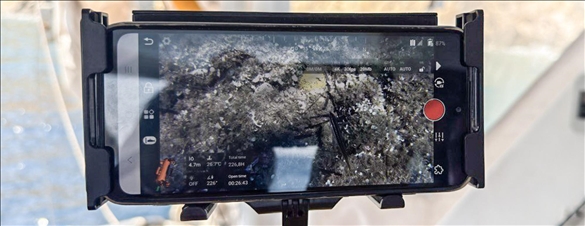
Turkish scientists discover largest recorded coral forest in Aegean Sea

Climate Change
'Omega block' traps heat over Europe, fuels abnormal heatwave, expert says
Agriculture
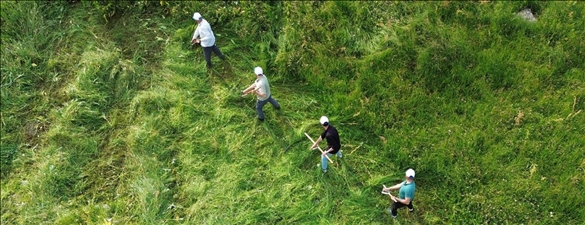
Artificial intelligence becomes farmers' 'engineer'

Climate Change
Risk of Super El Nino grows, raising fears of new global heat records

Climate Change
El Nino, Indian Ocean climate pattern raise risk of record heat: Expert

Climate Change
Study finds heat waves in Türkiye at strongest levels in 75 years
Climate Change
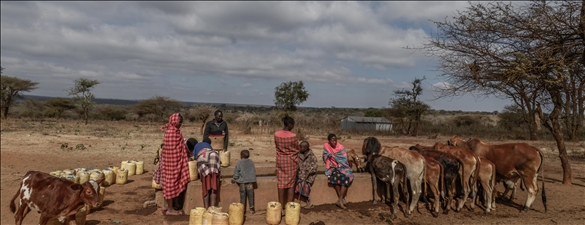
WHO expects stronger focus on link between climate crisis and human health at COP31
Climate Change
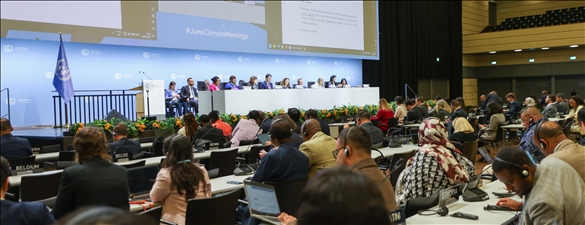
COP31 may mark turning point for climate finance, just transition, says expert

Climate Change
UN chief candidate Bachelet: Climate action 'not an option' as world faces growing crisis
Climate Change
Scientists say mounting pressures on oceans raise stakes for COP31
Climate Change
Climate disasters emerge as leading driver of global displacement, expert warns

Climate Change
'Eco-paralysis': Expert warns of growing mental health toll of climate crisis