Reviving lake in central Türkiye sees birds return amid drying wetlands


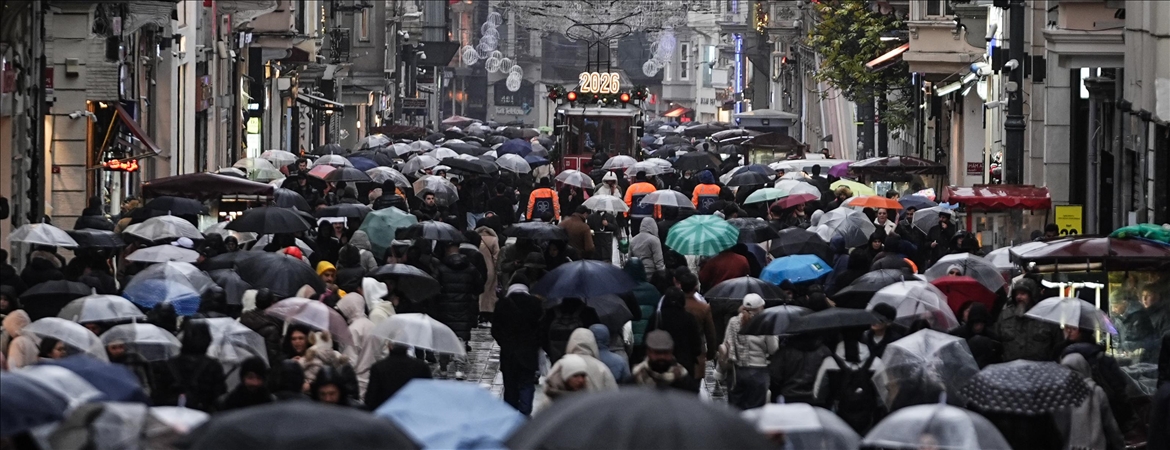
Mikdat Kadioglu, professor of meteorological engineering at Istanbul Technical University (ITU), stressed the importance of preparation against extreme weather events. “Yes, the climate is changing, but this does not mean that every severe event we experienced in Istanbul the other day was ‘abnormal,’” he said.
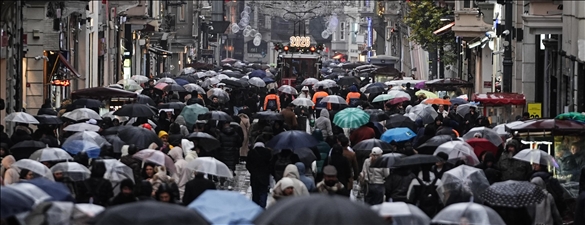
Intermittent heavy rainfall and strong winds that affected Istanbul the other day disrupted daily life across the city. Due to the storm, roofs were blown off buildings in many areas and trees were uprooted.
Speaking to Anadolu, Kadioglu shared insights regarding the adverse weather conditions affecting the city.
He described the situation in Istanbul as “strengthening winds during a cold frontal passage,” and said wind speeds reached 70 to 90 kilometers per hour, adding that this is a fairly common and meteorologically normal event in mid-latitudes.
Temperature fluctuations are normal
Kadioglu clarified that seasonal normals are calculated based on the mean of the last 30 years.
“You often hear on television that ‘today temperatures are around seasonal normals.’ People think this means ‘normal weather.’ No. This is a comparison tool, not a description of the weather that is expected to occur,” he said. “Weather is naturally inconsistent and chaotic; itfluctuates and surprises. One day it can be 15 degrees, the next day 8 degrees, and both are ‘normal.’ Expecting it to remain exactly at the average means misunderstanding life itself. Yes, the climate is changing, but that does not mean that every severe event like the one we experienced in Istanbul the other day is ‘abnormal.’ In the mid-latitudes, severe weather events have always existed and will continue to exist.”
Kadioglu noted that all these weather events are part of a natural process through which the atmosphere seeks to maintain its energy balance, adding that heat transported from the Equator to the poles sometimes occurs lightly, and at other times, harsh and destructive.
Specific precautions can be taken against weather events
Kadioglu explained that in storm-prone countries such as the United Kingdom, the Netherlands and Germany, trees along streets are planted with special supports, secured with ropes until their roots strengthen, and pruned in a way that leaves “windows” through which wind can pass. In Japan, he added, every building project undergoes wind-resistance testing for typhoons, and roof coverings are installed using special screws.
Highlighting that specific measures are also taken worldwide in the transportation sector against extreme weather events, Kadioglu said that automatic vehicle speed-reduction systems are used on bridges exposed to wind, and airport runways are oriented in the direction of prevailing wind.
Kadioglu emphasized that winds like those experienced in Istanbul the other day have always occurred independently of climate change.
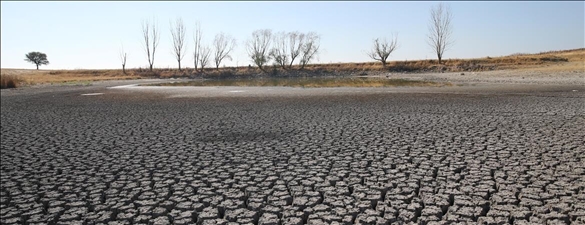
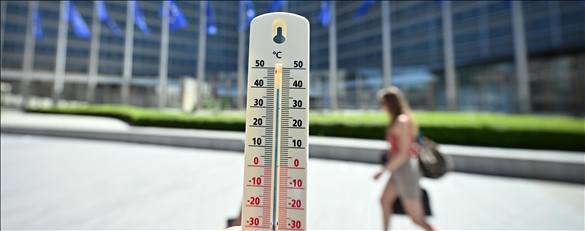
“The real issue is that we are not prepared for these events, neither physically in terms of infrastructure nor mentally. With climate change, the frequency of heavy rainfall events is increasing, drought periods are getting longer, sea levels are rising, and heat waves are becoming more frequent and prolonged. Our cities have become ‘obese cities’— we have used this expression many times. Istanbul has 15.7 million inhabitants, but its livable capacity is for between 8 and 12 million people. Ankara is right at the limit. We build on every square meter, cut down trees, and cover stream beds. Then when a storm hits, we ask, ‘Why did this happen?’”
Precautions citizens can take
Kadioglu advised that before storms hit, citizens should secure items on balconies and terraces, avoid parking vehicles under trees, refrain from going outside if storm warnings are issued, and have their roofs inspected once a year.
“You don’t fight the weather; you prepare for it. Nature is not our enemy. Storms, rain and wind are all part of our planet’s life cycle. We cannot stop them or control them. There is only one thing we can do: prepare. The storm we experienced the other day—yes, in Turkish, strong straight-line winds are called ‘storm’—was not extreme. It was not unusual. We were simply unprepared. And yes, the climate is changing. But while we are not even prepared for today’s weather conditions, talking about the future climate is a luxury. Let’s lay the foundations first. Weather will always be unstable. The question is: when will we stabilize, and when will we strengthen our infrastructure?” Kadioglu added.