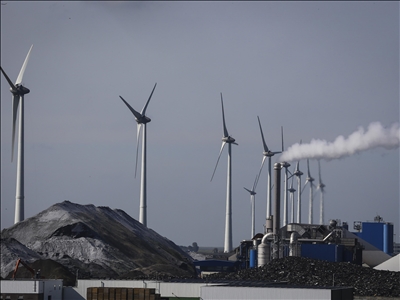
20 wind turbines halted in southwestern Netherlands after sea eagle death



As the El Nino weather phenomenon drives up global temperatures and intensifies heat-related deaths, experts warn that without urgent preventive measures, heat-related illnesses and fatalities could become the “new normal.”
Researchers from Nanyang Technological University and City University of Hong Kong published a study in Nature Climate Change examining the health impacts of El Nino events.
The research, covering 1960-2022 data from 10 Pacific Rim countries and regions, found that when El Nino effects fully dissipated, average mortality rates declined by 2.1%.
Findings also showed that El Nino’s impact on death rates varies by age, with the strongest effect observed among people under 30. Researchers attributed this pattern to greater exposure among younger populations to extreme heat and air pollution.
A historical comparison of major El Nino episodes indicated a sharp rise over time in the monetary value of life expectancy losses. The 1982-1983 El Nino event resulted in an estimated life expectancy loss valued at $2.6 trillion, while the 1997-1998 episode was valued at $4.7 trillion.
Speaking to Anadolu, Levent Kurnaz, director of Bogazici University Center for Climate Change and Policy Studies, said that in the absence of climate change, El Nino alone could increase global average temperatures by 0.1 to 0.2 degrees above normal levels.
Combined with the ongoing warming trend, however, it can push temperatures to record highs, particularly in August and September, he added.
Kurnaz emphasized that El Nino poses a serious threat to human health, recalling that in Libya a few years ago, around 13,000 people died in conditions linked to rising temperatures and warmer sea surfaces.
Tarik Mecit of Biruni University Faculty of Medicine warned that heat-related illnesses are likely to increase in the coming years.
If adequate precautions are not taken, such conditions and deaths could become the “new normal,” as heatwaves grow more frequent and intense, nighttime temperatures fail to fall sufficiently and the human body has less opportunity to recover, he said.
Mecit identified high-risk groups as people over 65, frail or socially isolated elderly individuals with chronic illnesses, infants and young children.
Outdoor workers in agriculture, construction, security and delivery services face particularly elevated risks. Even young and otherwise healthy individuals can experience heat exhaustion, heatstroke, arrhythmias and acute kidney injury under prolonged exposure, he cautioned.
The name El Nino, meaning “little boy” or “boy child” in Spanish, originated centuries ago among Peruvian and Ecuadorian fishermen, who used the term for warm ocean currents arriving near Christmas that severely reduced their catches.