Richest 0.1% produce more carbon pollution than poorest half of humanity: Report


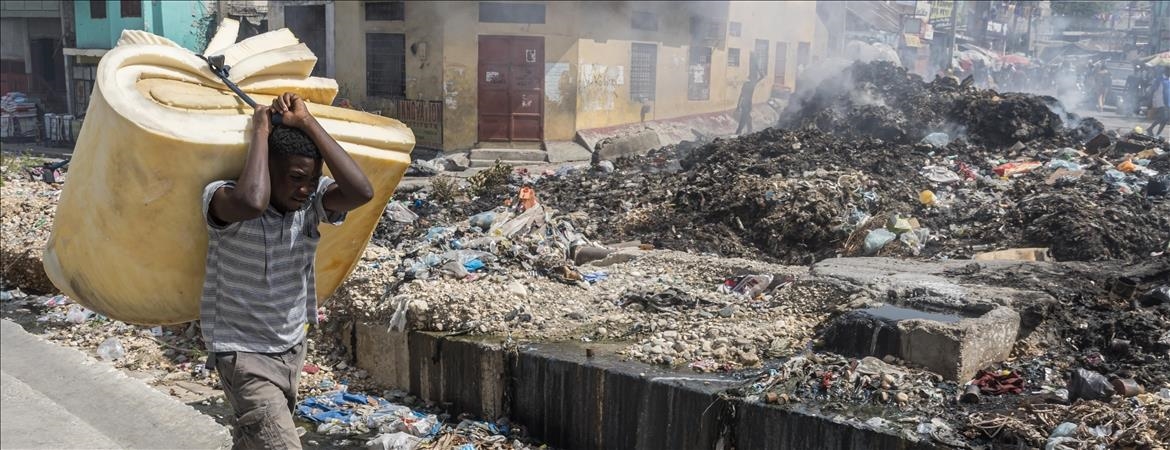
A study conducted by experts from World Bank and published in the scientific journal Nature Climate Change examined the impact of climate change on global poverty and inequality.
According to the study, an annual increase of 1 degree Celsius in temperatures raises poverty rates by 8.3 percent to 15.6 percent, depending on model estimates, when based on the daily poverty line of $2.15. When the daily poverty threshold is calculated at $3.65, the increase ranges between 4.3 percent and 4.7 percent.
The effect of rising temperatures on inequality was found to be stronger than its effect on poverty. While the Gini index, which measures income inequality, varies between 23 percent and 45 percent at the subnational level, a 1-degree increase in temperature raises the Gini index by 0.463–0.684 percentage points and the Theil index by 1.119–1.273 percentage points.
Analyses conducted in Indonesia clearly revealed the effects of rising temperatures on poverty and inequality. Based on the $2.15 daily poverty line, poverty rate was measured at its lowest in the western part of the country (0.1 percent) and at its highest in the east (42 percent).
In Italy, which ranks among the equal countries according to the Gini index, temperature changes have limited effects, whereas in countries which have high inequality, such as Namibia, temperature variations lead to pronounced impacts.
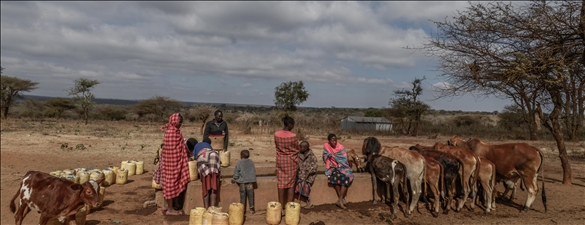
When country-level data are compared with real GDP per capita, global warming was found to increase poverty most sharply in low-income, warm countries. These include Madagascar, Malawi, Zambia, the Democratic Republic of the Congo, Burundi, Lesotho, Mozambique and Rwanda.
Global warming also increases inequality in many low- and upper-middle-income countries, including South Africa, Chile, Honduras, Colombia, Brazil, Namibia, Mexico, Bolivia and Botswana.
Future scenarios assessed
Under different climate scenarios, average temperatures in the countries covered by the study are expected to rise by 1.2–1.9 degrees Celsius by 2030 compared with the 1972–2022 period. This increase is projected to raise poverty rates by 10–15.9 percent when the $2.15 daily poverty line is applied.
Taking into account the World Bank’s projection that 622 million people will be living in extreme poverty by 2030, global warming is expected to increase the number of people living in poverty worldwide by 62.3 million to 98.7 million. The largest increases are expected under scenarios with higher greenhouse gas emissions, with the Gini index projected to rise by 1.6–2.5 percent.
In contrast, a scenario in which temperatures remain at 1979–2022 levels would result in fewer people living in poverty by 2030 than currently projected.
“The impact of climate change will vary across sectors”
Speaking to Anadolu, Prof. Dr. Ayse Uyduranoglu, an economics professor at Istanbul Bilgi University, said such studies should also be conducted by making similar comparisons across different regions within the same country.
“People from different income groups within the same country are not affected by the climate crisis to the same degree,” she said. “The impact of the climate crisis on income losses among low-income groups is far greater than for high-income groups.”
Uyduranoglu added that climate change would also affect sectors differently.
“We expect the agricultural sector to be much more heavily affected. In the case of Türkiye, the main difference between the east and the west is that the eastern regions rely more on agriculture for their livelihoods, while the western regions have economies based more on industry and manufacturing. I believe that making interregional comparisons based on sectoral structures within the same country would be highly beneficial,” she said.
“High-income groups are responsible for 90 percent of greenhouse gas emissions”
Emphasizing that low-income groups contribute relatively little to the climate crisis, Uyduranoglu said:
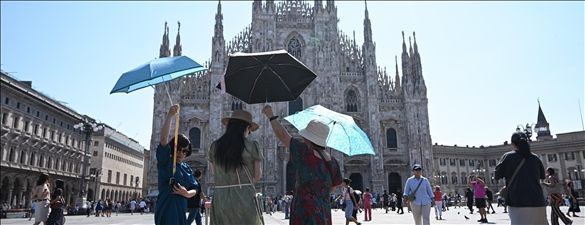
“We see that low-income groups are responsible for 10 percent of greenhouse gas emissions, while high-income groups account for 90 percent. High-income groups are more advantaged in reducing the impacts of climate change, not only financially but also in terms of education. Think about the heatwaves we experience in summer. Even if low-income households have air conditioning, they may hesitate to use it because of high energy costs. On the other hand, there are also low-income households that do not have air conditioning at all, or have it but cannot afford to run it.”
Uyduranoglu noted that failure to combat climate change would also undermine efforts to reduce poverty, adding that access to healthcare services is not equal for wealthy and poor populations living in the same city when it comes to health problems caused by pollution linked to greenhouse gas emissions.
She warned that climate change creates a vicious cycle of poverty, worsening and perpetuating it over time.
“Adaptation efforts are crucial”
Stressing that some countries are more vulnerable to climate change than others, Uyduranoglu said: “Some of these are what we call ‘third-world countries’, while others are developing countries. Climate change is one of the biggest obstacles to development. Even if we reduce carbon emissions, it is not possible to immediately slow the impacts of climate change. That is why adaptation efforts are crucial.”
She added that developed countries are better equipped to deal with climate change in terms of financial capacity, human capital, technology, legal frameworks and institutionalization, while in poorer regions, climate change-driven migration could become permanent.