Türkiye to unveil new energy transition targets at COP31 in Antalya


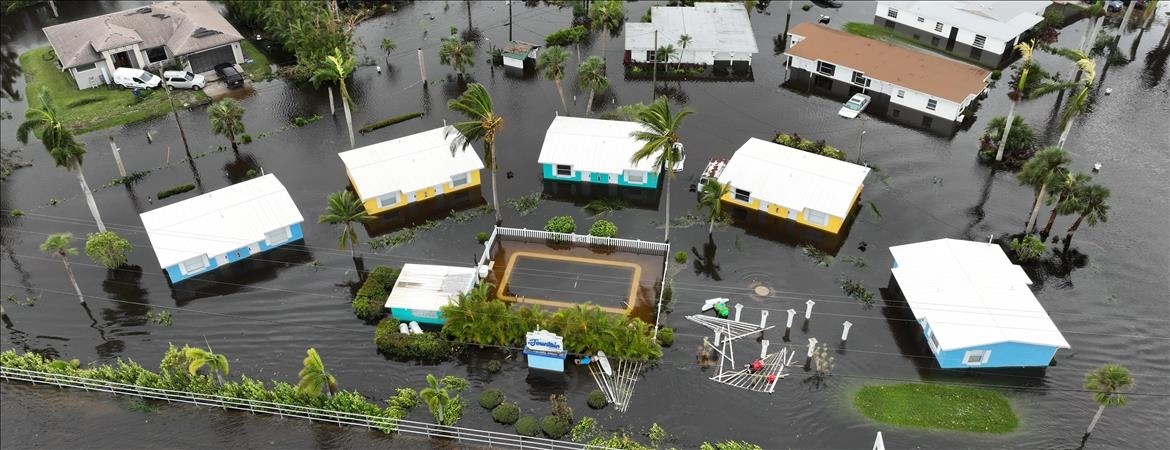
Floods, droughts and storms intensified by global warming are not only causing loss of life but are also disrupting production, logistics and trade. Global supply chains are among the most fragile systems against climate-related risks and where these risks are felt most severely.
A report titled “Insurance and reinsurance under climate stress: managing systemic risk in global supply chains,” prepared by the Stockholm Environment Institute (SEI), examines the growing pressure on the existing insurance system and the need for it to be integrated into the realities of climate change.
According to the report, rising climate risks strain the capacity of insurance and reinsurance systems.
While insurance plays a critical role in managing climate shocks, successive and interconnected disasters are prolonging the impacts of losses. This not only undermines economic stability but also renders traditional insurance models increasingly inadequate in the new risk environment.
Climate risks straining insurers
Extreme weather events are estimated to cost the European Union (EU) approximately €28 billion per year. A significant proportion of these losses are not covered by insurance.
Floods that struck Germany and Belgium in 2021 disrupted logistics and industrial activity across Europe, while droughts affecting Southern Europe in 2022 reduced agricultural output and strained water resources.
Southern Europe faces growing risks due to heat and drought that are undermining crop yields. Europe’s dependence on imports of soy, palm oil and other agricultural products makes food security dependent on climate conditions in Brazil, Argentina and Southeast Asia.
Fertilizer inputs stand out as another factor that significantly increases the risk. The EU imports approximately 30 percent of its phosphate and 85 percent of its potash, primarily from Morocco, Russia, Belarus and Canada. Climate-related disruptions in these regions have the potential to rapidly propagate throughout global food markets, resulting in increased costs and constrained supply.
Record-low water levels in the Panama Canal in 2023 caused major delays in intercontinental shipments of food, energy and industrial goods.
In 2021, extreme winter storms in the United States led to widespread power outages in Texas, halting semiconductor production and exacerbating the global chip shortage.
More frequent climate disasters increase premiums
Insured disaster losses are increasing in real terms by approximately 5 to 7 percent annually. Rising asset values, expanding construction in high-risk areas, and the growing frequency and severity of floods, wildfires and intense storms are among the main factors behind this trend.
As climate disasters occur more often and simultaneously affect multiple sectors, losses are becoming larger and more complex than insurers can cover. In such cases, insurance can turn into an additional source of economic pressure, as premiums jump, certain risks are excluded from coverage, or investors withdraw from the market. Especially in high-risk areas, individuals and businesses may find insurance either unavailable or unaffordable.
The report evaluates that the pressure climate risks on the insurance system is not a problem that insurers can solve alone. Instead, it calls for a coordinated transformation involving policymakers, regulators, the financial system and the real sector.
“The shift is achievable and more realistic than assumed”
Mikael Allan Mikaelsson, a policy fellow at the Stockholm Environment Institute and author of the report, spoke to Anadolu regarding the study.
Explaining why the report focuses on supply chains, Mikaelsson said climate risks are no longer local but have become systemic. “A flood, drought, or heatwave might start in one place, but it can quickly show up elsewhere as production stoppages, shipping delays, input shortages, and price spikes, because firms and sectors are so tightly connected through trade and logistics,” he said.
Mikaelsson stressed that the transformation required in the insurance system must be implemented without delay, noting that the global cost of supply chain disruptions could reach $25 trillion by 2060.
“We are already seeing retreat in high-risk property markets, like wildfire-prone parts of California and hurricane-exposed areas such as Florida in the US,” he said. “Similarly, in parts of Europe hit by major floods, heat and drought where cover becomes unaffordable or unavailable.”
Mikaelsson emphasized that the issue extends beyond goodwill or environmental awareness and has become directly linked to corporate balance sheets, asset values and business sustainability. For this reason, according to Mikaelsson, the large-scale shift required to address climate risk is achievable than people assume.