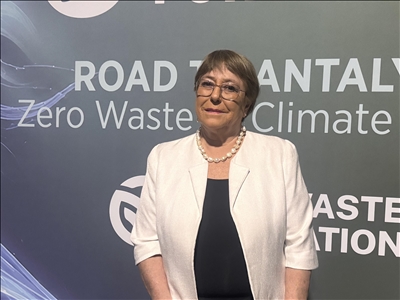
UN chief candidate Bachelet: Climate action 'not an option' as world faces growing crisis


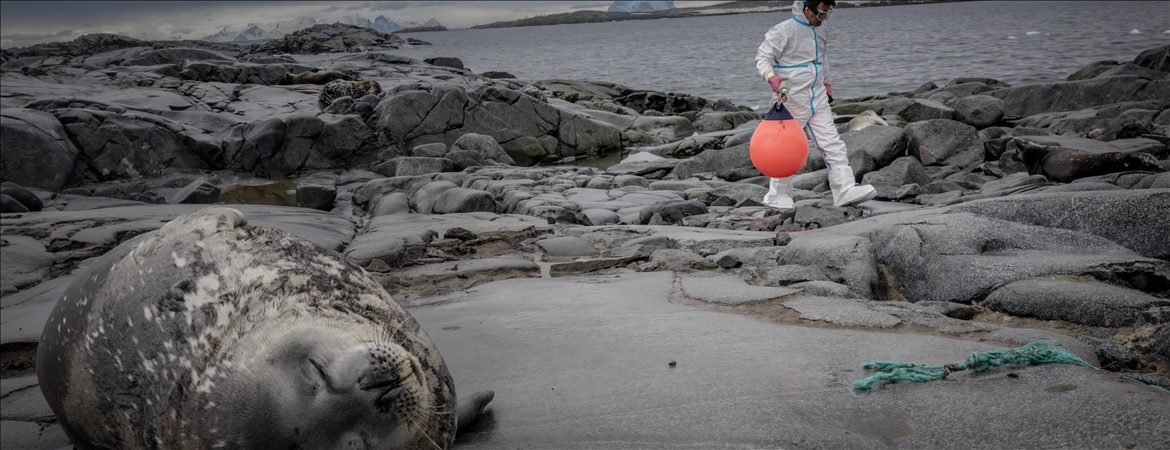
Wildlife in Antarctica is facing growing pressure from plastic waste climate change and disease risks carried by migratory birds researchers from Türkiye’s Antarctic science expedition said on World Wildlife Day on March 3.
The findings were shared by scientists participating in the 10th National Antarctic Science Expedition conducted under the auspices of the Presidency and coordinated by the Polar Research Institute at the TUBITAK Marmara Research Center under the Industry and Technology Ministry.
Scientists said environmental cleanup and biosecurity work carried out during the expedition reflects Türkiye’s “The World is Our Common Home” motto and the Zero Waste policy emphasizing that environmental protection requires global responsibility.
They stressed that Antarctica despite having no permanent human settlements is increasingly affected by global pollution and climate change.
Researchers said the polar ecosystem is shaped not only by natural processes but also by environmental pressures created by human activity across the world.
Scientists also noted that environmental changes recorded in Antarctica are closely linked to the future of the global ecosystem.
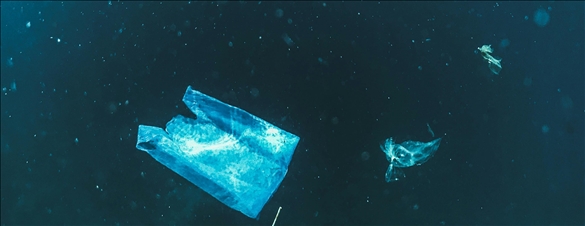
Micro-waste reaches Antarctica via ocean currents
Professor Burcu Ozsoy coordinator of the 10th National Antarctic Science Expedition said Antarctica the world’s fifth-largest continent has about 98% of its surface covered by glaciers.
She noted that the continent is surrounded by a sea ice area of nearly 14 million square kilometers roughly equivalent to its land area.
Ozsoy described the Arctic and Antarctic regions as critical components of the global climate system particularly during winter and said micro-waste remains one of the major environmental risks identified during scientific missions in the region.
“These wastes, which particularly affect fish and the ecosystem, reach here through ocean currents from other parts of the world,” she said.
She warned that such pollution is reaching glacial areas and combined with climate change is accelerating glacier melt.
Ozsoy said about 70% of the world’s freshwater reserves are stored in Antarctic glaciers.
“Losing glaciers, therefore, also means losing fresh water. We need to protect the ecosystem, the glaciers, and the fresh water — as well as the glaciers that form the foundation of the climate crisis’s adverse impact on the world,” she said.
Türkiye to host COP31
Ozsoy said scientific research shows polar regions are among the areas most severely affected by climate change and highlighted the importance of COP31.
She noted that parties to the Paris Agreement have pledged to adopt systems aimed at neutralizing and offsetting carbon emissions. Ozsoy said the COP31 meeting to be held in Türkiye will serve as a key platform where countries assess climate commitments and evaluate progress in addressing global warming.
“COP31 being held in Türkiye is extremely valuable, because all the countries of the world will be coming to Türkiye to discuss the climate and the climate crisis,” she said.
Bird flu among major biosecurity threats
Professor Ersan Basar leader of the expedition said Antarctica’s isolation does not prevent pollution and diseases from reaching the region rapidly.
He said avian influenza commonly known as bird flu represents one of the most significant biosecurity risks observed during the expedition.
Basar said the team maintained strict precautions throughout the mission especially during field studies on Dismal Island and Horseshoe Island where initial checks were conducted to detect animals potentially exposed to the virus.
“Once the risk assessment was completed, scientists began working in the field,” he said.
Basar added that the expedition’s doctor conducted preliminary checks using protective equipment to ensure safe working conditions while researchers were instructed to report any dead birds or animals they encountered.
Expedition doctor Yusuf Eminnevabi said bird flu has spread rapidly across Antarctica and was frequently observed during field research.
He added that the team also carried out waste collection under the Zero Waste framework.
“We collected human-generated plastic waste that had reached the area and encountered distressing scenes. This poses a danger not only for us, but for future generations as well,” he said.
Humpback whales recorded in Antarctic waters
Researchers also documented humpback whales in Antarctic waters that had previously been photographed off the coasts of Ecuador and Peru.
The sightings confirmed long-distance migration routes across the Southern Hemisphere based on photographic identification spanning several years.
The research team said video footage recorded by Anadolu was compared with international whale monitoring databases supporting ongoing scientific studies.
Scientists said the tracking effort which covers nearly a decade provides valuable insight into connections between marine ecosystems across distant ocean regions.