Mauritian president, new Turkish ambassador explore avenues to expand cooperation


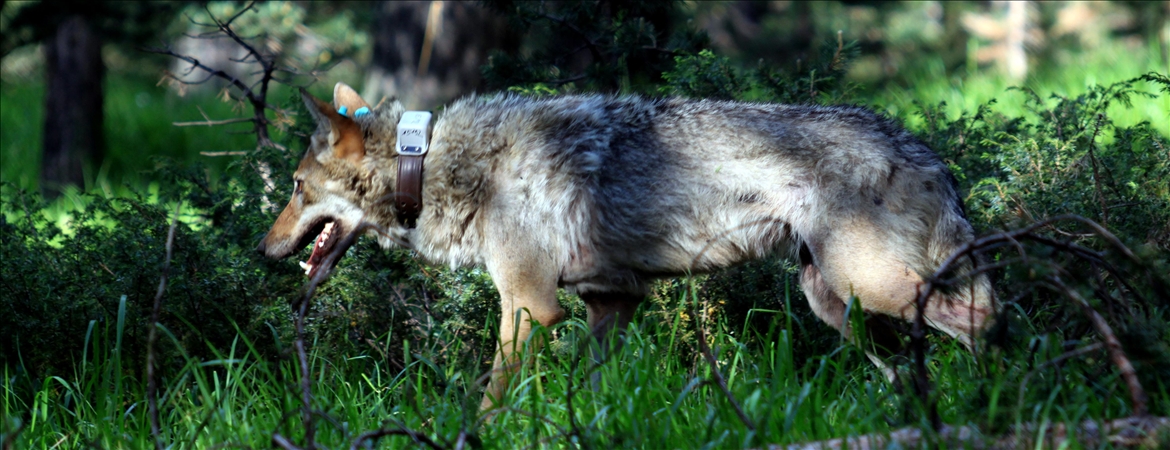
In Türkiye, the absence of a national wolf ecology and genetics program makes it harder to track and protect wolves as urban growth and expanding road networks break up their habitats, threatening their natural behavior and chances of survival.
Habitat fragmentation occurs when large natural areas are divided into smaller, isolated patches by roads and urban development.
Türkiye has made progress in recent years by building wildlife overpasses, guiding fences and ecological bridges to reduce these impacts.
Although the number of wildlife-friendly crossings has increased, collisions remain a serious threat. At the end of February, a young male wolf died in a nighttime crash on the Fethiye-Antalya highway in Mugla province.
Tissue samples were taken from the wolf and included in a TUBITAK (Technological Research Council of Türkiye) supported genetics research project.

A faculty member at the University of Utah and Koc University, and founder of the KuzeyDoga Society, Prof. Cagan Sekercioglu has been studying wolf movements with satellite tracking devices in Kars' Sarikamis region for 15 years.
The KuzeyDoga Society grew out of his 2003 Kars-Igdir biodiversity project and was established in Kars in 2007.
The group's wolf monitoring program includes high-quality GPS data from 50 wolves collared between 2011 and 2025.
During collaring, padded leghold traps are used and a veterinarian administers anesthesia. The collars are designed to drop off automatically, and wolves are monitored for up to two years.
KuzeyDoga's work is Türkiye's only wolf tracking project, and its first peer-reviewed study using GPS tracking was published in Wildlife Biology.
Türkiye's wolf population
Speaking to Anadolu, Sekercioglu said wolves require large, connected habitats but often encounter highways, urban areas, agriculture and other human activity.
He said the wolf's death in Fethiye was a predictable result of dense road networks.
Wolves are found in the Mediterranean and Aegean regions, though their numbers are lower than in inland mountainous areas.
Southwestern Türkiye remains a major gap in knowledge about wolf ecology and genetics, covering the southern Aegean and western Mediterranean regions.
Türkiye's wolf population is estimated at between 5,000 and 7,000, but there is no standardized national count. Wolves are widespread but unevenly distributed, with higher death rates in coastal areas than in the interior.
Young male wolves leave their packs and travel long distances in search of new territories, mates and groups — a stage known as dispersal.
The risk of hybridization is higher in areas with large numbers of free-roaming dogs, such as cities, waste sites and agricultural valleys, and lower in remote highlands. Sekercioglu said the tissue sample from the Fethiye wolf can help determine its ancestry and whether it has mixed with dogs.
He also said conclusions about the wolf's death should not be drawn without a necropsy. While photos may suggest long-distance movement or irregular feeding, the primary cause of death appears to be a traffic collision.
Sekercioglu said wildlife deaths at road crossings are a predictable problem and called for better planning of wildlife-friendly infrastructure.

Wildlife bridge needed on the Kars-Erzurum highway bisecting Sarikamis Forest
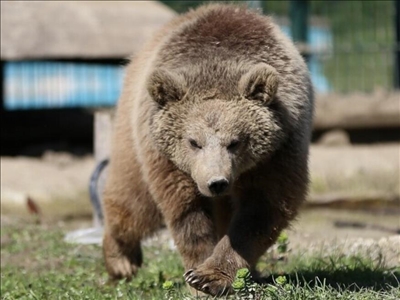
Sekercioglu said another wolf wearing a satellite collar was struck and killed by a vehicle last month in Sarikamis, repeating his 2016 call for a wildlife bridge at a key crossing point used by wolves, lynxes and brown bears.
Although the ministry approved the project and the General Directorate of Highways prepared plans, funding has been delayed.
"On the Kars-Erzurum highway passing through the Sarikamis Forest, vehicles continue to strike and kill wolves, brown bears, lynxes and other wildlife. These collisions also pose a serious risk to people and vehicles. We hope the bridge will be built soon. It will be Türkiye’s first wildlife overpass located using scientific tracking data," he said.
Sarikamis research
In Sarikamis, a district in Kars province in northeastern Türkiye, Sekercioglu studies how wolves survive and adapt in landscapes shared with humans. Thanks to the KuzeyDoga Society's long-term work, the 162-kilometer Sarikamis-Posof wildlife corridor was designated in 2012 as Türkiye's first official corridor for large carnivores.
Led by Assoc. Prof. Morteza Naderi of Sakarya University, Sekercioglu also published a dataset documenting 504 mapped human-wolf conflict events between 2004 and mid-2025, in which more than 12,000 livestock were killed or injured.
The data shows that the main threat to wolves today is retaliatory or preventive killing by livestock owners, marking a shift from earlier pressures such as bounty hunting and the fur trade.

Comparison with the US
In the contiguous United States, gray wolves were nearly wiped out by the mid-20th century.
Sekercioglu said comparing wolves in Türkiye and the United States highlights differences in policy. "In Türkiye, wolves were never wiped out nationwide. The wolf is a cultural symbol of the Turkish people," he said.
He said wolves and humans in Anatolia have coexisted for thousands of years in pastoral systems, supported by the use of livestock-guarding dogs.
He also stressed the need for standardized, transparent national monitoring systems and compensation programs for livestock losses — measures already used in parts of North America and Europe.
Wolves are listed globally as "Least Concern" by the International Union for Conservation of Nature (IUCN) and are not considered endangered in Türkiye. However, this status does not mean they do not face risks.
Local populations can still decline due to prey shortages, habitat fragmentation and human-caused deaths. These risks increase when movement between populations is disrupted, limiting genetic exchange. The wolf that died in Fethiye was likely on such a journey.
Wolves in Europe and the EU's livestock protection policy
Recent estimates suggest Europe has between 11,000 and 20,000 wolves, largely due to legal protections and adaptation to human-dominated landscapes.
The Bern Convention, which Türkiye joined in 1984, calls for strict protection while allowing limited exceptions under certain conditions.
At the end of 2023, the European Commission proposed changing the protection status of wolves under the convention, citing concerns about livestock losses in some regions. Sekercioglu said it is important to develop systems that both protect wolf populations and support rural livelihoods.

Wolves and rabies
Sekercioglu said healthy wolves rarely attack humans and that rabies is responsible for most serious cases in Türkiye.
Referring to a global review of 489 wolf attacks between 2002 and 2020, he said about 78% involved rabid animals.
"Rabies affects the nervous system, causing loss of fear, confusion, long-distance movement and unprovoked aggression. A rabid wolf behaves very differently from a healthy one — it is also a victim of the disease," he said.
The main source of rabies risk to wildlife in Türkiye is contact with unvaccinated domestic and stray dogs.
Sekercioglu said village surveys show that increased livestock losses reduce tolerance for wolves and lead to retaliatory killings, yet Türkiye still lacks a coordinated, data-driven national monitoring program.
Studies are currently carried out locally by universities and government agencies using methods such as camera traps, snow tracking and genetic analysis. "Türkiye needs a comprehensive national wolf ecology and genetics program," he said.
He added that central, eastern and northeastern Anatolia are the most suitable regions for combining tracking, genetic research and coexistence strategies.

Hybridized wolves
Sekercioglu said even experienced biologists cannot reliably identify wolf-dog hybrids based only on physical traits such as ears, tail, fur color or body shape, and that hybridization risk varies across the country.
"Reliable diagnosis requires genetic analysis — ideally using detailed DNA data to measure dog ancestry accurately," he said.
He said tissue samples from the Fethiye wolf could provide a first look at the genetics of wolves in southwestern Türkiye.
"It provides an initial genetic insight into the region. We can test whether this wolf has more dog ancestry than those in northeastern Türkiye and begin mapping where hybridization occurs," he said.
The wolf that died in Fethiye may have traveled hundreds of kilometers — and even in death, it may contribute to science. Researchers hope its case will help drive the creation of a long-needed national wolf ecology and genetics program in Türkiye.