With climate change, areas of Europe hit by wildfire could nearly triple: Study


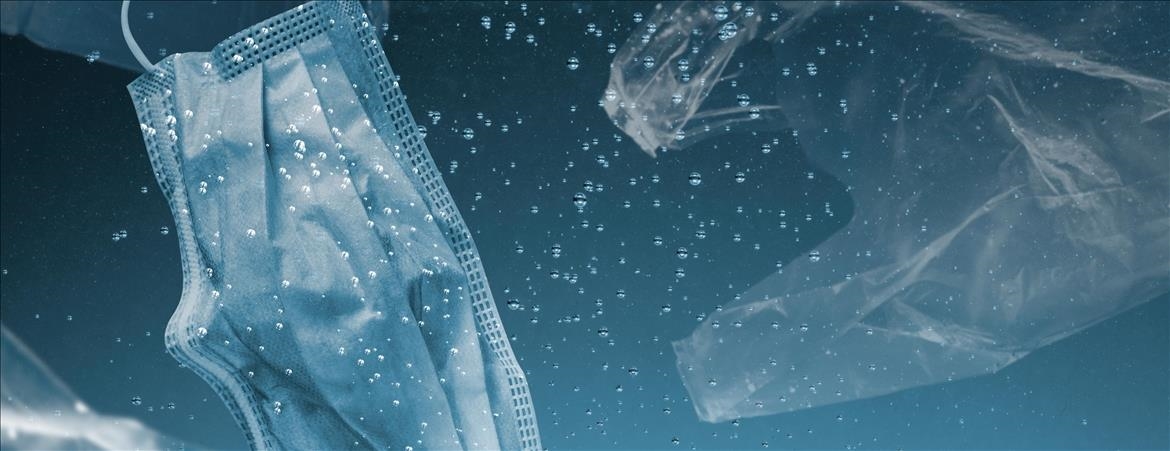
Turkish scientists studying plastic pollution in the Black Sea found that plastic waste can carry hazardous chemicals and spread them through the marine ecosystem.
“Although we previously demonstrated the distribution of plastics in marine environments and living organisms, their relationship with pollutants had not been revealed before. This is a first for Turkish seas and the Black Sea,” researcher Ulgen Aytan from Recep Tayyip Erdogan University told Anadolu.

She said the study showed that plastics help spread and retain hazardous chemicals in the Black Sea, posing risks to marine ecosystems and human health.
“In the Black Sea, plastics are not only marine litter but also mobile pollutant surfaces capable of carrying and retaining harmful chemicals,” she said.
“We can even detect chemicals on plastics that cannot be found in seawater,” she added. “This once again shows that plastics are unpredictable and complex pollutants.”
Plastic pollution in the Black Sea has been increasing due to human activity and the sea’s semi-enclosed structure, she warned, noting that pollution harms marine life throughout the food chain, from plankton to top predators.

‘Gloves, masks, textile fibers carried high chemical loads’
Aytan and researchers from the TUBITAK Marmara Research Center analyzed different types of plastics commonly found in the Black Sea after they remained in the marine environment for one year to examine whether they release toxic chemicals.
They examined chemicals added during plastic production, including PCBs, pesticides and PAHs, as well as persistent organic pollutants, which do not easily break down in nature and can accumulate in living organisms.
Samples were collected from the Rize coast in the southeastern Black Sea, an important fishing area where microplastics are frequently found in commercial fish species.
The study covered three categories of plastics: single-use products such as shopping bags, bottles and cups; masks and gloves widely used during the COVID-19 pandemic; and fishing nets.
She said different types of plastics have different capacities to retain pollutants.

“One of the striking findings was that plastic additive chemicals were found at higher levels than persistent organic pollutants in many samples,” she said.
“We observed particularly high chemical loads in plastics such as gloves, masks and textile fibers.”
Aytan said plastics begin releasing their own chemicals into the marine environment as soon as they enter the sea.
At the same time, persistent pollutants released through human activities accumulate on plastic surfaces, she added.

Consumption habits matter
Aytan said plastics pose a growing threat throughout the marine food chain.
“A plastic bottle casually used in daily life can pose a major threat to both ecosystem and human health,” she said.
“Our consumption habits directly affect marine health and its functioning.”

She warned that plastic pollution will continue to accumulate in semi-enclosed seas such as the Black Sea, increasing ecosystem pressure and food chain risks.
Aytan said reducing plastic pollution will require stronger prevention policies and improved waste management systems.
“Pollution must be prevented at its source and waste management must be strengthened,” she added.