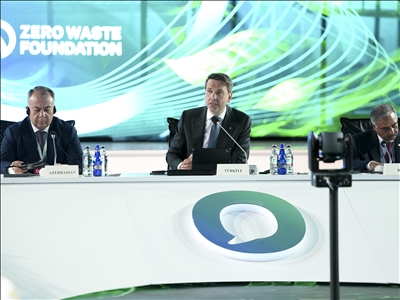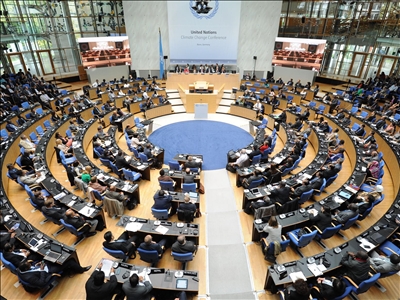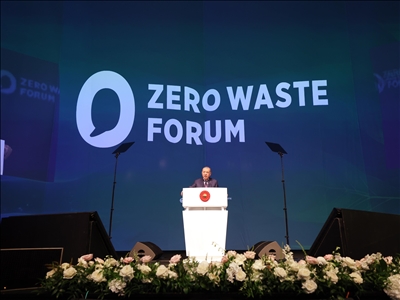
UPDATE - Turkish president warns climate change threatens humanity like war, pandemics


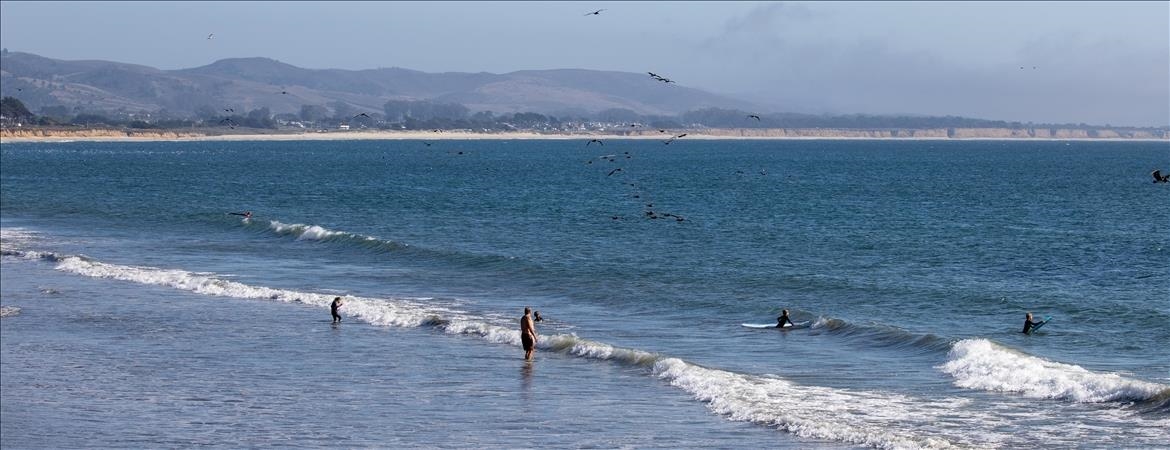
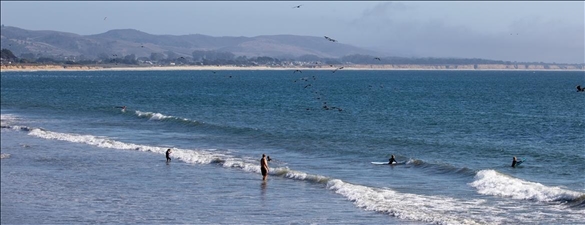
Turkish scientists warned that sea surface temperatures approached record levels in April and said new records could be set if El Nino conditions strengthen later this year, potentially intensifying marine biological stress events and raising the risks of coastal flooding and storm surges.
According to data from the Copernicus Climate Change Service, the global average air temperature in April reached 14.89 C, 0.52 C above the long-term average, making it the third-hottest April on record.
Average Arctic sea ice cover, which remained around 5% below average last month, was also measured at its second-lowest April level on record.
Cem Gazioglu, director of Istanbul University’s Institute of Marine Sciences and Management, told Anadolu that the global climate system can no longer be evaluated solely through atmospheric temperatures, noting that current data clearly demonstrates this shift.

He said the climate system has evolved into a complex structure shaped by interconnected processes, including ocean heat storage, marine heatwaves, hydrological extremes, cryosphere melting and atmospheric circulation anomalies.
“The strengthening interaction between the atmosphere and oceans is increasing both the frequency and severity of extreme meteorological events in midlatitudes. This is creating new areas of risk not only globally but also regionally,” he said.
Gazioglu noted that global sea surface temperatures approaching historical record levels are increasing upper-ocean heat content and strengthening energy-transfer mechanisms.
He explained that this process allows the atmosphere to carry more moisture, increasing the energy potential of tropical and subtropical cyclones while also intensifying extreme rainfall, prolonged heatwaves and hydrological droughts.
“If El Nino becomes effective, new sea surface temperature records could be seen throughout 2026. As a result, marine biological stress events may intensify, increasing the risks of coastal flooding and storm surges,” he said.

‘Studies must be supported with high-resolution climate data’
Gazioglu stressed that multidisciplinary data-production processes have become critical for marine sciences and climate management under current conditions.
He said coastal vulnerability analyses, sea level rise projections, blue economy planning, marine ecosystem management, disaster risk modeling and operational oceanography studies must all be supported with high-resolution climate data.
The scientist also highlighted that digital twin–based climate simulations, real-time environmental data integration and AI-supported early warning systems are becoming key tools in future coastal and marine management strategies.
Gazioglu said the impacts of global climate and oceanographic changes are becoming increasingly evident in Türkiye and argued that conventional periodic marine monitoring methods are no longer sufficient.
He recommended rapidly transitioning from traditional marine monitoring expeditions conducted at regular intervals to unmanned observation systems capable of providing continuous data flow.
“Traditional marine monitoring studies carried out only once or twice a year without scientific necessity cannot produce data capable of explaining highly dynamic events such as marine heatwaves, mucilage formation, sudden oxygen changes, coastal flooding or extreme meteorological processes,” he said.
“For this reason, continuous observation infrastructures based on operational oceanography have now become a strategic necessity.”

Effects of rising temperatures already visible in Türkiye
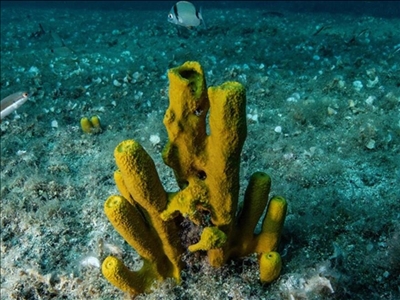
Gazioglu said prolonged sea surface temperature anomalies along the Aegean and Mediterranean coasts are altering species distribution, accelerating the spread of invasive species and transforming biological productivity regimes.
He added that recent severe floods and increasing landslides in the Black Sea basin clearly demonstrate the impact of changing atmospheric moisture transport on regional hydrological systems.
“The mucilage formation observed in the Marmara Sea is also linked to sea water temperature anomalies, stagnant hydro-oceanographic conditions and increasing nutrient loads,” he said.
Gazioglu noted that coastal erosion processes in the Black Sea have accelerated due to sediment transport caused by heavy rainfall, while short-duration but high-intensity convective rainfall events around Istanbul have led to more frequent urban flooding incidents.
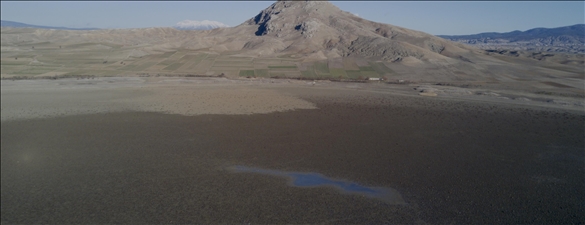
He also warned that meteorological and hydrological drought trends are becoming more pronounced in Central and Southeastern
Anatolia, leaving Türkiye simultaneously exposed to multiple climate risks.

Eastern Mediterranean identified as ‘climate change hotspot’
Gazioglu said the Eastern Mediterranean is globally recognized as a “climate change hotspot” and warned that marine and atmospheric processes around Türkiye could generate more high-energy extreme events in the future.
He underlined that rising sea surface temperatures create a significant thermodynamic energy source capable of increasing the formation potential of Mediterranean cyclones, known as “medicanes,” as well as intense convective systems and coastal disaster risks.
“In countries like Türkiye, which is surrounded by seas on three sides and located at the intersection of different atmospheric circulation systems, high-resolution climate observation networks need to be developed,” he said.