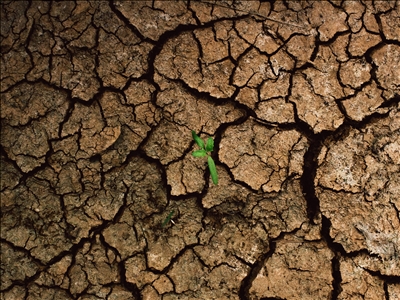
Groundwater levels in Austria could drop by up to a quarter by 2050



The El Nino weather phenomenon, expected to emerge in July, could become a new source of concern for global commodity markets by disrupting temperature and precipitation patterns worldwide.
Climate models had projected neutral conditions since the start of the year, but signs of El Nino have recently intensified.
El Nino typically raises temperatures in coastal regions and across the globe, while La Nina brings cooler weather conditions. Neutral periods between the two are associated with more ordinary weather patterns.
Zafer Ergezen, a futures and commodities expert, told Anadolu that the probability of El Nino developing by mid-2026 had risen above 80%, with sea surface temperatures already increasing.
“The warming of the oceans, coupled with a decrease in winds blowing towards the Americas, leads to increasing temperatures in the Pacific Ocean, which leads the Americas to see increased rainfall, while Asia and Australia to see decreased rainfall and more drought, and the disruption of season timings in Africa and India,” he said.
Ergezen said Asia would be a key focus due to potential risks to palm oil, cocoa and cotton production.
Indonesia accounts for around 60% of global palm oil supply, while Malaysia is also a major producer, making the market highly sensitive to weather shifts. He added that disruptions could spill over into other vegetable oils such as soybean and sunflower oil.
“El Nino led to decreased cocoa production over the past five decades and while we may not see the effect on cocoa this year, we may next year, so it’s possible that cocoa prices will rise,” he said. “El Nino this year is expected to be stronger than previous ones.”
He also warned that delayed monsoon rains and high temperatures in India could increase pest infestations in cotton fields, adding to market volatility.
Rice production could also come under pressure due to reduced rainfall in Thailand and Vietnam, two of the world’s leading rice exporters, he said.
“But looking at the positive side, soybean production is expected to rise, given previous periods whether in the US or Argentina, and we may see a similar trend this year,” Ergezen added.
He said the June-September monsoon season in India would serve as one of the clearest indicators of how severe El Nino may become.
“We’ll be monitoring the region, especially India, as the rainfall there will indicate expectations for cotton, sugar, rice and palm oil,” he said.
“If the monsoon is ordinary, risks could ease but if the impact is weak, this will be an early warning signal for a particularly strong El Nino in the coming period,” he added.