Fossils reveal climate-driven extinctions in ancient New Zealand ecosystem


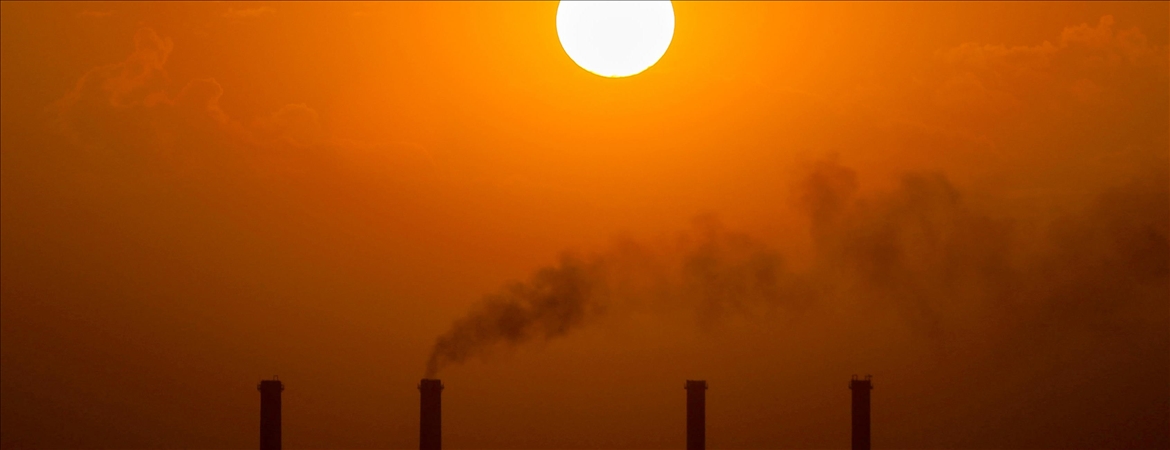
A new report from the United Nations Environment Programme (UNEP) shows that for every dollar invested in protecting nature, $30 is spent destroying it.
The State of Finance for Nature 2026 report builds on UNEP’s 2023 analysis that found government subsidies and private investments equivalent to roughly 7% of the global economy directly damage ecosystems. The latest edition also examines how those financial flows can be redirected toward a nature-positive economic model.
Michael Konig-Sykorova, senior project manager at the Frankfurt School of Finance & Management and lead author of the report, said there are signs that investors are gradually shifting toward sustainable growth.
Nature-based solutions are already being implemented across sectors such as coastal protection, urban cooling, water management and agriculture, driven by cost advantages, regulatory pressures and changing consumer behaviour, he told Anadolu.
There are also signs that some harmful investments are retreating, he said, noting that oil and gas investments harmful to nature fell from $990 billion in 2020 to $519 billion in 2023.
“This trend aligns with growing recognition that nature-related risks are material to financial stability, alongside the declining costs of renewable energy production,” he said.

Financing gap between harm and protection
Despite growing interest in sustainable investment, the report highlights a major imbalance in global financial flows.
Previous UNEP research found that finance directly harming nature reached $7.3 trillion, while investments in nature-based solutions totaled just $220 billion, creating a ratio of more than 30 to 1.
Of the $7.3 trillion in harmful finance, $2.4 trillion comes from government support, largely directed toward sectors such as fossil fuels, agriculture and water use.
The remaining $4.9 trillion stems from private-sector investments, concentrated mainly in utilities, industry, energy and basic materials.
"A major driver of negative impacts is the industrial sector, which accounted for nearly $1.4 trillion in 2023,” Konig-Sykorova added.
Meanwhile, funding for nature-based solutions such as forest restoration and wastewater management reached $220 billion in 2023, with around 90% coming from public sources.
Private-sector contributions totaled $23.4 billion, although the report notes a gradual upward trend.

However, meeting global commitments under the 1992 Rio Conventions on climate change, biodiversity loss and desertification will require investment in nature-based solutions to rise to around $571 billion by 2030 and $771 billion by 2050, according to the report.
It also emphasizes that forests and oceans remain underfunded despite their central role in addressing climate change and biodiversity loss and calls for stronger investment in urban green spaces, regenerative agricultural practices and nature-compatible infrastructure, including carbon-absorbing building materials.
Financial priorities overtaking climate targets
Konig-Sykorova warned that global political and economic priorities are increasingly shaping investment decisions in ways that could undermine climate and biodiversity targets.
Countries with weak institutional frameworks and limited legal enforcement capacity may be particularly vulnerable to investments that harm nature, he said.
Asia led public domestic spending on nature-based solutions with $93 billion in 2023, followed by North America with $59 billion and Europe with $34 billion.
However, Konig-Sykorova said the investments required to meet targets under the three Rio Conventions remain at serious risk.

Given current trends, achieving the Paris Agreement’s financial alignment goals and commitments to phase out harmful subsidies will also be difficult, he added.
“As we see in recent years … short-term interests often dominate investment decisions aimed at advancing development and geo-political goals without adequately considering ecological integrity,” he said. “Some policy signals, for example, discussions around revising the EU’s 2035 combustion engine target raise questions about credibility of climate ambition relative to industrial policy priorities.”
Even so, he believes that the trajectory can be changed with emerging technologies and other solutions.
A nature-positive transition requires strong leadership, comprehensive policy reforms and coordinated public-private collaboration, he added, alongside a shift in mindset to gradually end harmful financing and promote investments aligned with the goals of the Rio Conventions.