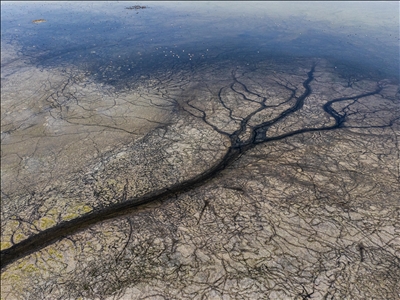
Chronic drought grips Türkiye as 2-year rainfall deficit deepens



The Middle East is confronting an intensifying water crisis, with rising temperatures, frequent droughts, and population growth compounding long-standing scarcity. Governments across the region are turning to desalination and water innovation to secure their future, positioning the Middle East as a global leader in water technology.
The region holds only 2% of the world's renewable freshwater, and 83% of the territory faces severe water scarcity, with projections from the World Resources Institute (WRI) estimating that 100% of the population will face acute scarcity by 2050.
A study published in the Nature journal in January noted that the MENA region accounts for 41.8% of global operational desalination capacity, with approximately 5,000 plants producing 28.96 million cubic meters of water per day.
Governments are planning to nearly double this capacity between 2024 and 2028, having already contracted an additional 20.9 million cubic meters per day of new output, according to the National.
Investment in desalination infrastructure has seen a massive surge. Between 2006 and 2024, the region invested $53.4 billion in capital expenditure, representing 47.5% of total global spending during that period.
Total investment is now projected to rise to $100 billion by 2030, reflecting both regional demand and the global imperative for freshwater resources, which is expected to rise by up to 25% by 2050.

Country-by-country water treatment capacities
Desalination has become critical for domestic water supply across the Gulf states, which rank among the five most water-stressed countries globally, according to the World Resources Institute (WRI)'s Aqueduct Water Risk Atlas.
Kuwait: 90% of drinking water comes from desalination, with major plants, including Shuaiba North, Shuaiba South, Az Zour, Shuwaikh, Doha East, Doha West, and Subiya, providing a cumulative capacity of over 2.2 million cubic meters per day, according to the World Population Review's data released this year. Kuwait is among the five most water-stressed countries globally, according to the WRI's Aqueduct Water Risk Atlas.
Oman: Around 86% reliance on desalinated water, supported by solar-powered plants such as the Musandam facility opened in 2025, according to the Desalination News.
Saudi Arabia: 70% of water needs are met through desalination. Riyadh’s Desalination Plant produces 1.02 million cubic meters per day, with plans to raise output to 17.8 million cubic meters per day by 2030, according to UNESCWA (Economic and Social Commission for Western Asia) statistics released in 2024 and the Desalination News. The kingdom operates 30-32 plants across 17 strategic locations, accounting for over 25% of global desalinated water capacity, according to the World Population Review.
Bahrain: Bahrain continues to invest heavily in modern desalination technologies, including the Al Hidd plant, though precise capacity figures are less publicly reported, the World Population Review shows.
Qatar: Ras Abu Fontas, a facility that generates over 400,000 cubic meters per day, supporting rapid urban and industrial growth, according to UNESCWA. Qatar is also one of the most water-stressed nations globally, according to the WRI's Aqueduct Water Risk Atlas.
The UAE: Some 42% of drinking water is desalinated, with a cumulative capacity of 7.27 million cubic meters per day across multiple plants, according to the World Population Review. The UAE operates roughly 70 major plants, including Jebel Ali and Al Yasat Al Soghrih Island, producing up to 2 million cubic meters per day at some facilities, the World Population Review shows.
Israel: While exact percentages vary, Israel is a global pioneer in water reuse and desalination, with capacity reaching 1.91 million cubic meters per day (2.76% of global share) through facilities such as Sorek, Ashkelon, Hadera, Palmachim, and Mekorot’s plants, producing substantial amounts to meet urban demand, according to the World Population Review.
Iran: Currently heavily dependent on traditional freshwater sources, with only 2% of supply coming from desalination. Plans for expansion exist amid regional conflict pressures, according to The National News. Iran’s reservoirs are at critical lows following five years of severe drought.
Innovation and sustainability
The region is seeing a decisive technological shift from older thermal methods to the Sea Water Reverse Osmosis (SWRO). While thermal methods require 14-28 kilowatt-hours (kWh) per cubic meter, modern SWRO uses only 4-6 kWh.
Saudi Arabia has been a focal point for water innovation.
In November 2025, Eastern Province Governor Prince Saud bin Naif inaugurated the Toray Membrane Middle East Factory in Dammam, the largest regional facility producing 300,000 desalination membranes annually.
This supports the shift toward reverse osmosis, which is easier to integrate with renewable energy and less energy-intensive.
“This plant strengthens supply-chain localization and boosts industrial self-sufficiency,” the Ministry of Water and Environment stated.
The region is also pioneering sustainable desalination solutions.
Oman’s solar-powered Musandam plant uses reverse osmosis to reduce reliance on fossil fuels.
Saudi Arabia is collaborating with the US-based Ebb Carbon to decarbonize desalination at scale, “marking the world’s first large-scale initiative focused on reducing emissions from water production,” Desalination News reported.
Modern plants increasingly integrate AI and digital twin technologies to optimize energy use and predict maintenance, according to the World Population Review.
Challenges ahead
Despite rapid expansion, the region faces challenges in cost and energy demands.
Desalinated water in Saudi Arabia and the UAE costs around $1.50 per cubic meter, according to World Bank data. Energy-intensive cooling processes create a feedback loop where increased desalination drives higher energy consumption, which in turn increases water demand.
Experts warn that balancing technological growth with sustainable resource management will be key.
“Sustainable growth will depend on the region’s ability to balance expanding capacity with responsible management of environmental and economic resources,” the Desalination News' report emphasized.
Additional threats include climate change, environmental impact of brine discharge, and cyberattacks on water infrastructure.
While Saudi Arabia and the UAE have invested in redundancies, smaller states such as Bahrain, Qatar, and Kuwait remain more vulnerable.
Strategic implications
The reliance on a few dozen “Mega-Plants” has heightened security stakes. These facilities are now viewed as “critical infrastructure” at extreme risk during regional conflicts.
A leaked 2008 US diplomatic cable suggested Riyadh might require evacuation within a week if key desalination plants were destroyed, while a 2010 CIA analysis warned that outages could last months.
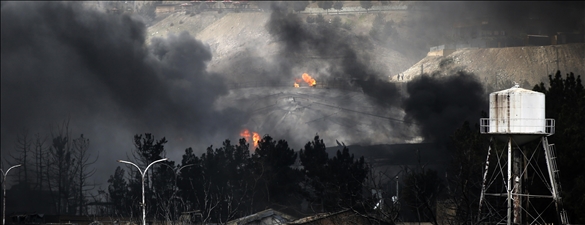
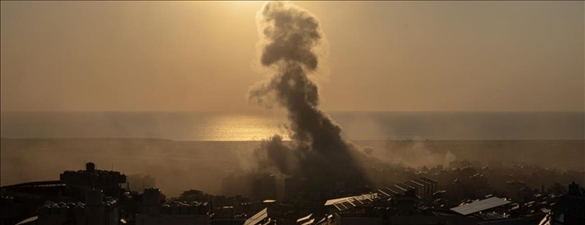
The current conflict in the region has already seen direct hits.
Bahrain accused Iran of damaging one of its plants, while Iran reported a US airstrike on a plant on Qeshm Island, disrupting water for 30 villages. Other strikes have occurred near Dubai's Jebel Ali port and Kuwait’s Doha West plant.
Because many plants are cogeneration facilities (producing both water and electricity), an attack on the power grid directly halts water production.
Geopolitical analysts, including Aziz Alghashian of the Gulf International Forum, noted that strikes on water infrastructure are designed to pressure governments without forcing full-scale war, though this restraint has limits, according to The National.
Iran’s Foreign Minister Abbas Araghchi recently warned that “attacking Iran's infrastructure is a dangerous move with grave consequences,” following the impact on Qeshm.