World could warm 3.25C by 2100 under current policies, Swiss-German study suggests


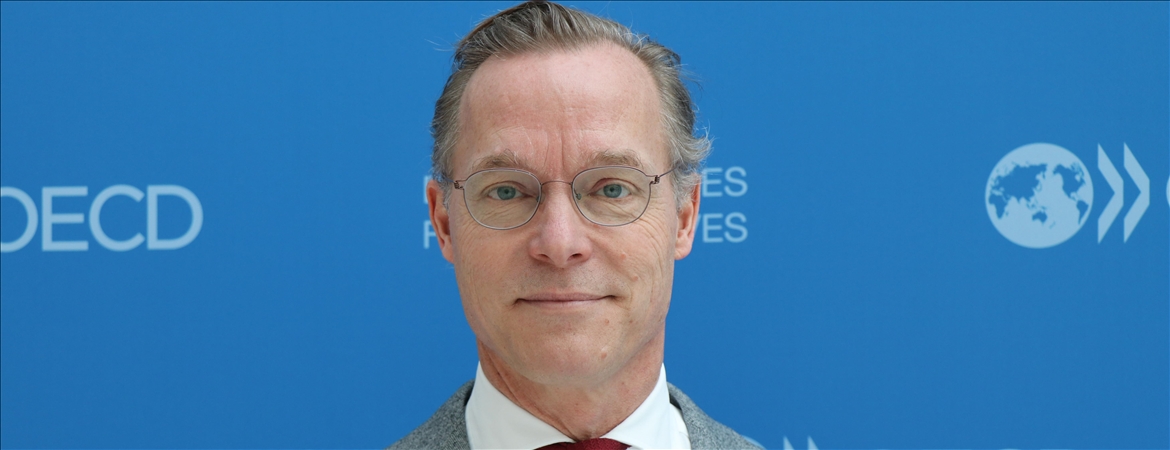
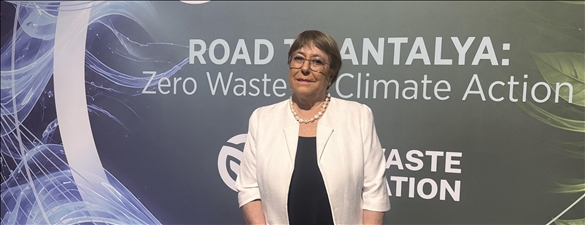
Türkiye’s zero-waste initiative is setting a global example ahead of the UN Climate Change Conference COP31 to be hosted in Antalya, the environment director of the Organisation for Economic Co-operation and Development (OECD) said.
“Many countries can look at Türkiye as a source of inspiration... politically, at the government level, and culturally, at the household level,” director Jaime de Bourbon de Parme said, speaking to Anadolu at the OECD headquarters in Paris.
De Bourbon de Parme discussed Türkiye’s Zero Waste program, food waste as a climate solution, circular economy opportunities and expectations for COP31.
March 30, recognized as International Day of Zero Waste following a UN resolution, has helped raise awareness of global waste challenges.
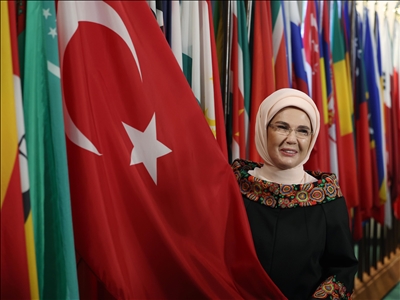
The initiative began in Türkiye in 2017 under the auspices of First Lady Emine Erdogan and has since expanded into a global movement.
Global leadership and soft power
De Bourbon de Parme stressed the importance of political leadership in accelerating international cooperation.
“It’s incredibly important that global leaders put the attention on waste and circular economy because it is an issue that needs to be resolved,” he said.
“By having soft power, having global leaders discussing it, for instance, with Mrs. (Emine) Erdogan putting it on top of the agenda, other global leaders will put attention to it and then civil servants can start discussing it more freely.”
He said the OECD supports governments with data, analysis and guidance on circular economy solutions.
“Every country has a different type of solution. If we compare these solutions, we can see what the best options are going forward,” he added.
Integrating zero waste across levels
OECD policy approaches to waste focus on three areas: food, circular economy and plastic pollution.
Plastic alone could account for 5% of global emissions by 2040, roughly twice Brazil’s annual greenhouse gas emissions.
He said solutions require coordination across multiple levels: international agreements covering production and design, national targets and fiscal incentives and local implementation through recycling and reuse infrastructure.
Food waste and climate impact
De Bourbon de Parme highlighted food waste as a major global challenge affecting both food security and climate change.
“What a lot of people don’t know, it generates a lot of greenhouse gases,” he said.
“One of those gases is called methane. Methane has about 80 times more impact on climate than CO2, but it also breaks down within 10 to 12 years. This is a very low-hanging fruit, an easy solution to tackle first.”
He said composting can help reduce emissions, but behavioral change at the household level is also crucial.
“Food can be held longer than you think if you use certain methods... and therefore reduce greenhouse gas emissions,” he said.
Circular economy and job creation
De Bourbon de Parme highlighted the economic benefits of a circular economy, noting that reuse, repair and recycling activities are labor-intensive and create employment opportunities.
“Going from a linear to a circular world... there will be more wins, more jobs in a circular economy than in a linear economy,” he said, emphasizing the need for a just transition.
Growing awareness and COP31 expectations
Since the 2022 proclamation of the International Day of Zero Waste, OECD member states have shown increased awareness, he said, citing Türkiye’s event on textile waste as an example.
“We’re very much looking forward to COP31 where net zero or zero waste is going to be central on the agenda,” de Bourbon de Parme said.
“I think that will be attracting global attention not only to the problem but also to the solutions going forward.”
He expressed high expectations for Türkiye’s COP31, noting lessons from COP30 in Brazil.
“Brazil did a lot of work, but it’s like they built the station, but the train hasn’t left the station yet. So I hope that in Türkiye we’ll be laying the tracks where the trains can drive on and maybe some of the trains will be leaving the station.”
He highlighted Türkiye’s nine-point climate action agenda, with priorities including climate action implementation, zero waste, green industrialization and the energy transition.
Rising fossil fuel prices amid tensions in the Middle East make renewable energy a key focus, he said.
Türkiye as global model
De Bourbon de Parme described Türkiye’s performance as exemplary.
Municipal waste generation per person in Türkiye is below the OECD average and overall waste levels have declined since 2000.
“Türkiye is excellent in zero waste policy. That’s why it’s great that Türkiye is putting it on the international agenda,” he said, while noting challenges remain, including gaps in service coverage and limited recycling capacity.
“Many countries can look at Türkiye as a source of inspiration... politically, at the government level, and culturally, at the household level.”
He praised Türkiye’s school programs and awareness campaigns aimed at instilling responsibility in the next generation.
He noted continuing challenges, including limited waste service access for about 10% of the population and continued reliance on landfill disposal for a large share of municipal waste.
Still, the program raises global awareness and supports school-based education efforts encouraging responsibility among younger generations.
Looking ahead to COP31
“The whole world will be looking at Türkiye. We’ll be seeing opportunities to invest in Türkiye, the lessons learned from Türkiye, but also your global leadership in really neutrally bringing all parties in the world together to find common solutions,” de Bourbon de Parme said.
He said the OECD will support Türkiye and its COP31 in cooperation with Australia, acting as a bridge to promote global collaboration.