Türkiye's livestock waste offers major untapped energy potential


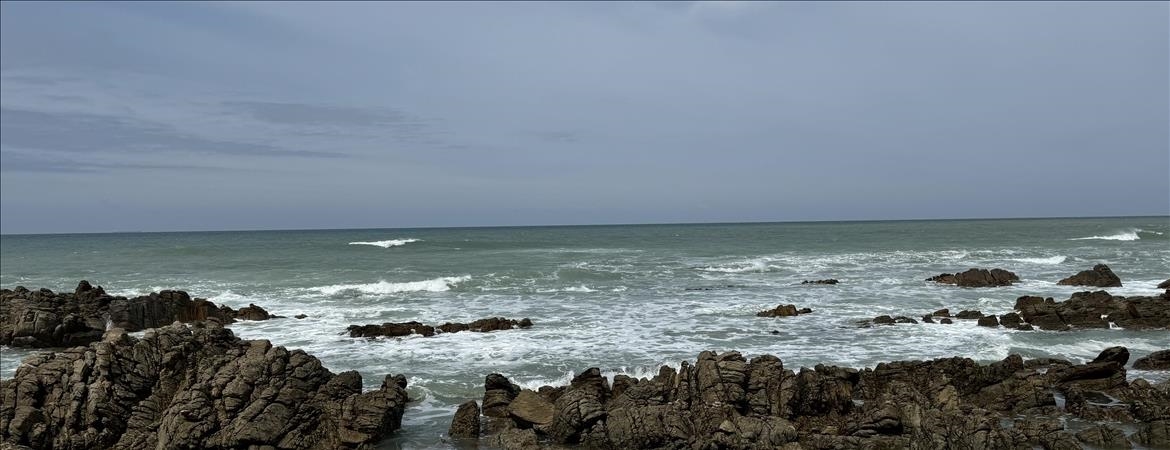
A new international study shows that including damage to oceans and marine ecosystems nearly doubles the social cost of carbon, adding about $48 per tonne to standard climate cost calculations that have largely ignored ocean impacts.
The study, published in Nature Climate Change, was conducted by researchers from universities in the United States, Germany, Canada, Italy and the Netherlands and incorporates ocean-based impacts of carbon emissions into the social cost of carbon (SCC), a key metric used to guide climate policy.
The researchers examined the effects of climate change on what they describe as ‘blue capital,’ defined as the combined natural, economic and social benefits derived from oceans, seas and coastal ecosystems.
In this framework, the study analyzed climate impacts on coral reefs, mangroves, fisheries, aquaculture and port infrastructure.
The findings show that damages to marine systems have been largely overlooked in influential indicators such as the SCC, which estimates the economic harm caused by each additional tonne of carbon dioxide emitted into the atmosphere.
Blue social cost of carbon
To calculate the ocean-based component of the SCC, researchers modeled two scenarios: a reference scenario that included climate impacts and another reflecting the effect of an additional megatonne of carbon dioxide emitted into the atmosphere in 2020.
According to the study, the blue social cost of carbon in 2020 totaled $48.3 per tonne. Of that amount, $22.1 was attributed to fisheries, $14 to coral reefs, $10.1 to mangroves and $2.1 to ports.
These figures represent ocean-related damages that are not included in standard SCC calculations. Excluding ocean impacts, the researchers found, results in a significant underestimation of the true cost of carbon, with total damages nearly doubling when marine systems are taken into account.
Oceans function as natural sinks
Professor of economics at Anadolu University Ceyda Erden Ozsoy said oceans act as a vast “natural bank” that regulates the climate while sustaining economic activity.
Ozsoy said the concept of blue carbon refers to the capacity of coastal and marine ecosystems to absorb and store carbon dioxide from the atmosphere, noting that mangrove forests, seagrasses and salt marshes trap carbon in soil and function as natural sinks that slow climate change.
She added that blue capital encompasses all economic and welfare benefits provided by oceans and marine ecosystems.
Ozsoy said the social cost of carbon measures the total damage to people and the economy caused by each additional tonne of carbon dioxide emissions, including impacts on health, food systems, infrastructure and quality of life.
"Integrated assessment models are commonly used to calculate the social cost of carbon. A chain of emissions increase, temperature change, economic and welfare damages is established, and market losses are monetized with damage functions, while non-market and ecosystem impacts are monetized with natural capital/benefit functions, and the cost per tonne is determined by discounting future impacts to present value," she said.
Ozsoy said the blue social cost of carbon quantifies the monetary value of damage to marine ecosystems such as corals, mangroves, fisheries and ports for each additional tonne of emissions, making visible impacts that are often ignored in SCC calculations.
She said the study develops sector-specific damage functions to assess how ocean systems respond to climate change, monetizing both market and non-market losses to estimate per-tonne costs.
According to the study, rising greenhouse gas concentrations alter the chemical and physical structure of oceans, weakening ecosystems and undermining their natural regulatory functions, Ozsoy said.
She added that oceans absorb part of the additional atmospheric emissions and shape the climate system’s response.
"When oceans are taken into account, the true economic cost of climate change is much higher than assumed. First of all, the fact that damages from oceans and marine ecosystems alone add $48 per tonne shows that current social cost of carbon calculations systematically underestimate damages by excluding ocean impacts. When ocean impacts are included, total cost nearly doubles. Secondly, when the discount rate is reduced to 2%, the value rises to $168, indicating that most ocean-based damages emerge in the long term and in the form of permanent welfare losses. In other words, when future losses are taken more seriously, the cost of each tonne of emissions today appears much higher."
Food and health risks increase
Ozsoy said ocean-based damages are expected to reduce fish stocks, undermine food security and increase health risks, while the loss of coral reefs and mangroves will leave coastal areas more exposed to natural disasters and economic losses.
She said the sharp increase in costs at lower discount rates highlights long-term and intergenerational risks.
"The main message of the study is that if the true cost of carbon is higher than we think, climate policies must be stronger. This means both reducing emissions and placing oceans at the center of policy design," she added.