From forests to towns: What is behind Russia’s bear encounters?


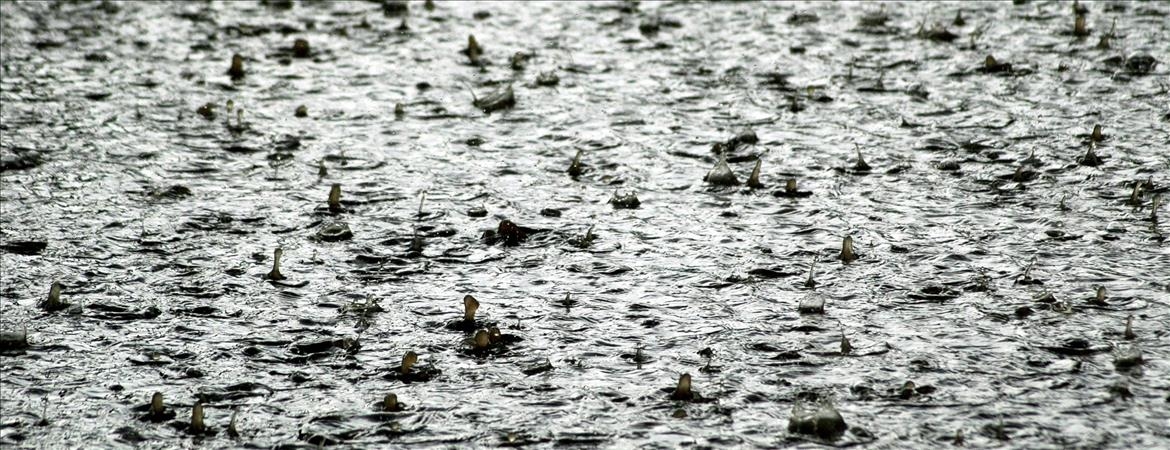
Driven by intensifying drought and mounting pressure on water resources, rainwater harvesting systems that collect and store roof runoff are increasingly emerging as a sustainable method to reduce water consumption and generate savings at both individual and societal levels.
Speaking to Anadolu, Guclu Insel, a professor at Istanbul Technical University (ITU), emphasized that such measures have become a crucial necessity rather than an alternative solution, particularly due to irregular precipitation patterns linked to climate change.
Insel noted that rainwater is an important natural resource that is relatively clean when first formed in the atmosphere but may become contaminated by air pollution and dust before reaching the ground.
“It must be utilized with appropriate filtration and pre-treatment systems,” he said.
He highlighted the critical need for adequate storage capacity, stressing that infrastructure must be in place to capture this resource as soon as precipitation occurs.
Pointing to water loss caused by insufficient storage, Insel said rainwater can be used for utility purposes after simple treatment.
“Rainwater harvesting alone does not solve the entire water problem, but it is a complementary and strategic tool for sustainable water management,” he added.
Common practice in Europe
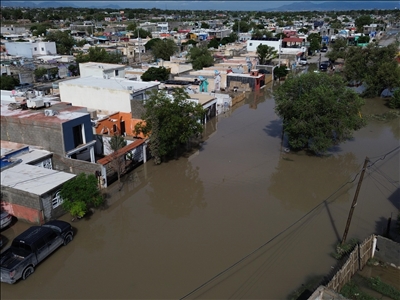
Eyup Arslan, general manager of Hydrain, a rainwater harvesting and water management engineering company, described rainwater harvesting as a system designed to mitigate the impacts of drought and floods while preventing uncontrolled runoff.
He noted that while these systems have been implemented for many years in European countries, particularly Germany and Australia, they are relatively new in Türkiye.
“Rainwater from the roof is largely cleared of mud and coarse pollutants via filters placed in downpipes and taken into storage tanks. Contaminated water is separated and discharged into the sewage system,” he said, explaining how the system operates.
Arslan stated that 35% of domestic water consumption accounts for toilet flushing.
“A family of three consumes an average of 600 liters of water daily. About 200 liters of this is used in toilet cisterns, which can be met with rainwater.
Filling cisterns with rainwater can reduce total water consumption by 30 to 35%. It can also be easily used for park and garden irrigation, building cleaning, and car washing,” he said.
Agricultural benefits
Highlighting the significant advantages of rainwater harvesting in agriculture, Arslan pointed out that it is highly beneficial for plants because it does not contain salt or chlorine and is rich in nitrogen and nitrate.
He said storage systems are typically installed in dry creek beds or strategic locations to capture runoff during heavy rainfall for use in the irrigation season. These systems rely on filtration and often operate without pumps.
Large-scale underground storage
Emphasizing the importance of underground systems for rainwater harvesting, Arslan noted that these units can store between 100 and 50,000 cubic meters of water (approximately 3,531 cubic feet and 1,765,733 cubic feet).
“Infiltration tanks used for flood prevention can reach capacities of up to 500,000 cubic meters,” he said.
Arslan stated that these concrete-free systems, built with green technology, reduce mains water consumption by approximately 30%, with savings rising further in housing complexes.
“Savings can reach 40% when used for gardens and common areas, and up to 50% when toilet cisterns, washing machines, and dishwashers are included,” he said.
Estimating that Istanbul's 1 million buildings could harvest 100 million cubic meters of rainwater annually - five times the capacity of Alibeykoy Dam - Arslan said collecting water at the source serves as both a flood prevention measure and a major conservation strategy.
Need for incentives
He noted that incentive and support mechanisms are mainly implemented through organized industrial zones and municipalities, while financing options for individual residences remain limited.
“Homeowners can currently only establish these systems with green certification loans or eco-friendly housing loans offered by banks,” he said.
Arslan stressed that incentive mechanisms must be expanded and that individual residences should not be excluded from the process.
Rainwater harvesting is not only an environmental investment but also a disaster prevention infrastructure that reduces flood damage, he said.
Warning against complacency regarding current rainfall levels, Arslan estimated that Istanbul risks wasting approximately 100 million cubic meters of water without such measures. He argued that rainwater harvesting systems effectively pay for themselves by mitigating flood damage.
“It’s not only water saving but also a disaster prevention solution; it has the potential to reduce the impact of floods by up to 75%. We need to collect water where it falls, not where it overflows,” he added.