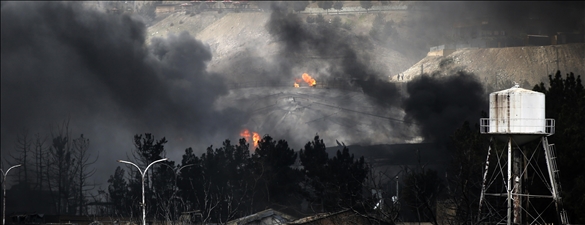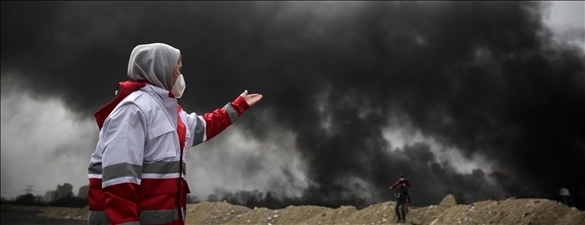
Toxic fires sparked by Israeli strikes on Iranian oil depots raged for days, endangering public health


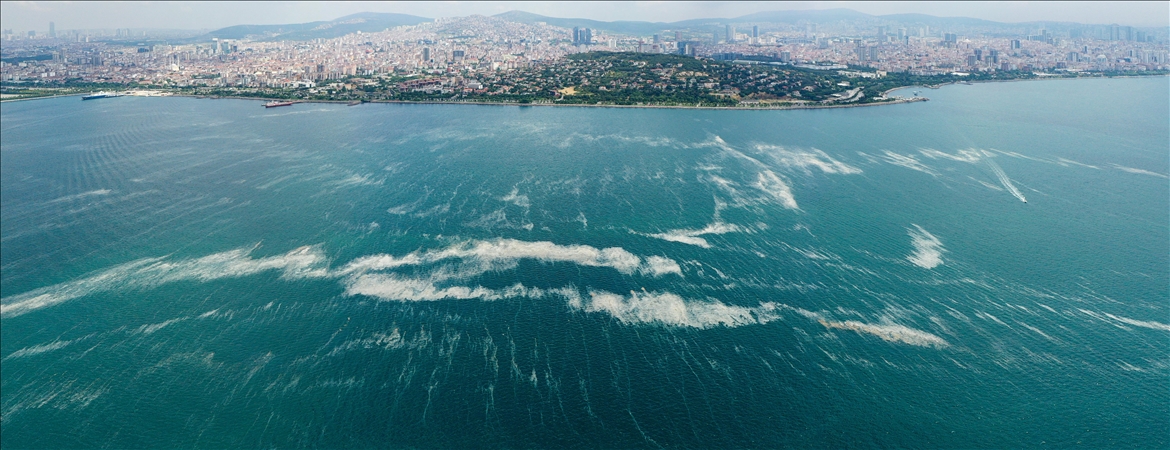
Scientists from Istanbul University’s Institute of Marine Sciences and Management, under the leadership of Prof. Dr. Nazli Demirel and PhD student Dalida Bedikoglu, have conducted a study on the structure of zooplankton communities in the Sea of Marmara over a 20-year period.
The scientists analyzed the data they collected between 2002 and 2022 through long-term laboratory studies and published their findings in September.
According to the findings, the number of species of copepods and cladocerans within the zooplankton group varies seasonally. Over the years, these species are being replaced by new, smaller ones.
High-impact ecological events such as rising temperatures, changing nutrient availability, and mucilage formations are contributing to these changes. Notably, during the mucilage outbreaks in 2007–2008 and 2020–2021, zooplankton communities experienced collapses.
Critical declines in zooplankton abundance observed immediately before mucilage periods reflect disturbances in the system’s balance.
Overfishing of anchovies, sardines, and horse mackerel (fish that feed on zooplankton) as well as increases in jellyfish populations, also play a significant role in these changes in zooplankton population.
On the other hand, fluctuations in sea temperature and chlorophyll-a levels directly affectdominance and size of zooplankton species. Smaller, fast-reproducing species are becoming increasingly dominant in the Sea of Marmara.
This shift in zooplankton communities also impacts upper levels of the food chain. Direct changes in zooplankton indirectly threaten the overall ecosystem balance.
The study further emphasized that the Sea of Marmara has become more vulnerable to climate change and human-induced pressures, highlighting the critical need for long-term monitoring to support ecosystem management.
“Zooplankton are shrinking, and every link in the chain is affected”
Prof. Dr. Cem Gazioglu, Director of the Institute of Marine Sciences and Management at İstanbul University, told Anadolu that the increase in smaller-sized species observed in the Sea of Marmara signals major changes in the ecosystem.
“Zooplankton are shrinking, and every link in the chain is affected,” he said.
Gazioglu noted that the exchange of water between the Mediterranean and Black Sea in recent years has shaped marine life in the Sea of Marmara and that climate change and rising sea temperatures have contributed to the current situation of the zooplankton.
He pointed out the great importance of the study and stated that the different aspects of the issue should be examined carefully and in detail.
Emphasizing that during the studies, it was observed that larger species were gradually being replaced by smaller and faster-reproducing ones, Gazioglu said that some of them had become dominant for longer periods of the year.
“These organisms are one of the most important indicators of the resilience of the marine ecosystem”
PhD student Dalida Bedikoglu from the Institute of Marine Sciences and Management at İstanbul University emphasized that the long-term observations carried out in the Sea of Marmara are crucial for understanding changes in the marine ecosystem.
Recalling that sharp declines were detected in these small communities of organisms immediately before mucilage outbreaks, Bedikoglu said: “Changes in sea temperatures and water quality degradation accelerate this process. These changes affect not only small marine organisms but the entire food chain they are part of.”
She underlined that changes in zooplankton serve as a warning sign for the overall health of the Sea of Marmara and for the productivity of fisheries:
“These organisms are one of the most important indicators of the resilience of the marine ecosystem. Changes in them directly reflect our capacity to adapt to climate conditions,” she said.
“Structural changes in zooplankton communities affect not only these organisms themselves, but also the entire system where they are part of the food chain. Therefore, continuing long-term monitoring studies is critical for sustainable fisheries and ecosystem management in the Sea of Marmara.”