


Afghanistan is focusing on renewables to meet its domestic energy demand, Mohammad Humayon Qayomi, chief advisor to the president of Afghanistan told Anadolu Agency on Thursday.
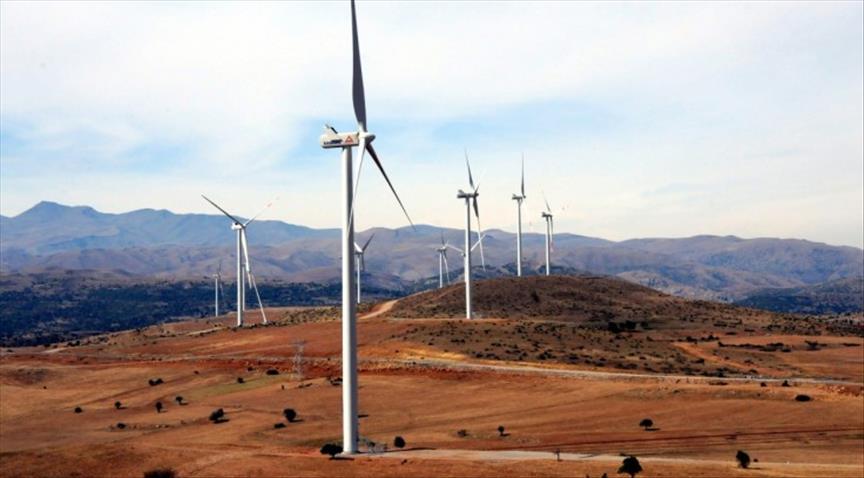
"We have over 23,000 megawatts (MW) of potential hydropower, over 60,000 MW of potential wind energy, over 220,000 MW for solar, and 10,000-15,000 MW for geothermal," he said.
"In total, Afghanistan has a lot of potential [for energy], but we have not really utilized a lot," he said.
Qayomi said Afghanistan currently imports electricity from four of its neighbors -- Tajikistan, Uzbekistan, Turkmenistan and Iran.
"Current installed capacity in Afghanistan is very small, it's about 442 MW, while current demand is about 2,000 MW," he said.
Qayomi explained that in 2002 only six percent of the Afghan population had access to electricity; but this has now increased to around 30 percent at the moment.
He outlined that the idea is to have electricity in major cities connected to the national electricity grid while for the interior areas, off-grid systems such as renewables would be employed as on grid systems would not be economical.
Afghanistan plans to have 100 MW of renewables capacity in the next six to eight months, Qayomi said and added "We hope that it will be the beginning of many future [energy] projects on renewables."
"Our whole idea is that we are trying to increase our electricity generation in a green way, so it will be based on hydro, wind and solar," he said.
- Afghanistan as an exchange partner
With the country's potential to meet its local needs, Qayomi also asserted that Afghanistan also has the potential to export energy to neighboring countries.
"Afghanistan wants to be an energy exchange center, so that energy supplies from Central Asian countries could move through Afghanistan to meet Pakistan's energy needs," he said.
"Pakistan has a major electricity issue. They have an installed capacity of about 21,000 MW. But, their projected demand for 2030 is about 90,000 MW. So, under these circumstances, Pakistan will have a major energy shortage. I hope we can increase regional collaboration and meet the [energy] needs of the region," Qayomi concluded.
By Ovunc Kutlu
Anadolu Agency
ovunc.kutlu@aa.com.tr
