Thai police claim that the head of an underground network set up to destabilize the country has not fled overseas as first suspected, but is hiding within the country's borders.
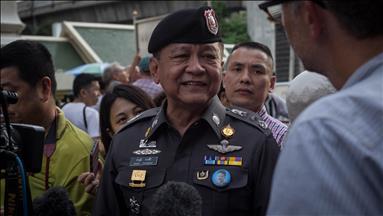
Pol Maj Suriya Singhakamol was reported in the Bangkok Post Wednesday as saying that "the suspect, identified only as Banpodj, was an old man who had never faced... an arrest warrant."
He is trying to flee the country, added Singhakamol, the director for technology and cybercrime at the Department of Special Investigation.
"Banpodj Thailand network" messageboards are renowned among "Red Shirts" -- supporters of the deposed Shinawatra clan, long at odds with the conservative establishment -- for comments critical of the country's military junta and the rival Democrat Party.
The goverment of Yingluck Shinawatra -- the sister of clan head Thaksin, the establishment's ten-year nemesis -- was overthrown by the ruling military junta in a May 22 coup. Many analysts see a recent five-year ban from politics imposed on her as a way of keeping the clan away from elections that they, or affiliates, have won for the past decade.
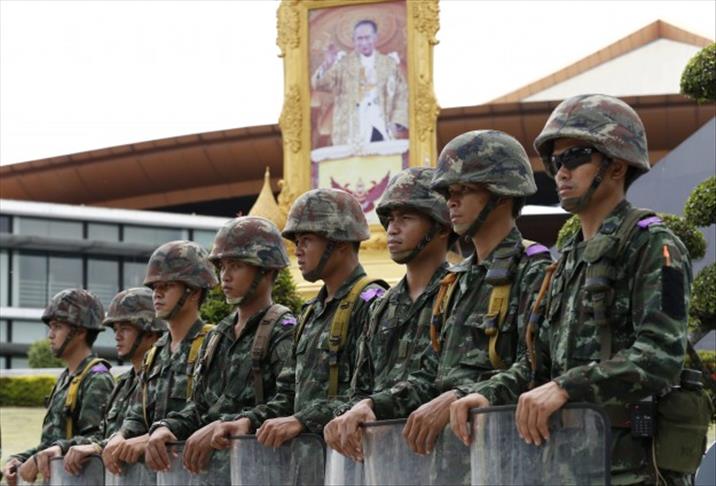
On Tuesday, Thai media reported the arrest of six people for membership of Banpodj, which police said was plotting to overthrow the monarchy.
At that point, authorities said Banpodj -- suspected of heading the network since 2011 -- had fled Thailand, and continued to publish information aimed at dismantling the monarchy from overseas.
Singhakamol said Wednesday that the movement had made efforts to conceal its IP address, suggesting that it may have been using a device which would make it appear as if it was posting comments from outside the kingdom.
The Nation reported Colonel Siripong Timula, the deputy commander of the country's Technology Crime Suppression Division, as saying that the group divided its activities into three levels.
He said that the leader's level took charge of spreading ideas along with producing video clips and articles; an operational level upheld the task of generalizing the ideas of the group through social media; while he alleged that a collaborator level took care of the network's finances.
Material was propagated through social media, such as Facebook, blogs and YouTube, he added.
"From the investigation, the suspects in this network operated systematically. They had been dividing work, holding secret meetings, and attempting to use distorted information to propagate false information," Timula said.
Thailand has a harsh lese-majeste law, which makes it a crime to defame, insult or threaten members of the royal establishment. Critics, however, say that it is often also used to clamp down on free speech and undermine anyone seen to be critical of the establishment while maintaining its grip on power.
Since seizing power, the National Council for Peace and Order (the junta's official name) has abrogated the constitution and the senate, and banned all opposition and criticism of the junta’s orders.
Banpodj postings Tuesday showed various attacks on the ruling establishment but none on the royal family.