By Max Constant
BANGKOK
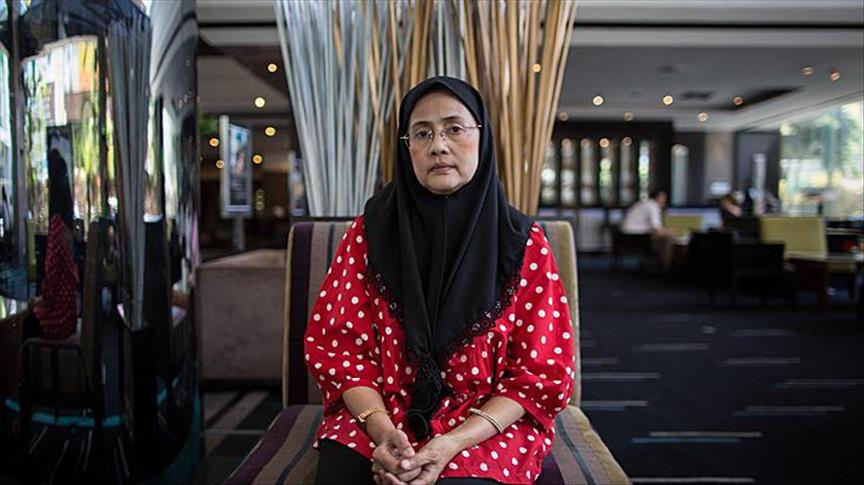
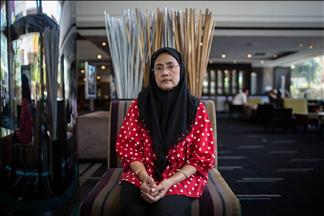
A prominent Thai Muslim human rights activist expressed her concerns Monday for those suspected of involvement in the Aug. 17 bombing in Bangkok, saying that so far they have no legal representation and human rights lawyers are reluctant to volunteer given the sensitivity of the case.
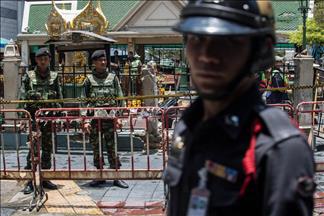
So far, three people -- all Muslim -- have been arrested for the bomb attack at the Hindu shrine which killed 20 people and injured over 130 others, while arrest warrants have been issued for ten more.
“My concern is about the rights of the suspects. All accused have the right to have access to a lawyer, but from what I see, they have no lawyers,” Angkhana Neelapaijitr, chairwoman of the Justice and Peace Foundation told Anadolu Agency on Monday.
“The suspects must have a lawyer during the interrogation. This is a basic right. They must also be allowed to practise their faith,” she added.
Since seizing power in a coup May 22, 2014, the junta has been accused of using torture to extract confessions
On Aug. 21, a Thai court ordered the junta to compensate the family of a young Muslim man who died from his wounds after being tortured by the military in insurgency-plagued southern Thailand, while it has detained hundreds of activists, academics and politicians -- with some of them affirming they had been tortured.
Neelapaijitr, who has been nominated to become a member of the constitution-sanctioned Human Rights Commission, said she had tried to “encourage human rights lawyers to volunteer” to defend the suspects, but that these lawyers “might be scared [off] because of the situation”.
The first suspect, whose nationality has still not been determined, was arrested during a police raid on an apartment Aug. 29 where a large amount of materials to build bombs and around 200 fake passports were found.
A second suspect was arrested near the Thai-Cambodian border last Tuesday. He was holding a Chinese passport with Xinjiang written as the birthplace.
The Chinese embassy was given the passport by Thai authorities last Wednesday but is still yet to verify the passport's authenticity.
This suspect -- named by Thai authorities as both Mieraili Yusufu and Yusufu Meerailee -- has admitted under interrogation that he helped assemble the bomb and give it to a yellow-shirted man near the bomb scene.
Security cameras of the Erawan shrine have shown the yellow-shirted man placing a bag containing the bomb under a bench, and then leave the shrine around 15 minutes before the explosion.
The Bangkok Post reported Monday that police have said that this suspect detonated the bomb with a remote control device.
A third suspect was arrested also Tuesday in Narathiwat province in southern Thailand.
Police said he was found with “a number of passports and documents”.
Security sources have told the Post that he was a key member of a ring smuggling Muslim Uighur and Rohingya through Thailand's southern border, but other reports have said that the Thai Muslim man was arrested because he had phoned another suspect -- a Thai Muslim woman married to a Turkish man -- after a warrant was issued for her detention.
Formal charges are yet to be brought against any of the three detained suspects.
“The charges must be limited by the evidence,” Neelapaijitr told Anadolu Agency.
She warned that if no lawyers volunteer, a lawyer will then be assigned by the court.
“But I think the lawyer must have knowledge of the history of the issue, otherwise it might be useless,” she added.
"The issue" is the Uighur issue -- at the bedrock of the case -- with suspicions growing among Thai authorities that the attack is an act of revenge by smugglers linked to the Turkic community which lives in Xinjiang in north-western China.
For years, Uighur and Rohingya have been smuggled through Thailand from their home countries of China and Myanmar, where activists and NGOs claim they are subject to state persecution.
Once in Thailand, they acquire false passports and travel through the country's southern border to Malaysia, with the aim of hopping on flights to countries that will recognise them as legitimate refugees.
With the case involving the freeing of those seen to be suffering persecution, questions are being raised as to if the bombing will be judged by authorities as political or criminal.
“We have to base our work on human rights. We can approach authorities based on human rights issues, but as soon as there are political implications, as in the Uighur case, it is much more difficult,” said Neelapaijitr.
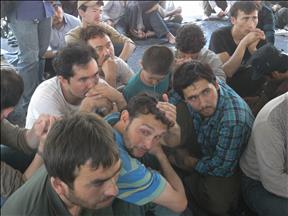
In July, Bangkok deported 109 Uighur -- 85 men and 24 women -- to China, but prior to the deportation it shipped 180 Uighur women and children to Turkey, which welcomes Uighur as its own as they are among a number of Turkic tribes that inhabit a region many Turks call East Turkestan and consider to be part of Central Asia, not China.
The deportation to China -- which separated husbands from wives and fathers and mothers from children -- led to a chorus of protests from International Organizations and foreign governments.
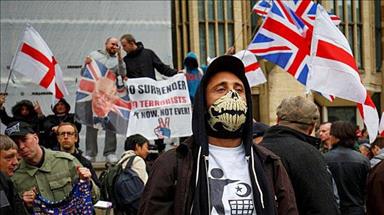
Anger at Thailand’s move was none more fervent than in Turkey, where a group of people, among them members of pro-Uighur organization, ransacked the Thai consulate in Istanbul on hearing the move to China.
Meanwhile, 52 Uighur, accused of illegal entry to the Kingdom Thai territory, continue to be detained at immigration centers in Songkhla province in southern Thailand.
Neelapaijitr told Anadolu Agency that she had discussed their situation with senior government officials, and they "have no intention to send them to China”.
Asked if the allegations of Uighur involvement in the bombing could influence Thai authorities decision Neelapaijitr said that she did not think the junta's attitude will change.
"The Thai government has already got experience with the deportation policy. Pictures shown on the Internet showed that they [Uighur deported to China] were not treated well,” she underlined.
Immediately after July's deportation, Chinese TV pictures emerged on the internet showing the deportees blindfolded on the plane to China, while the country's Ministry of Public Security had claimed that many of them had been "on their way to Turkey, Syria or Iraq to join jihad" -- allegations that Turkey's Foreign Ministry spokesperson Tanju Bilgic later described as "ridiculous".
“Personally, I think the Thai government should send the 52 Uighur to Turkey and not to China, because there is no reason to send them to China,” said Neelapaijitr.
“According to Thai law and to International law, to deport someone to a country you need evidence of a verdict or evidence of serious criminal charges.”
In the case of the Uighur deported and awaiting deportation she says she has seen none.