Head-on train collision in Denmark leaves 17 injured
Authorities say 'too early' to determine cause as investigation focuses on technical, human factors, noting 5 of injured people are in critical condition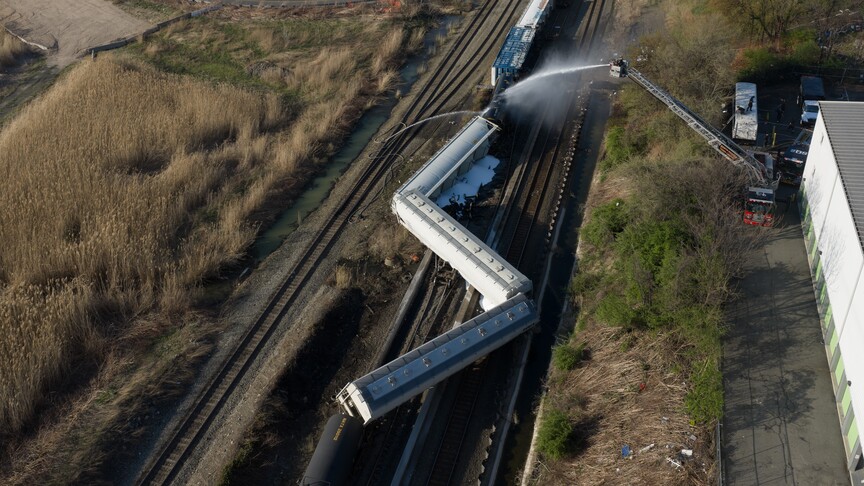
A head-on train collision in Denmark on Thursday left at least 17 people injured, five of them in critical condition, with authorities saying it is "too early" to determine the cause, local media reported.
Two trains crashed on the Gribskov Railway in North Zealan earlier in the morning -- traveling on a single track in opposite directions, Danish broadcaster DR reported.
Police said emergency services were swiftly dispatched to the scene, where rescue operations were still ongoing, with at least 60 responders involved.
The regional health authority, Region Hovedstaden, said several of the injured were transported to Rigshospitalet in Copenhagen, including employees of the operator Lokaltog.
Authorities, according to the report, said rescue operations were extensive, with emergency crews working to bring the trains back to the tracks, a process expected to last into the night.
Klaus Jensen, head of unit at the Accident Investigation Board, said investigators were collecting technical evidence and data but cautioned against early conclusions.
“It is far too early to say anything about it,” he said, adding that authorities are examining possible issues with signaling systems, tracks and human factors.
Claus Rene Pedersson, safety manager of Lokaltog, said such an accident should not have been possible under normal safety systems.
“This should not be possible, and we do everything in our daily lives to ensure that it does not happen,” he said in the report.
Gribskov Mayor Trine Egetved said some of the injured had been airlifted to Rigshospitalet hospital.
“I am deeply shaken and shocked and thinking of all those involved,” she said in a post on the US social media platform Facebook.
She noted that the railway is widely used by local residents, workers and schoolchildren, adding that authorities are working to support those affected.
Police said they have an overview of the situation but that rescue efforts are continuing as authorities seek to determine the cause of the collision.