09 March 2016•Update: 22 March 2016
By Esra Kaymak Avci
WASHINGTON
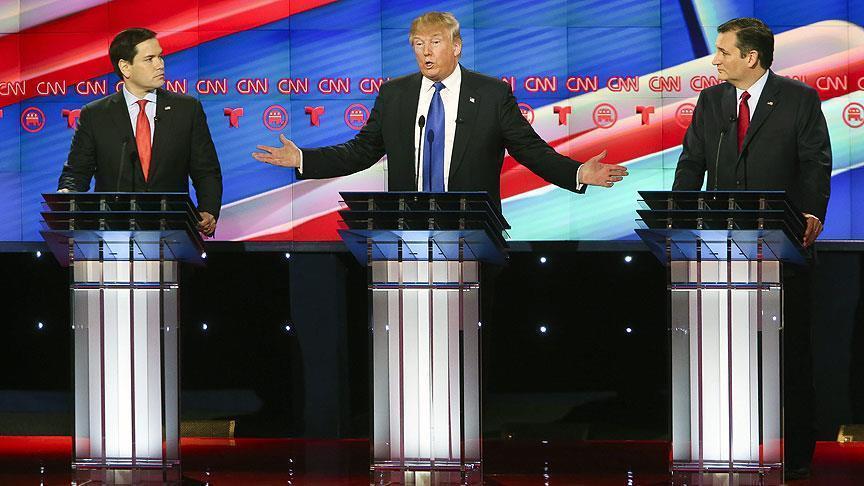
While Tuesday night's presidential primary races saw more success for Republican billionaire Donald Trump, the case for the Democrats was more fifty-fifty.
The real estate mogul won in Mississippi by 48 percent and in Michigan by 37 percent. In both states, Texas Senator Ted Cruz came second, followed by Ohio Governor John Kasich. Florida Sen. Marco Rubio failed to get over 10 percent in either state.
With Mississippi and Michigan, the number of states that Trump has won so far has increased to 13.
But in Idaho, luck was on Cruz' side, when he won the race by 42 percent. Trump followed on 28 percent, while Rubio was ranked third and Kasich last.
With his recent victory, the number of states supporting Cruz rose to six.
The results of Tuesday's primaries show that the number of Trump's delegates increased to 428. Cruz has 315 delegates, followed by Rubio who has 151 delegates. Kasich, on the other hand, has only 52.
To win the candidacy for the presidential election in November, one of the four men should reach the delegate number of 1,237.
A forth Republican primary took place in Hawaii also on Tuesday. But due to the four-hour time difference between the East Coast of the U.S. and West Coast -- where Hawaii is close to -- the primary results are not known yet.
In the Democratic race it is hard to identify any candidate as the winner based on Tuesday's primary results.
Wins were shared among former U.S. Secretary of State Hillary Clinton and Vermont Senator Bernie Sanders – the only two candidates for the Democratic Party.
Sanders' victory in Michigan dented Clinton's dominance in the Democratic primary race.
For Sanders, his victory in Michigan marked his ninth in primary elections.
In Mississippi, Clinton won the state by 83 percent, which increased the number of her victories to 12 states in total.
The number of Clinton's delegates went up to 1,214 with Tuesday's primary win, whereas Sanders' number of delegates increased to 566.
A Democratic candidate needs to win 2,383 delegates order to become the presidential hopeful.
The primaries for both parties will continue until July.
In mid-July, the Republican Party will announce its presidential candidate in Cleveland, whereas the Democrats will announce theirs in Philadelphia.