WASHINGTON, D.C.
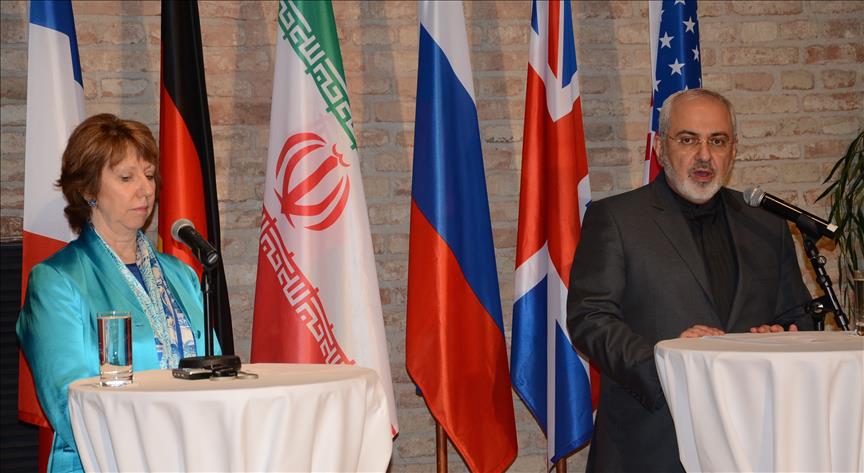
The P5+1 group of international negotiators and Iran have decided to extend nuclear talks until November 24, one year since the first step agreement was reached between the parties, according to the Obama administration.
“To turn our back prematurely on diplomatic efforts when significant progress has been made would deny ourselves the ability to achieve our objectives peacefully, and to maintain the international unity that we have built,” U.S. Secretary of State John Kerry said in a statement released to the press.
“While we’ve made clear that no deal is better than a bad deal, the very real prospect of reaching a good agreement that achieves our objectives necessitates that we seek more time.”
The P5+1 -- the U.S., Russia, China, France, Germany and the U.K. -- and Iran had initially agreed on a deadline of July 20.
The additional time will allow the P5+1 and the Islamic Republic to reach an accord on remaining issues relating to Iran’s nuclear program, including enrichment at Iran’s Natanz facility, which Kerry said requires “much more work."
Still, the sides have made progress on sealing off “the plutonium path to a bomb through” Iran’s heavy water reactor at Arak, repurposing the enrichment facility at Fordow, and ensuring that Iran’s stockpile of low-enriched uranium cannot be turned into higher grade uranium for a bomb, according to America’s top diplomat.
The parties agreed that a comprehensive agreement will include enhanced monitoring and verification measures beyond those that currently exist.
Kerry added that throughout the extended period, the P5+1 and Iran have agreed to uphold their obligations under the joint plan of action, which set out the guidelines for negotiations.
Under the plan, Iran diluted half of its 20 percent enriched uranium hexafluoride. Under the extension, Iran has committed to convert all of its 20 percent uranium hexafluoride into fuel for the Tehran Research Reactor. Twenty-five kilograms are to be converted by the end of the extension, according to Kerry.
In exchange, Iran will receive access to $2.8 billion in frozen assets, Kerry said, and the sanctions relief that Tehran received under the plan will remain in place throughout the extension.
"Let me be clear: Iran will not get any more money during these four months than it did during the last six months, and the vast majority of its frozen oil revenues will remain inaccessible," he said. "And, just as we have over the last six months, we will continue to vigorously enforce the sanctions that remain in place."
White House Press Secretary Josh Earnest said that there was a "credible prospect" for a comprehensive deal.
“We have an opportunity to achieve a lasting, diplomatic solution that will resolve one of the most pressing national security issues of our time,” he said in a statement released to the press. “We will not accept anything less than a comprehensive resolution that meets our objectives, which is why it is necessary for negotiations to continue.”
Both U.S. President Barack Obama and British Prime Minister David Cameron agreed that negotiations should continue to ensure that Iran’s nuclear program is only for peaceful purposes, according a readout of their call provided by the White House Friday.
www.aa.com.tr/en