28 December 2015•Update: 28 December 2015
By Alex Jensen
SEOUL
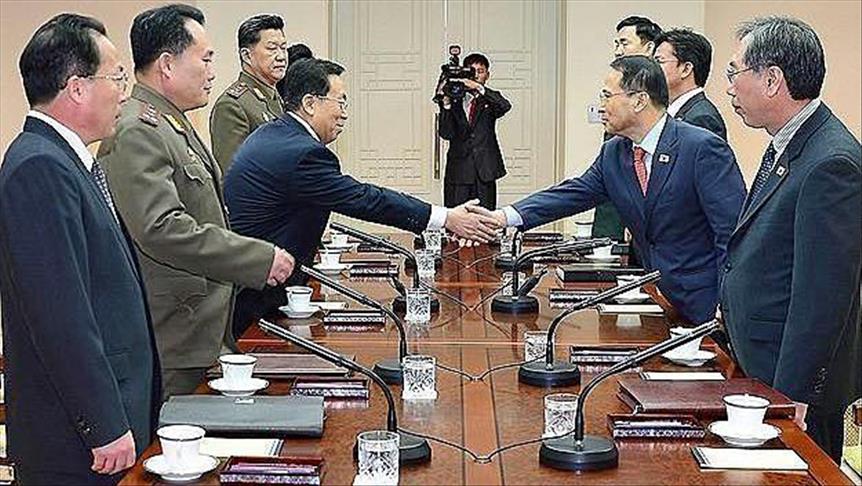
One of the sharpest thorns in relations between South Korea and Japan may have been removed Monday following talks between their respective foreign ministers -- the outcome of which saw Tokyo offer $8.3 million in compensation to victims of its past sexual slavery.
The 1 billion-yen agreement came after seemingly endless working-level talks over a dispute that appeared to offer little room for negotiation on either side.
South Korea had been demanding a clear apology and compensation on behalf of ageing former so-called comfort women, who were forced into sexual servitude during Japan’s 1910-45 rule over the Korean Peninsula.
On the other hand, Tokyo insisted that all colonial era matters were settled under their 1965 bilateral treaty -- and hopes of a new deal diminished under a conservative Shinzo Abe government.
A turning point arrived last month, when South Korean President Park Geun-hye agreed to hold an official summit with Abe -- Park had previously refused to do so amid the perception that the Japanese prime minister was moving even further away from a comfort women solution.
Earlier this month, another victim died at the age of 96, bringing the number of surviving South Korean former sex slaves to just 46 from an original tally estimated to have reached the hundreds of thousands.
"The comfort women issue is an issue whereby many women under the then military's involvement bore deep scars to their honor and dignity, and from this perspective, the Japanese government acutely feels responsible," Tokyo's Foreign Minister Fumio Kishida said at a Seoul press conference alongside his counterpart Yun Byung-se.
Kishida added that Abe expressed "an apology and repentance from the heart to all those who as comfort women experienced much pain and bore scars that are difficult to heal on their bodies and souls".
Previous Japanese administrations had spoken with regret, but the billion yen compensation package represents a key development -- it will be paid via an official South Korean fund, with Seoul expressing satisfaction with the forthcoming conclusion of their lengthy dispute.
Nevertheless, not all victims were so pleased, as 88-year-old Lee Yong-soo told reporters that she and her fellow former comfort women had not been properly considered.
She called for legally binding recognition of their plight from Japan, and insisted that she would "not be satisfied even if they put a comfort woman statue in the middle of Tokyo and said sorry".
Seoul said it would consider removing one such statue that was erected outside the Japanese Embassy in the South Korean capital in 2011.
In Washington, the White House lauded the long-sought agreement, calling it “an important gesture of healing and reconciliation”.
“The United States applauds the leaders of the ROK [Republic of Korea] and Japan, two of our most important allies, for having the courage and vision to forge a lasting settlement to this difficult issue,” National Security Council Advisor Susan Rice said in a statement.
Meanwhile, China -- whose relations with Tokyo have also been strained due to Japanese colonization -- has responded to Monday’s agreement by reiterating that the island nation must deal with historical issues.
Foreign Ministry spokesperson Lu Kang told reporters that the recruitment and treatment of "comfort women" was a grave crime against humanity, state news agency Xinhua reported.
"China has always advanced that Japan should face squarely and reflect upon its historical aggression, and deal with related issues in a responsible way," he stressed.
* Anadolu Agency correspondents Satuk Bugra Kutlugun and Michael Hernandez contributed to this story from Ankara and Washington, respectively