UNITED NATIONS
by Erol Avdovic
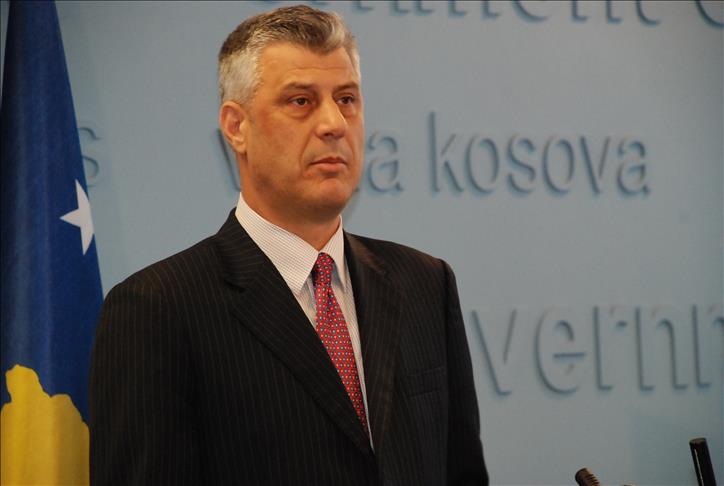
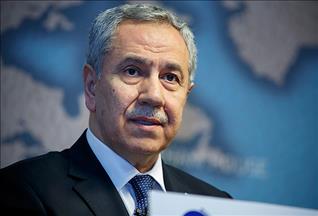
The Prime Minister of Kosovo Hashim Thaci says he is convinced that on December 1st, when in 24 municipalities where there will be run-off elections, it will be proven again that Kosovo is a democratic country where elections are held in a spirit of high political culture. That will be, as he said “a turning-point which will speed up the improving quality of inter-ethnic relations in Kosovo and Kosovo’s progress toward European integration.”
In an exclusive interview with the Anadolu Agency (AA), Mr. Thaci said the proposed association with Serb ethnic majority in northern Kosovo cannot replace municipal assemblies and the responsibilities of municipalities cannot be transferred to it.
He also went to elaborate his public dissent with Prime Minister of Serbia Mr. Ivica Dacic on their somewhat different visions of the proposed association in northern Kosovo.
“The Brussels agreement is very clear and does not allow interpretations based on individual or group desires. Therefore, as it has been foreseen by the agreement, the association of the Serb majority municipalities in Kosovo will be established based on Kosovo laws and the European Charter of Local Self Government. Its competences and bodies will drive from the Kosovo laws. The model of the existing Association of Kosovo Municipalities will be applied also to the new Association of the Serb majority municipalities in Kosovo,” Mr. Thaci said.
“This association will not serve as a substitute for the powers vested to the municipalities and cannot have any executive or legislative role,” he explained.
Dialogue with Belgrade goes on
Asked to comment on Dacic’s words that Kosovo Albanians are “specially sensitive” to this association in Kosovo -- not to look like “Republika Srpska” (RS - which is part of Bosnia and Herzegovina with the Serb majority in it), and that he (Mr. Dacic) does “not like to irritate them” - Thaci said, he would “not make any comment on the political statements of any of Serbia government officials on this matter.”
But, asked directly whether it would be acceptable that the Association of municipalities with Serbian ethnic majority in northern Kosovo could still have some similarities with Bosnian Serb entity “RS”, Thaci was quite clear:
“Under no condition this association can look or ever become something similar to ‘Republika Srpska’ in Bosnia and Herzegovina,” Mr. Thaci said.
Prime Minister also said he was not upset with Mr. Dacic’s insistence that the Brussels agreement and further dialogue to follow are "status neutral" – saying therefore -- Serbia will not recognize Kosovo:
“This is nothing new. In Serbia, most of politicians still hesitate to wake up from their dreams of last century. Statements of this kind are only for the public consumption in Serbia and they have no impact anywhere else. Everybody who has followed the process in Brussels and has read the Agreement, knows that Brussels Agreement on the Normalization of relations between Kosovo and Serbia reaffirms Kosovo's territorial sovereignty,” Thaci said, adding:
“Regarding the issue of recognition of Kosovo from Serbia, all I can say is that this will happen for sure in the future because there is no other alternative to it.
Better prospective and new recognitions
Thaci expressed optimism for his country's economic prospects. He said that the World Bank in its “Doing Business” report for 2014, has ranked Kosovo 86 out of 189 countries for ease of doing business. Prime Minister stressed that Kosovo has risen by 40 positions in the rankings and also has been declared one of the top 5 of 10 Reforming countries in the world making most progress in three or more indicators measured by the World Bank.
Asked what are the most difficult problems remained to be solved with Belgrade, and what are the expectations in Pristina regarding that dynamic, Mr. Thaci told AA, he was proud that Kosovo has contributed to peace and stability in the region and beyond.
“We have solved many problems so far. The implementation of the agreements reached in Brussels indeed has produced positive developments, as well as serious delays in the implementation. But, it is worth to say that our efforts as two sovereign countries and neighbors have led to a series of new agreements, such as the Agreement on telecommunications and energy. The next steps will be to address the remaining issues related to the fate of missing persons, Kosovo pension fund, participation of Kosovo in the international sport events etc. We will solve these issues using the same model, though the facilitation of EU High Representative Catherine Ashton and strong support of the United States.”
Russian factor
Mr. Thaci also said Russia will eventually change her position on his country, and Kosovo will become a member state of the United Nations.
“Kosovo has been recognized by majority of the states worldwide or over half of UN member states. Only during the UN General Assembly sessions in September this year, the Republic of Kosovo has been recognized by another four UN member states, El-Salvador, Grenada, Thailand and Libya. Thus increasing the total number of recognitions to 104 states. This process is irreversible and Kosovo will take its place among the free nations of the United Nations in the future. Time will come when Russia will adjust its position in relation to Kosovo in accordance with the realities in the ground. Kosovo will exist forever as a free independent and democratic state.”
englishnews@aa.com.tr