- The author is head of the African Studies Department at the Institute of Regional Studies, Ankara Social Sciences University in the Turkish capital.
ISTANBUL
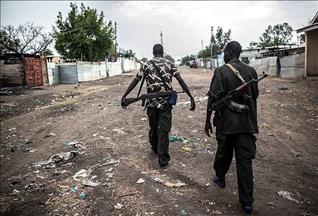
As the war launched by the United States and Israel against Iran continues to dominate global headlines, an ongoing conflict and humanitarian catastrophe in northeastern Africa is slipping under the radar. According to UN High Commissioner for Human Rights Volker Turk, more than 11,300 civilians were confirmed killed in Sudan last year alone. When the thousands more who remain missing or unidentified are factored in, the full scale of Sudan's humanitarian crisis becomes even more apparent. With neither basic needs -- food, water, shelter -- nor security and healthcare being met, nearly 14 million people have been forced from their homes. Some are struggling to survive in makeshift camps within the country's own borders, while many others have fled to neighboring Chad, South Sudan, Egypt, and Ethiopia.
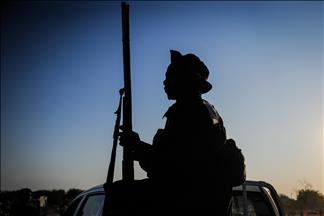
The driving force behind the escalating violence and deepening humanitarian collapse is a paramilitary group known as the Rapid Support Forces (RSF). The UN has confirmed that the RSF has committed atrocities in El-Fasher, the capital of North Darfur, that may constitute genocide and crimes against humanity — and warns that the violence risks spilling over into the Kordofan region. Yet despite these warnings, the UN has struggled to offer any meaningful response beyond calling for an expansion of the arms embargo, which currently applies only to Darfur, to cover all of Sudan. As Sudanese Minister of Justice Abdullah Muhammad Darf has noted, however, such a measure could ultimately work in the militias' favor rather than against them.
The current military-political landscape: A state divided in all but name
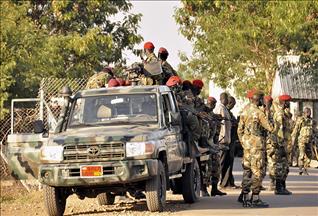
The Sudanese Armed Forces' recapture of the capital Khartoum last March was a watershed moment in the civil war. The "Government of Hope" under Kamil Idris subsequently established itself in Khartoum in early 2026 -- yet the country remains effectively split along an east-west fault line, and the consequences of that division continue to play out on the ground. The military now holds sway over 13 of Sudan's 18 states, while the RSF controls the administrative centers of the remaining five.
Port Sudan, serving as the government's temporary capital, sits in the far eastern Red Sea state. The states of Kassala and Gedaref, both bordering Ethiopia, are similarly under army control. The Nile corridor and the northern states form a relatively stable belt where the military maintains a strong presence and manages its key logistical operations. The army also holds much of the Blue Nile and Sennar regions, though intermittent clashes continue to flare up across both areas.
In the west, the RSF has erected a parallel so-called administration centered in Nyala, operating under the name of the Government of Peace and Unity (hukumat al-salam wal-wahda). It controls South, West, Central, East, and North Darfur, and retains influence over parts of North and West Kordofan as well. RSF leadership has been working to keep its supply lines intact by holding the border corridors with Chad and Libya.
At the sociological level, the struggle for power in Sudan can be understood as running along two distinct fault lines. The first, which has sharpened since 2023, is the contest between urban Arabs and Bedouin Arabs -- the Ja'a (Ja'aliyyin) and Juhayna being the respective archetypes. The second is the conflict between Bedouin Arabs and autochthonous Black African communities, such as the Rizeygat and the Masalit. Sudan's Sovereignty Council chief Abdel Fattah al-Burhan, along with much of the senior officer corps, hails from the urban Ja'aliyyin tribe, while RSF rebel leader Mohamed Hamdan Dagalo -- better known as Hemedti -- belongs to the Rizeygat branch of the semi-nomadic Juhayna. The Rizeygat, traditionally herders of camels and cattle, occupy a central role within the RSF. Their sub-clans -- the Abbala, Mahamid, and Mahariya — along with the Baggara sub-groups of Kordofan, namely the Beni Hussein, Hawazma, and Missiriya, are all active within the RSF's ranks. Kindred tribes from Chad and the Central African Republic, including the Awlad Rashid, Habbaniyya, and Salamat, are also fighting alongside the RSF. RSF militias have been deliberately targeting non-Arab Masalit and Zaghawa communities with systematic brutality, displacing millions and fundamentally reshaping the region's demographic makeup.
Regional ripple effects and international entanglements
The power vacuum in Sudan has created fertile ground for the expansion of trafficking networks -- in people, weapons, and narcotics -- both within the country and across the wider region. Smuggling operations along the Libyan and Chadian borders are exploiting migrants seeking passage to Europe. The unchecked proliferation of light weapons flowing into the region is feeding the cycle of violence. The protracted civil war has also turned Sudan into a hub for drug production and distribution. Following the fall of Bashar al-Assad's regime in Syria and the dismantling of its drug laboratories, narcotics networks moved swiftly to exploit the lawless environment in Sudan. In early 2026, around half a tonne of crystal methamphetamine was seized in Port Sudan. Shortly thereafter, a laboratory capable of producing 100,000 Captagon tablets per hour was discovered in the city of Al-Jayli.
The refugee flows and weapons transfers originating from Sudan have unsettled the ethno-political balance in neighboring countries, particularly Chad and South Sudan. Since 2023, more than 915,000 Sudanese refugees have crossed into Chad. In some border towns in eastern Chad, the influx has effectively doubled the local population. South Sudan has been similarly strained -- roughly 800,000 people fleeing Sudan's civil war have sought refuge there, compounding the country's existing economic and political fragilities. Clashes between government forces and armed opposition groups are intensifying across South Sudan's Jonglei, Unity, and Upper Nile regions; an attack in Ruweng as recently as March 2nd killed more than 160 people. A parallel crisis simmering alongside the civil war is the growing Sudan-Ethiopia tension. According to Sudan's Ministry of Foreign Affairs, Ethiopian drones violated Sudanese airspace this month and carried out strikes on Kurmuk in Blue Nile state.
Egypt, which hosts over 1.5 million Sudanese refugees, finds itself backing the Sudanese military while simultaneously maintaining close ties with the UAE -- the RSF's principal patron. Cairo's core dilemma is balancing its strategic interests in Sudan against its dependence on Emirati investment. Saudi Arabia and Turkey are broadly aligned with Egypt in supporting the Sudanese Armed Forces. Riyadh is working to preserve its standing as a mediator within the Jeddah Process, while Ankara has delivered tonnes of food, medicine, and shelter supplies to Port Sudan aboard what it has dubbed "goodwill vessels."
The United States and the European Union are pursuing a strategy of sanctions and diplomatic pressure. Washington has frozen the assets of both the RSF and certain military-affiliated entities in an attempt to force both parties to the negotiating table. The EU, largely in step with the US ideologically, has taken the position that any post-war government must be cleansed of both military influence and Islamist elements, and has on that basis been channeling funds to secular opposition platforms such as Taqaddum.
Russia, having initially hedged its bets early in the conflict, has since firmly aligned itself with the Sudanese Armed Forces. Plans to establish a Russian naval base in Port Sudan resurfaced in late 2025, and as part of that broader arrangement, Moscow's provision of advanced weaponry to the Sudanese military is widely seen as having played a decisive role in turning the tide against the RSF.
The People's Republic of China, Sudan's dominant trading partner under former President Omar al-Bashir, has struggled to maintain its foothold in the country since his ouster. The China National Petroleum Corporation has been pulling back from Sudanese oil fields, and the prospect of the civil war metastasizing into regional chaos poses a tangible threat to Beijing's Belt and Road Initiative. China has made quiet attempts at mediation, but none have borne fruit.
Possible scenarios
Forecasting where Sudan's civil war -- now entering its third year -- goes from here is deeply uncertain. Set against the current national, regional, and global backdrop, four scenarios are plausible.
In the first scenario, sustained international pressure brings both parties back to the table, and a new power-sharing arrangement is attempted, this time informed by the failures of previous agreements. Under present conditions, this seems the least likely outcome.
In the second scenario, the conflict grinds on at low intensity, with neither side capable of delivering a knockout blow. A war economy takes deeper root -- fed in part by the illicit trade of key commodities like gold and gum arabic -- while the humanitarian situation continues to deteriorate.
In the third scenario, the de facto partition hardens into something permanent. The Sudanese military consolidates the north and east; the RSF entrenches itself in the west and south. Banking on an anti-Islamist identity, the RSF declares unilateral independence in the territories it controls and assembles a thin diplomatic support network through Ethiopia and Kenya. Like the first, this scenario appears remote for now.
In the fourth scenario, the war between the US-Israeli axis and Iran drags on and its consequences for the UAE -- the RSF's key backer -- grow severe enough to curtail Emirati financial and logistical support for the militia. With Türkiye, Egypt, Saudi Arabia, and Russia stepping up their backing, the Sudanese Armed Forces consolidate their battlefield dominance, systematically neutralize the RSF, and eventually restore central control across the country.
However the war evolves, its course will be shaped primarily by regional actors -- though the positions taken by global powers could prove equally consequential.
*Opinions expressed in this article are the author's own and do not necessarily reflect Anadolu's editorial policy.