Syed Zafar Mahdi
06 February 2026•Update: 06 February 2026
TEHRAN, Iran
An Iranian lawmaker said Friday that the presence of the US Central Command (CENTCOM) chief during the Iran-US nuclear negotiations in Oman “violated” a parliamentary law designating American forces in the Middle East as “terrorists.”
In a social media post, Ebrahim Rezaei, a senior member of parliament and spokesperson for the assembly’s National Security and Foreign Policy Commission, said the move violates Article 1 of the law titled “Reciprocal Action Against the United States’ Designation of the Islamic Revolutionary Guard Corps as a Terrorist Organization.”
The law was passed by the Iranian parliament in May 2019 in response to the designation of the Islamic Revolutionary Guard Corps (IRGC) as a “foreign terrorist organization.”
Under the law, CENTCOM forces and other American military entities were designated as “terrorists” in a tit-for-tat measure.
“One does not negotiate with terrorists,” Rezaei wrote on the US social media company X.
Earlier on Friday, The Wall Street Journal reported that the US delegation included Admiral Brad Cooper, commander of US forces in the Middle East.
While Defense Department officials do not typically take part in high-level diplomatic talks, US President Donald Trump has previously sent senior military leaders to negotiations.
Some reports said the CENTCOM commander’s presence in the Omani capital, Muscat, might be a signal that the talks should not be limited to the nuclear issue, as Iran has insisted.
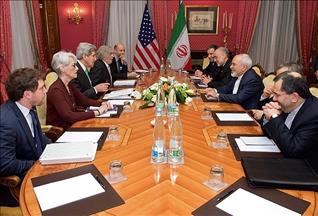
Earlier, Iranian state media reported the conclusion of the latest round of nuclear negotiations with the US in Muscat, with both delegations set to return to their respective capitals for further consultations.
In his remarks following the talks, Foreign Minister Abbas Araghchi called the negotiations “a good start and can have a good continuation,” but stressed that this depends on the other side and the decisions that will be made in Tehran.
The talks came following weeks of heightened tensions between the two countries.