by Fatih Erel
GENEVA
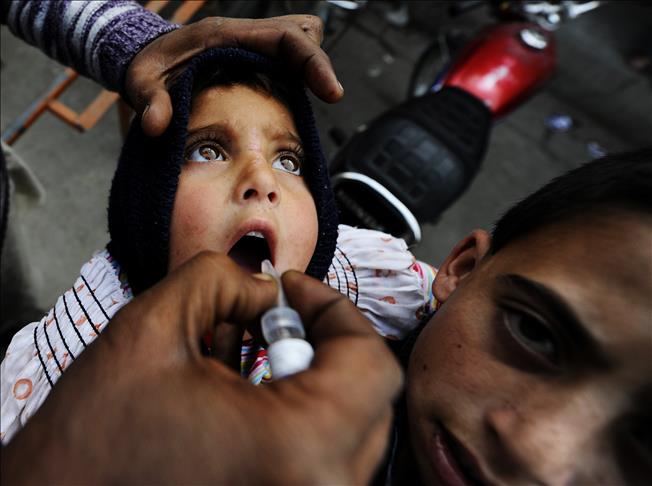
While many of Pakistan's neighbors have recently been able to declare themselves polio free, the country is struggling itself with eradicating the virus. The World Health Organization warned Monday that even areas of Pakistan that were free of the virus are now being re-infected.
"As long as polio remains anywhere in the world, polio-free countries everywhere will continue to be at risk of re-infection. This virus has shown again that it can find susceptible children anywhere," said Tarik Jasarevic, a World Health Organization spokesperson.
Jasarevic said the best way for countries to protect themselves and minimize the risk and consequences of being re-infected is to maintain very high levels of vaccination coverage, strong disease surveillance, and implement relevant recommendations for travellers.
Pakistan, Cameroon, and the Syrian Arab Republic pose the greatest risk of spreading poliovirus abroad in 2014.
"The strain circulating in the Middle East is from Pakistan," he said. "So that is the big danger: this virus must be eradicated from endemic reservoirs such as Pakistan as quickly as possible, otherwise the risk of having outbreaks such as the one in the Middle East will always remain."
Pakistan is one of only three countries in the world, alongside Nigeria and Afghanistan, where polio remains endemic and repeated attempts by the government to eradicate polio have been thwarted by militant attacks on anti-polio workers. After a 2011 CIA operation to find former Al-Qaeda leader Osama bin Laden used a polio vaccination campaign as cover, the Pakistani Taliban declared a de-facto ban against the initiatives which they have implemented by killing health workers. Polio vaccination campaigns are also restricted by social taboos because of claims the goal is to sterilize Muslim children.
The international health body also highlighted the spread of polio in Syria, where 39 cases have been confirmed in 2014, which is difficult to control because of the high population movements caused by the ongoing civil war.
"There is of course a complex political and security situation associated with the outbreak, which complicates running outbreak response, reaching all children during every campaign, clearly assessing impact, monitoring the situation," said Jasarevic. "The main aim is to concentrate on reaching more children during each immunization campaign."
He highlighted however that the World Health Organization had been preparing a plan for tackling polio before the current outbreak .
"It is the largest ever immunization response across the Middle East, and includes vaccination for refugees whether in camps or living among the host population, as well as for the host communities themselves," said Jasarevic. "The risk remains that areas in Syria and other countries will remain at extremely high risk of becoming again re-infected, as long as polio transmission is ongoing anywhere."
englishnews@aa.com.tr