Mucahithan Avcioglu
24 April 2026•Update: 24 April 2026
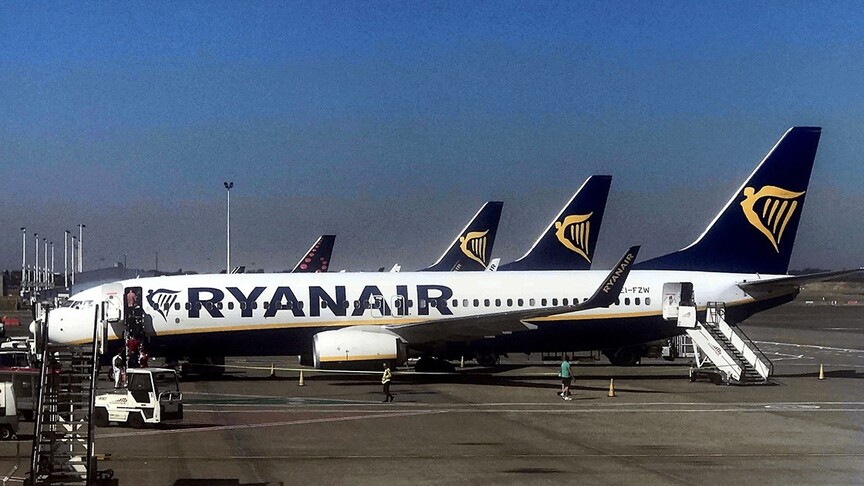
Ryanair, Europe’s largest low-cost carrier, said Friday it will close its Berlin base from Oct. 24, 2026, citing high operating costs and additional fee increases imposed by Berlin Brandenburg Airport.
In a statement, the airline said it will also further reduce its flight schedule in Germany due to persistently high operating costs.
Under the decision, Ryanair will close its seven-aircraft Berlin base and relocate the aircraft to lower-cost EU countries. The carrier also said it will cut its Berlin winter schedule by 50%.
The company said charges at Berlin Brandenburg Airport have risen by 50% compared with pre-COVID-19 levels, while passenger traffic has fallen from 36 million to 26 million.
Despite the decline in passenger numbers, Ryanair said the airport operator’s decision to introduce an additional 10% increase in charges for the 2027–2029 period is “excessive.”
The airline said pilots and cabin crew affected by the closure will be offered positions at other Ryanair bases across Europe, while its growth strategy outside Germany will continue.
Ryanair DAC CEO Eddie Wilson said the company had “no alternative” but to close its Berlin base.
Due to Berlin Airport’s excessive charges and the government’s tax regime, Wilson said Ryanair’s Berlin traffic will fall from 4.5 million to 2.2 million passengers, representing a loss of around 2 million seats annually.
He also criticized Germany’s aviation sector, saying it has lost competitiveness.
“German aviation is broken. The government admits that it is uncompetitive, yet there is no strategy to cut aviation taxes or high airport fees – despite Ryanair warning that Germany would lose traffic, connectivity, jobs and trade,” he said.
Ryanair’s move comes as other low-cost carriers, including EasyJet and Wizz Air, have also scaled back operations in Germany due to high costs.
Germany’s coalition government pledged in its coalition agreement to reduce aviation costs. However, industry representatives say the country’s aviation sector has lagged behind many others in its post-pandemic recovery due to persistently high costs.
Separately, a new regulation set to take effect on July 1 will lower ticket taxes to levels seen before the May 2024 increase, in a move aimed at easing the tax burden and strengthening the sector’s competitiveness.
Industry representatives also warn that the war in Iran, rising jet fuel prices, and supply constraints are creating additional challenges for airlines.