BANGKOK, Thailand
Thailand's finance ministry has revealed for the first time the scale of financial losses suffered by the country in disastrous rice-subsidies schemes initiated by the government overthrown in a May 22 coup.
The Bangkok Post reported Thursday that since July 2011 -- the date the government headed by Prime Minister Yingluck Shinawatra was inaugurated -- losses have climbed to $15.8 billion, according to Rungson Sriworasat, the permanent secretary of the ministry.
The four schemes -- under which rice was bought from farmers at twice the market level -- are not the first loss-making rice support programs in the country.
Since 2004, the combined loss of 15 rice-subsidies programs, some initiated under the government of Thaksin Shinawatra -- Yingluck's brother -- and some under the Democrat Party government of Abhisit Vejjajiva, amount to a staggering $20.8 billion. But programs launched under Yingluck's rule represent 79 percent of this figure, according to the permanent secretary.
He underlined that the amount was not beyond expectations, but warned that the government "may have to find a method to pay the debt without causing problems to the country’s development and public debt position.
"It may take too long to rely solely on budget allocations, so bonds may need to be issued,” added Sriworasat.
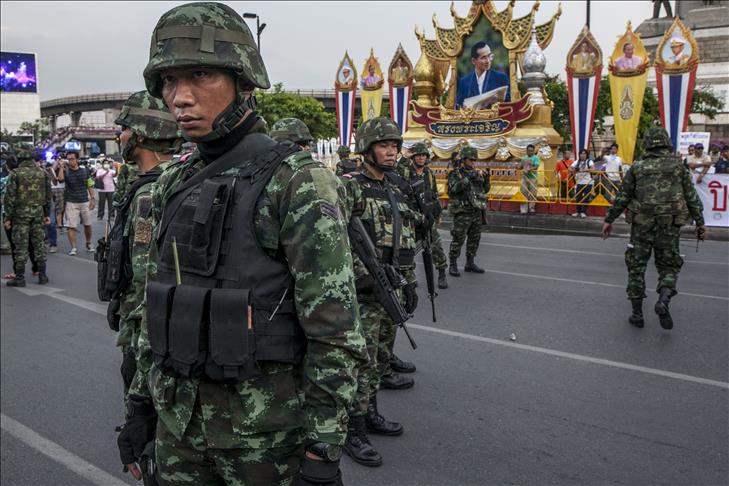
Financial losses and the suspicion of corruption in the rice-subsidies schemes were a major factor in the massive anti-government demonstrations which paralyzed parts of capital city Bangkok from November last year to the May 22 putsch.
Although Yingluck was charged in August by the country's anti-corruption commission with negligence of duty in relation to the rice program, the attorney general's office sent the file back to the commission for “lack of evidence.”
It has since set up a joint panel with the commission to deepen the probe.
Outside of this judicial process, the anti-corruption commission has asked the national assembly appointed by the junta to impeach Yingluck on the same charge. The former prime minister, who had to face the assembly on Wednesday for a vote on the charge, was given a two-weeks respite in order to study the file.
If impeached, she would be banned from politics for five years.
Rungson Sriworasat, the permanent secretary of the finance ministry, said that the four stages of the rice scheme under Yingluck’s government bought in 85 million tons of rice. Of this, 19.2 million tons are still in storage with a deterioration rate of 10 to 40 percent.
At the beginning of November, the Thailand Development Research Institute, a leading think tank, suggested that the military-appointed government donate up to half of the stored rice to the United Nations World Food program.
www.aa.com.tr/en