By Andrew Jay Rosenbaum
ANKARA
A debt restructuring deal struck late on Thursday between Ukraine and its creditors is key to the country's economic development as fighting in the country’s east continues to drain resources.
The agreement will allow the Ukrainian government to write off 20 percent of its $18 billion debt to private lenders, of which the largest is Franklin Templeton with $7 billion.
Ukraine will also get $3.6 billion in debt relief under the deal. “That's an enormous amount for us,” Finance Minister Natalie Jaresko told CNBC on Thursday.
U.S. Treasury Secretary Jacob Lew said the agreement would strengthen Ukrainian budget and help the government put an “ambitious” reform plan in place, as well as reinforce economic recovery and grow the private sector.
“Things are looking up for Ukraine,” Anders Aslund, a senior fellow of the Atlantic Council, said in a note on Friday.
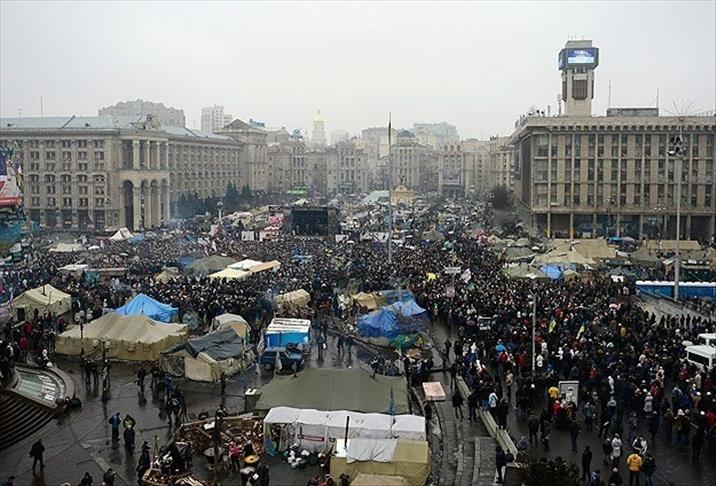
He noted that the deal should help Ukraine to develop its battered economy - severely hit by the conflict with pro-Russian separatist rebels, which has seen 6,800 killed and which costs the government about $5 million a day.
The deal is critical to Ukraine receiving aid from the International Monetary Fund (IMF). In February, the fund concluded a four-year, $40 billion stabilization loan with Ukraine.
The IMF has paid out $5 billion of a total commitment of $17.5 billion from its own funds. It has asked the World Bank, other international financial institutions and donors to help with another $17 billion. Debt restructuring is to make up part of the remaining $15 billion.
IMF Managing Director Christine Lagarde said the deal would “help restore debt sustainability and - together with the authorities' policy reform efforts - will substantively meet the objectives set under the IMF-supported program.”
Jaresko pledged to continue the government’s fiscal reforms, privatize state-owned enterprises, recapitalize the banking sector and tackle corruption, which has been a major impediment on the economy.
Ukraine’s economy is in a parlous state. GDP contracted by nearly seven percent last year and shrank 14 percent in the second quarter of this year, according to IMF statistics.
Factory output is down by nearly a fifth year-on-year and consumer spending has dropped by 25 percent so far this year. Inflation is close to 55 percent and the hryvnia has been the worst-performing currency for the past two years.
With the debt deal in place, economists say that Ukraine will see a slow recovery. The IMF forecasts 2 percent growth in 2016 - but only if the conflict remains subdued and global volatility does not weigh on growth.
“The outlook for Ukraine is uncertain,” the IMF said in its report in May.
Uncertainty is made worse by a dispute over $3 billion in bonds held by the Russian government. Moscow has repeatedly refused to consider restructuring this debt, which was acquired before the current, pro-EU government in Ukraine came to power.
Ukraine paid interest on the bond in June but is demanding a reduction in payments for the future. It's a burden that the country can ill afford.