LONDON
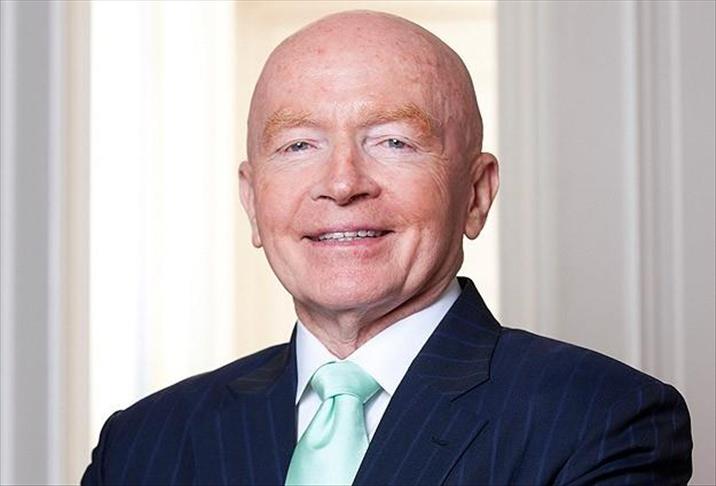
Turkey’s economy is not “fragile”, Mark Mobius, executive chairman of the Templeton Emerging Markets Group said.
Mobius, in an interview with Anadolu Agency, said there were great opportunities in Turkey for investors.
“I don't agree with the ‘fragile five’ thesis since it simplifies the very complex economic structure of those five countries and in Turkey's case, it denigrates the very real strengths of the economy,” he said.
The “fragile five” concept was created by analysts at Morgan Stanley in 2013. It groups Turkey, Mexico, Brazil, Indonesia and South Africa as emerging markets under particular economic pressure.
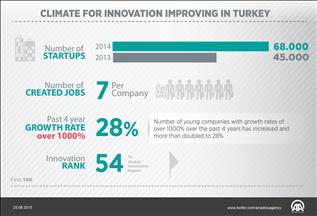
Mark Mobius said Turkey’s economy is “very vibrant, with a well-trained and educated workforce” as well as “excellent managers, capable of entering global markets effectively”.
“Therefore we cannot say that it is ‘fragile.’”
Mobius also explained how the U.S. Federal Reserve's projected interest rate increase will affect emerging markets.
"The perception of risk is rather low since the idea of an interest rate hike has already been discounted by the market. The expectation is that, if a rate hike comes, it will be small. The real risk comes if the interest rate hike is large, and larger than expected. In that case, all markets, including emerging markets, will be impacted. We must remember that the impact of interest rate rises is just one of the variables that impact markets, and it is important to note that, in the past, in many cases, markets actually rose in the face of higher interest rates because of other extenuating circumstances," Mobius commented.
“The dollar pressure will now be reduced since the amount of depreciation of several emerging market currencies has gone too far so that many of the currencies are severely undervalued on the price parity basis,” Mobius explained. "We must remember also that the U.S. government does not want a dollar that is too strong, since that will harm the U.S. economy. The challenge facing the U.S. Federal's Reserve is how to raise interest rates in the face of falling interest rates in Europe, Japan and China.”
Oil prices
Mobius is not dismayed by the sharp fall in oil prices, a movement that directly affects emerging market exporters like Brazil.
"Oil prices are primarily driven by sentiment. If you look at the actual supply and demand trends over the last 20 years, in each year, the actual supply-demand varies no more than 5 percent either way. However the actual market price of oil has had a tremendous range and volatility. We can, therefore, expect oil prices to reach a medium trend-line which will probably be higher than where it is now, but it won't go dramatically higher. It's important to note that given the high growth particularly in the two most populous nations in the world, India and China, the demand for oil and oil-products will continue to rise despite the introduction of alternative energy sources which are expected to grow, but not replace oil in a short time period. This is also the case of coal where coal-fired plants continue to be built because in many parts the world it is the most economic form of electric power generation."
Mobius also spoke about the volatile price of gold.
"The price of gold is like oil prices. The supply and demand is fairly steady over the years, but the prices vary greatly because of sentiment at any particular time. Now that the dollar is strong, there is demand to hold dollars rather than gold. But once there is fear of dollar depreciation because of high U.S. government debt and the political factors, we will see gold move up again. The best time to invest in gold is when no one else wants it and it is very unpopular," he said.
Grexit
Mobius said that a 'Grexit' (Greece’s exit from the eurozone) would create a worse crisis than the country’s current debt problem.
He explained: “I believe that the debt situation in Greece is not as important as the necessity for Greece to remain in the European Union and to continue using the euro. The euro system provides tremendous economic benefits for people in Europe, and the euro has become a reserve currency of importance. Any crack in the structure caused by the departure Greece would be tragic.”
Russia sanctions
Sanctions imposed by the U.S. and Europe on Russia make it impossible for investors to increase their holdings in the country “to any great extent”, Mobius continued.
“The way out for Russia is of course to expand its scope of collaboration and trade with India, China, Brazil and other major countries around the world. It's also important for them to establish an internal legal system where investors feel safe and have confidence that any assets they bring into the country or generate within the country will be safe and secure. This goes not only for foreign investors but for domestic investors as well," he said.