Riyaz ul Khaliq
05 March 2026•Update: 06 March 2026
ISTANBUL
Australian and Canadian prime ministers on Thursday called for de-escalation in the Middle East amid the ongoing US-Israel offensive on Iran, along with Tehran's retaliatory attacks.
“The world wants to see a de-escalation,” Australian Prime Minister Anthony Albanese told reporters alongside his Canadian counterpart Mark Carney in Canberra.
Albanese was responding to a question that the conflict in the Middle East “appears to be widening,” according to an official transcript of his comments.
“There needs to be a de-escalation of hostilities. Right now, we have a spreading of hostilities … there needs to be the ending of targeting civilians, civilian infrastructure. Those are necessary conditions before ceasefire can exist,” Carney said.
Carney is on an official trip to Australia as part of his three-nation Asia tour.
Both have opposed Iran getting nuclear weapons.
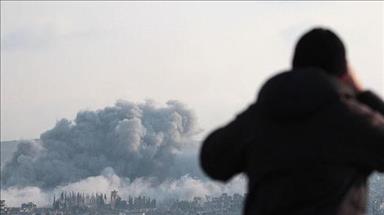
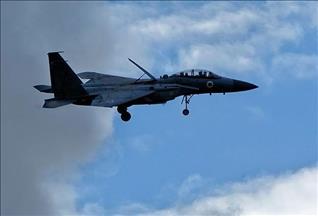
Tensions have surged in the Middle East after the US and Israel launched airstrikes on Iran beginning Feb. 28, killing over 900 people, including Iran’s Supreme Leader Ali Khamenei and more than 165 elementary schoolgirls, according to Iranian authorities.
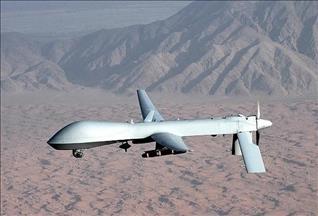
Iran has retaliated with drone and missile attacks targeting US-linked sites in Gulf countries, causing multiple fatalities. At least six US service members have been killed and several others injured.
When asked whether the Five Eyes alliance was still a “viable operating model," Carney said: “There are many challenges, but there are many things that continue to function very well and the Five Eyes would be top of that list.”
The Five Eyes is an intelligence-sharing alliance comprising the US, UK, Australia, Canada, and New Zealand.
Address to parliament
Carney also addressed the Australian parliament.
He told Australian lawmakers that the two nations have a “rare” ability to help convene a coalition of middle powers, emphasizing greater strategic autonomy.
“In the post-rupture world, the nations that are trusted and can work together will be quicker to the punch, more effective in their responses, and more proactive in shaping outcomes," he told the Australian House of Representatives.
“The world will always be driven by great powers. But it can also be shaped by middle powers that trust each other enough and act with speed and purpose," he said, according to CTV News.
Australia and Canada also elevated their partnership in critical minerals, defense, and artificial intelligence sectors.
According to a joint statement, the two sides reaffirmed their “close strategic alignment” and steadfast commitment to a world “governed by rights and rules, not fear or force.”
They acknowledged the challenges facing Australia and Canada in a “deteriorating geostrategic environment” and noted “increasing risks for regional and global stability.”
The statement said the two sides committed to pursuing common positions on key critical minerals issues, working together to shape emerging markets in ways that “reflect our shared commitment to fair and open trade, and high environmental and labor standards.”
They also agreed to enhance defense and security cooperation, including through the establishment of a biennial defense ministers’ meeting.