- Analysts say Japan is balancing support for the US with avoiding deeper involvement, constrained by law and public opinion
- ‘Japan is seeking to deepen its alliance with the US even as the Trump administration appears indifferent, or even hostile, to the normative order that underpins Japan’s safety and prosperity,’ says International Crisis Group’s Mathew Wheeler
- ‘This is less a routine summit than a stress test of the US-Japan alliance,’ says foreign policy expert Nancy Snow
- ‘Japan is seeking to deepen its alliance with the US even as the Trump administration appears indifferent, or even hostile, to the normative order that underpins Japan’s safety and prosperity,’ says International Crisis Group’s Mathew Wheeler
ISTANBUL
When Japan’s Prime Minister Sanae Takaichi meets US President Donald Trump at the White House, the backdrop could hardly be more different from their last encounter.
Just months ago, the two leaders appeared together aboard the USS George Washington, exchanging warm words as Trump introduced Japan’s first female prime minister and praised her as a “strong, powerful, and wise” leader ahead of the February elections she went on to win decisively.
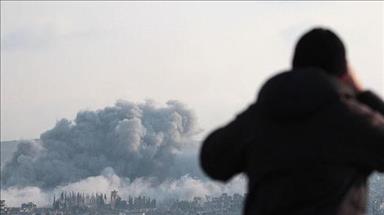
Now, their meeting comes amid a widening war involving Iran, with rising tensions in the Middle East threatening global energy supplies and reshaping the priorities of one of Washington’s closest allies.
For Tokyo, the timing could hardly be more difficult.
Japan depends on the Middle East for more than 90% of its energy imports, much of which passes through the Strait of Hormuz – a critical shipping route now under strain as Iran asserts control in response to US-Israeli strikes.
The government has already begun releasing 15 days’ worth of oil from its strategic reserves to cushion the impact on an already fragile economy.
Takaichi acknowledged the challenges ahead, telling lawmakers this week that she expects “an extremely difficult” visit to Washington.
A summit reshaped by war
Before the conflict, analysts expected the meeting to focus on familiar issues – security cooperation, trade, and US commitment to Japan’s defense.
“Prior to the war with Iran, it seemed likely that Takaichi would use the summit to seek reassurances from Trump about the US commitment to Japan,” said Mathew Wheeler, a Far East analyst at the International Crisis Group.
That reassurance, he added, had already been in question following tensions with China, particularly after Takaichi warned last year that a Chinese attack on Taiwan could constitute a “survival-threatening situation” for Japan.
Beijing reacted strongly, and Tokyo had been seeking clearer public backing from Washington.
But the outbreak of war in the Middle East has shifted the focus.
“The dynamic has shifted as a result of the (Iran) war, with Takaichi now under greater pressure to demonstrate Japan’s commitment to the alliance,” Wheeler said.
Nancy Snow, a foreign policy scholar and senior adviser at communications consultancy KREAB Tokyo, said the summit may appear routine on paper, but the reality is far more complex.
“In truth, this summit is happening under extraordinary strain,” she said.
“Japan is looking for reassurance that the US security umbrella remains credible, especially as Washington is now deeply engaged in the Middle East.”
She said the biggest challenge lies in differing expectations between the two countries.
“Japan is no longer asking for protection – it’s asking for predictability. The US is approaching alliances in more transactional terms, in other words, what are allies contributing?” she said.
Trump, she added, is likely to push Japan to increase its military and financial contributions.
“This is less a routine summit than a stress test of the US-Japan alliance,” Snow said.
Takaichi, she said, may seek clarity on a fundamental question: “Is the US fully committed to deterrence in Asia, or is it open to accommodation with China?”
Pressure over the Strait of Hormuz
The war’s immediate impact on energy supplies has placed the Strait of Hormuz at the center of discussions.
According to Snow, it is “the most immediate and sensitive issue” facing the two leaders.
Japan’s heavy reliance on Middle Eastern energy leaves it particularly exposed to any disruption.
“Any disruption hits Japan directly and quickly. At the same time, Japan faces real constraints. Its constitution, legal framework, and public opinion all limit its ability to participate in military operations abroad,” she explained.
“And importantly,” Snow noted, “Japan has maintained relatively stable relations with Iran.”
That could make any US request for military support particularly delicate.
“If the US presses Japan to deploy naval assets, Prime Minister Takaichi is unlikely to say ‘no’ outright, but she will be very careful,” she said.
Instead, Takaichi is expected to emphasize non-combat roles and diplomatic efforts.
“Japan will practice a form of principled restraint – supporting stability without being drawn into escalation,” Snow said.
Wheeler reiterated that there is little public support in Japan for involvement in the US-Israeli war, and constitutional constraints provide strong grounds for limiting military engagement.
He recalled that while Japan deployed maritime forces to the Gulf of Oman in 2019, it did so independently and not as part of a US-led coalition.
A delicate balancing act
Japan’s position is further complicated by its long-standing opposition to what it describes as “unilateral use of force to change the status quo.”
While such statements are often directed at China, the current conflict presents a more difficult scenario.
Wheeler said US and Japanese officials had previously discussed how to respond to a crisis in the Strait of Hormuz when updating alliance guidelines in 2015.
“But that scenario envisioned Iran, rather than the US, using force preemptively,” he said.
Now, with the US and Israel having carried out strikes on Iran first, Tokyo faces a more complex diplomatic balancing act.
“The broader problem for Tokyo is that it regularly voices its opposition to ‘the unilateral use of force to change the status quo’ without a UN mandate because it weakens the rules-based international order grounded in international law that is so central to Japan’s vision of a ‘Free and Open Indo-Pacific,’” Wheeler said.
“So, Japan is seeking to deepen its alliance with the US even as the Trump administration appears indifferent, or even hostile, to the normative order that underpins Japan’s safety and prosperity,” he added.
A changing alliance
For some analysts, the meeting signals a deeper shift in the US-Japan relationship.
Snow said she expects “a quiet shift in the alliance.”
“For decades, Japan has relied on the US as a stable security guarantor. Today, that guarantee feels less certain – not absent but less predictable,” she said.
“This meeting is not just about immediate issues like Iran or China. It’s about whether the alliance can adapt to a world where US leadership is more volatile and global crises are more interconnected.”
Japan has already increased defense spending and invested heavily in the US economy, she noted.
But the core question remains.
“So, Japan’s core question is not just ‘what more can we do for America?’ – it’s ‘what can we rely on from America?’”
“Takaichi is looking for predictability: on security guarantees, on trade policy, and on whether Washington will consult allies before taking actions, like strikes on Iran, that have major global consequences,” she said.
“For Japan,” Snow added, “the question is whether the US can deter China while being pulled into conflicts elsewhere.”
As Takaichi arrives in Washington, that question – more than any single policy issue – is likely to define the tone of the talks.