ISLAMABAD
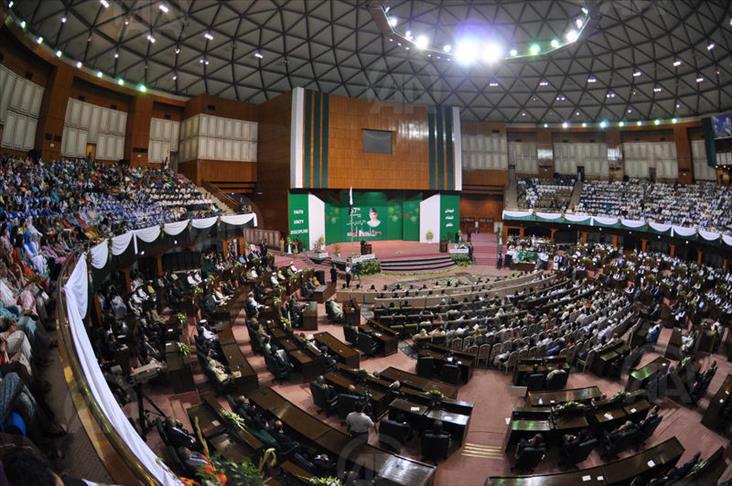
The Pakistani government has called an all-party conference on September 9 to seek national consensus on whether or not to hold peace talks with local Taliban militants in an effort to bring an end to homegrown militancy that has crippled the state's socio-economic structure for years.
"This is a very sensitive event. It is going to decide the future course of action that could be peace talks or a full-force military action against the Taliban," a senior government official told Anadolu Agency on condition of anonymity.
The conference will be presided over by Prime Minister Nawaz Sharif and attended by all major treasury and opposition parties, including the two mainstream religious parties – Jamat-e-Islami and Jamiat Ulema Islam – which have already offered to mediate between the government and the Taliban.
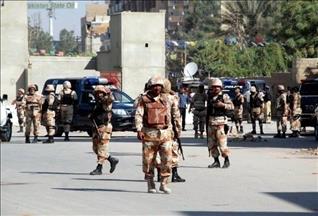
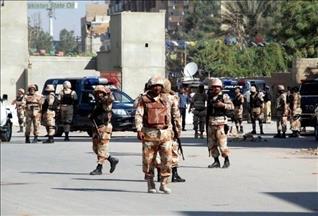
Army chief Gen. Ashfaq Pervez Kyani and intelligence chief Lt. Gen. Zaheer-ul-Islam will brief participants about ongoing operations against the Taliban, along with the prospects for proposed talks with the militant group.
The conference will be held in-camera; the media will not be allowed to cover the proceedings.
"The presence of media may compel many [participants] to reserve their opinions. That's why, on their request, the government has decided to go for an in-camera session," the government official explained.
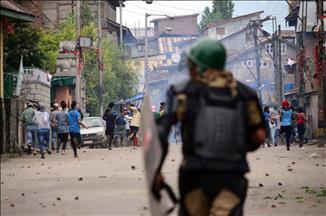
In his first address to the nation as prime minister, Sharif had offered the Taliban an olive branch, asking them to come to the negotiating table in an effort to end the violence that had claimed over 40,000 lives – including 4000 security personnel – since 2004.
The dead also include over 3,000 tribesmen, many of them women and children, killed in US drone strikes during this period.
According to government statistics, the exchequer has incurred a loss of $70 billion since the country joined the US-led war on terror in 2002.
The Taliban had earlier rejected Sharif's offer, which they had said "lacked substance."
However, they have since softened their stance, announcing they were ready for talks if the government was sincere.
- Difficult task
The conference had initially been scheduled for last month.
But cricketer-turned-politician Imran Khan, whose Pakistan Tehrik-e-Insaf (PTI) rules the northwestern Khyber Pakhtunkhawa (KP) province – the Taliban heartland – had refused to attend the conference until he was given an exclusive meeting with the prime minister and army chief.
Khan, whose party won a landslide victory in May general elections in KP, wanted to know if there had been any verbal or secret agreements with the US regarding drone strikes.
"The government has accepted our offer," PTI spokesman Shafqat Mahmood told AA.
He confirmed that Khan was going to hold an exclusive hour-long meeting with Sharif and Kyani.
Security analysts see a difficult task ahead for the government.
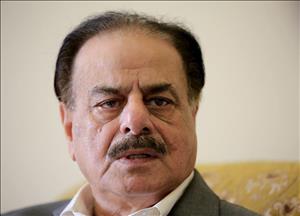
"Even if there is a consensus for peace talks, it is very difficult to materialize that," Hamid Mir, a veteran Islamabad-based journalist and analyst, told AA.
"I think the conference will issue an ambiguous declaration in line with the past, approving and supporting talks but without any line of action," he predicted.
Mir, who was the last journalist to interview slain Al-Qaeda leader Osama Bin laden in Afghanistan in 2002, believes the army chief's briefing during the conference will be a decisive factor.
"It's a very complicated situation. The army does not seem to be in the mood for talks as it has gained a lot of ground against the Taliban in the recent past," he noted.
"My sources tell me that the army and ISI [intelligence agency] chiefs will not support the idea of peace talks," he said.
"But the opinion of political parties might be in favor of talks."