Nancy Caouette
07 November 2015•Update: 08 November 2015
By Nancy Caouette
MEXICO CITY
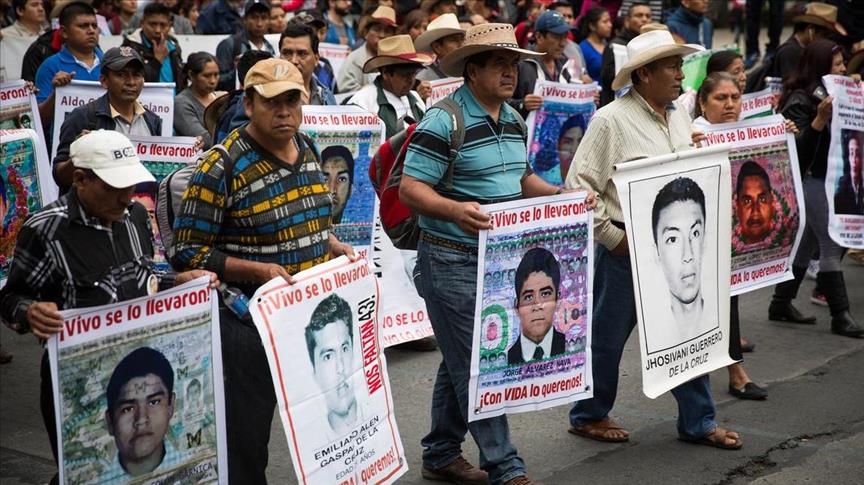
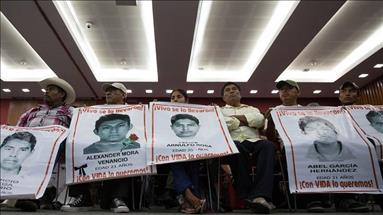
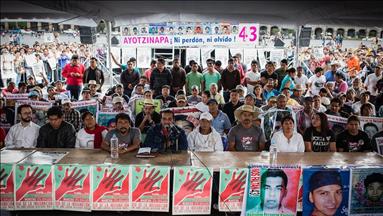
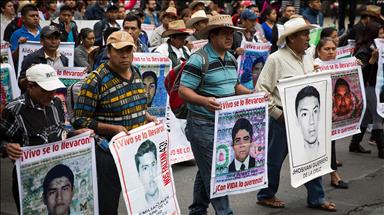
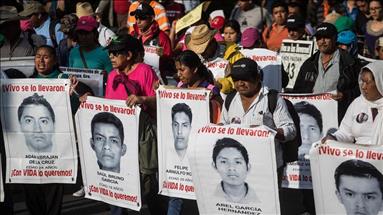
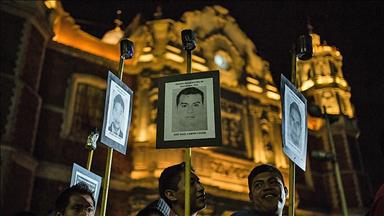
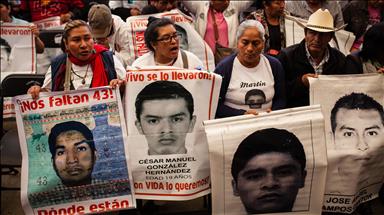
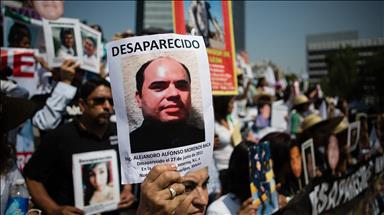
A group of international experts on Friday reiterated its demand that Mexican authorities allow it access to key individuals in the case of 43 male students who disappeared last year.
Experts from the Inter-American Commission on Human Rights (IACHR) believe federal police and soldiers knew the students were being attacked by local police in Iguala but failed to intervene.
Those claims are supported by witness reports documenting the sighting of soldiers at various times throughout the night of the disappearances.
“It is impossible that [authorities are] depriving us of an information source. We consider that it is necessary to speak with the soldiers because we must determine what happened with the young men,” said Chilean lawyer and IACHR expert Francisco Cox, during a press conference.
Mexico’s current Attorney General has so far interviewed at least 12 soldiers but said the experts could submit a list of questions for the troops.
But IACHR experts say they have never been informed by the prosecutor that any of the 26 soldiers they want to question could be interviewed.
“The group has never received information about these judicial processes,” said Angela Buitrago, an IACHR member.
The country’s previous Attorney General presented a controversial version of the facts in the case in January in which he said the students were killed and then burned in a giant fire at a garbage dump in the town of Cocula, located near Iguala.
Earlier this week, Mexican and Argentine experts exhumed the body of a different male student found the morning after the 43 students went missing and, whose face was skinned off.
Julio Cesar Mondragon is one of the six victims fatally killed by Iguala police in Sept. 2014.
The official version concluded that Mondragon’s face was eaten by an animal, a claim his relatives called a “mockery”.
New forensic tests will be conducted on Mondragon’s remains to determine if he was tortured.
An initial autopsy was crippled by inconsistencies, according to the IACHR.
President Enrique Pena Nieto, whose credibility has suffered because of the case, promised last September that the government is still investigating the disappearances.
The group of international experts was formed in November 2014 with the purpose of providing technical assistance on the case by way of an agreement between the Mexican government, IACHR and victims’ relatives.
An initial mandate of six months has since been twice extended. Under pressure, Mexico’s government in October issued another extension to run until April 30.