Mohamud Ismail Kulane
04 March 2026•Update: 04 March 2026
MOGADISHU, Somalia
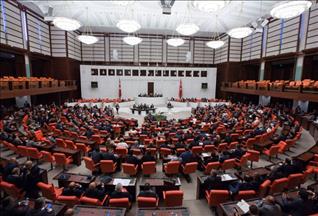
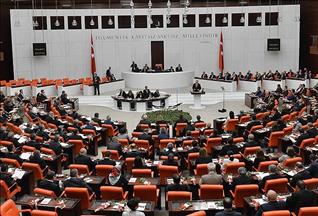
Somalia’s parliament approved a long-awaited new constitution Wednesday, ending years of constitutional review and debate.
During a session broadcast live by Somali National Television, 222 lawmakers -- 185 from the House of the People and 37 senators -- voted in favor of adopting the new constitution.
Under the new constitution, Somalia’s president will be elected by parliament, lawmakers will be chosen by the public, and the prime minister will be appointed by the president but can be dismissed by parliament.
An individual may serve as Somalia’s president for a maximum of two terms. To do so, they must be a Somali citizen by birth, and cannot run if their mother is a foreign national.
The president, prime minister, speaker of parliament, and chief justice are barred from holding dual citizenship and must renounce any foreign nationality if elected or appointed. They are also prohibited from having a foreign-national spouse.
The new constitution centralizes foreign relations, giving the federal government exclusive authority to conclude bilateral agreements and bars individual states from negotiating with other countries on their own.
It sets the age of religious maturity at 15, legal responsibility at 18, and extends the government’s term of office from four to five years.
The constitution is expected to take legal effect once signed by the president. It replaces Somalia’s provisional 2012 constitution, which established a federal governance model during the country’s post-civil war reconstruction but left several key articles subject to later review and finalization.
Throughout the constitutional review process disagreements between the federal government and state administrations have arisen, particularly over the system of government, electoral model, power distribution, and the status of the capital, Mogadishu.
Somalia has long used an indirect system to elect its president and parliament, and the new constitution aims to introduce clearer, more binding rules for elections and senior public offices.
*Writing by Mevlut Ozkan in Istanbul