WASHINGTON
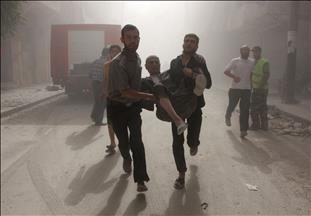
A State Department report released Friday catalogued a 35 percent jump in terror attacks in 2014, noting that they have become strikingly more fatal.
Daesh’s rise in Iraq and Syria and increased attacks by Nigeria’s Boko Haram militant group significantly contributed to the spike, it said.
Despite gains made against al-Qaeda, poor or failed governance in Iraq, Libya, Nigeria, Syria and Yemen has “continued to provide an enabling environment for the emergence of extremist radicalism and violence”, according to the report.
More than 60 percent of all attacks took place in five countries: Iraq, Pakistan, Afghanistan, India and Nigeria, and nearly 80 percent of all fatalities took place in five countries: Iraq, Nigeria, Afghanistan, Pakistan and Syria.
Fatalities from all attacks jumped 81 percent compared to 2013, the report said. That is due, in part, to the increased lethality of attacks. More than 100 people were killed in 20 attacks last year, compared to only two such attacks in 2013.
Nine of the deadly attacks took place in Nigeria, with another two striking neighboring Cameroon.
Last year also saw a dramatic increase in the number of terrorism-related abductions with more than 9,400 people kidnapped or taken hostage - triple the amount in 2013, the report said. The abductions took place primarily in Iraq, Nigeria and Syria.
In Syria, the total number of foreign fighters that flowed into the country last year – 16,000 from more than 90 countries – was more than an annual total for Afghanistan and Pakistan, Iraq, Yemen, or Somalia at any point in the past 20 years, the report said.
“By virtue of its location, the international transport hubs on its territory, and its long border with Syria and Iraq, Turkey remained the main transit route for foreign terrorist fighters,” the report said, but noted that Turkey has ramped up its efforts to stem the flow in the past year.
“In 2014, Turkey increased cooperation with source countries to develop an extensive banned-from-entry list of known or suspected terrorists and introduced tougher traveler screening procedures, making it more difficult for foreign terrorist fighters to cross its borders,” it said.
The State Department’s counterterror coordinator said that the bulk of foreign fighters who have traveled to Syria have joined Daesh.
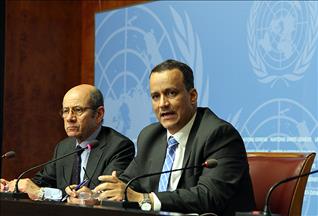
“Many of the foreign terrorist fighters joined ISIL [Daesh], which has seized contiguous territory in western Iraq and eastern Syria,” Tina Kaidanow told reporters at a press briefing marking the report’s release.
Kaidanow strongly defended the Obama administration’s counterterror efforts, saying that the figures “do not tell the whole story”.
“It’s one way, but not the sole way of laying out the effectiveness of our efforts,” said Kaidanow. “We have made progress. I don’t want to portray to you that there’s not plenty left to be done. There certainly is,” she added.