WASHINGTON
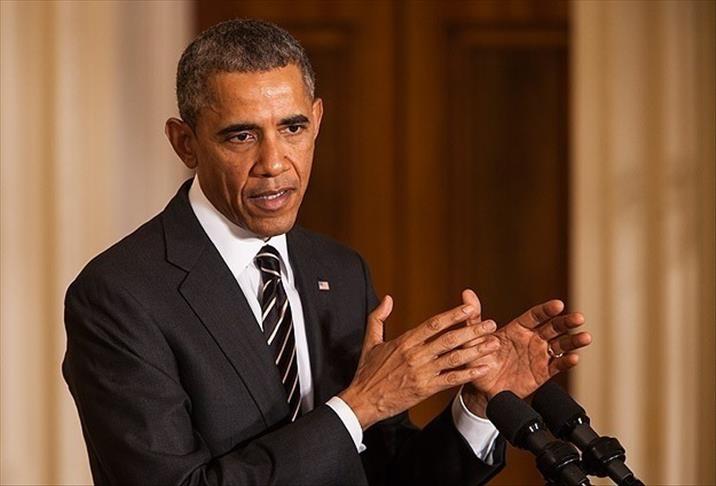
President Barack Obama on Tuesday pledged $205 million in humanitarian aid to Iraq to help those displaced by Daesh.
The humanitarian assistance will also support Iraq’s response to the Syrian crisis, according to a joint statement released by the White House.
The funds will bring the U.S.’s contribution to help displaced Iraqis to more than $407 million since the start of fiscal year 2014, read the statement that did not address the Iraqi government's request for military aid.
Obama's financial aid commitment came during an Oval Office meeting with Iraqi Prime Minister Haider al-Abadi.
The Iraqi premier did not make a specific request for additional military assistance during the meeting, White House Press Secretary Josh Earnest told reporters. He added that Abadi is "obviously interested in affirming" U.S. and coalition commitments for "equipment, training, advise and assistance and even military strikes that back Iraqi security forces."
Obama told reporters following the meeting that Iraq and the U.S. coalition have recovered about a quarter of the territory Daesh militants had captured since last June and he expressed support for Iraqi forces and tribal engagement initiatives with U.S. training and equipment against the militant group.
He gave a nod to the recent decision by the Iraqi government to supply thousands of rifles and other equipment to tribal fighters in the predominantly Sunni western Iraqi province of Anbar.
Iran's involvement in Iraq's war against Daesh did not go unnoticed by Obama. "We expect Iran to have an important relationship with Iraq as a close neighbor," he said, but stressed that any foreign assistance should go through Iraq's government and be accountable to the chain of command in Iraq.
"It sends a clear message that ultimately Iraq is in control of its own destiny," Obama said.
Iran's support for Shia militias have raised concerns about sectarian tensions in the country.
Shia militias who have allegedly pillaged and committed atrocities in the Iraqi city of Tikrit, recently liberated from Daesh, have contributed to those mounting concerns.
While admitting crimes have been committed, Abadi also emphasized the importance of stabilizing areas liberated from militants and said the complete transfer of authority to local officials need to be ensured as well as the maintenance of civil order, civilian protection, the return of displaced residents and the restoration of government services and the economy.
Responding to Iranian involvement in the fight against Daesh, Abadi welcomed assistance from regional countries but added a caveat.
"We do not accept any intervention in Iraq or any transgression on Iraqi sovereignty," Abadi said. "This is a war that is fought with Iraqi blood with help from the coalition forces and regional countries."
Abadi also signaled that progress has been made in his country along sectarian lines by indicating the passage of a national budget approved in late January, Iraq’s first in years with cross-sectarian support.
The budget included key provisions benefiting the regional Kurdish government in Iraq's north with respect to oil exports and revenue sharing, addressing a long time debate between the central government and the Kurdish administration.