HONG KONG
Hong Kong's justice minister has said it is still possible for a pro-democracy figure to be nominated as a candidate for the territory's top job when Hong Kongers elect their leader by “one man, one vote” for the first time in 2017.
The secretary for justice, Rimsky Yuen, made the comment after the government's launch of a new round of public consultation on achieving "universal suffrage" for the chief executive election in 2017, the South China Morning Post reported Friday, quoting public broadcaster RTHK.
The government's consultation document strictly follows the decision made by Beijing on Aug. 31 last year, which said that while Hong Kong can pick its leader with a popular vote, it must choose from two or three candidates approved by half of a 1,200-strong Beijing-loyalist nominating committee, according to the report.
The former British colony returned to Chinese sovereignty in 1997 under a "one country, two systems" formula with the eventual goal of universal suffrage. The Basic Law, Hong Kong's mini-constitution, allows the territory wide-ranging autonomy and freedoms not granted in Communist Party-ruled mainland China.
Yuen told RTHK that the government’s job was “very close to a mission impossible” after pan-democrat lawmakers promised to boycott the two-month consultation and veto the reform package to be tabled later this year.
HK democracy advocates are demanding open nominations in the 2017 election. They say the pre-screening of candidates makes a joke of the concept of universal suffrage.
Speaking on the same program, University of Hong Kong law professor Michael Davis said the way out was to “start over.”
“They imagine that having a pan-democrat take up the office of the chief executive would be some kind of danger to the central government, and so … tried to keep the pan-democrats out of that position. The central government has dictated a model and I think that’s wrong,” Davis said, according to the newspaper.
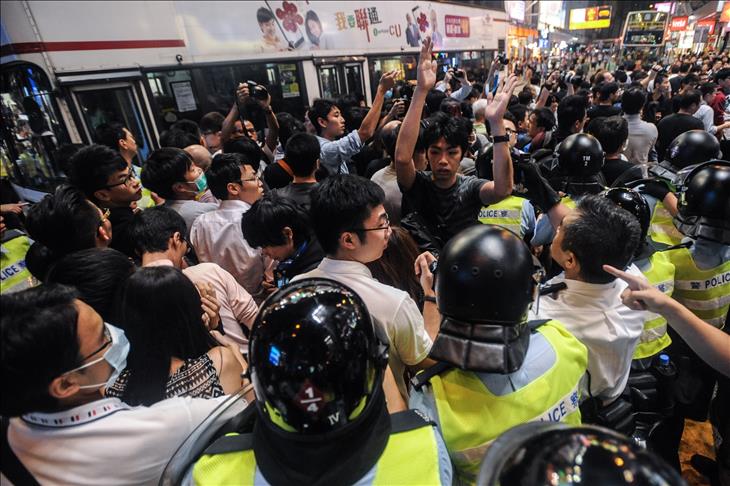
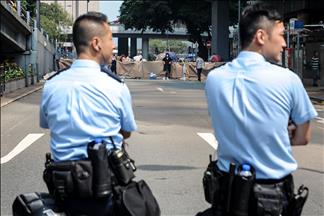
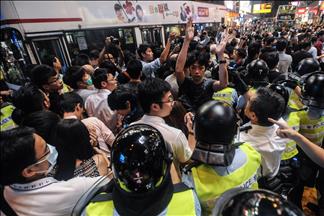
Democracy protesters staged months of road blockades from the end of September. Police cleared the sites in December, marking an end to the largely peaceful street demonstrations.
Yuen said: “I don’t think we can assume that no pan-democrat can become a nominee. We have seen in the past that pan-democrats have joined the race. We are simply following the decision of the [national legislature] on August 31. I don’t think one can simply say right now that no pan-democrat can come in.”
The United Nations’ International Covenant on Civil and Political Rights says that the right to vote and to stand for election shall not be subject to unreasonable restrictions.
Yuen added that in comparing Hong Kong’s election system to those of other jurisdictions, the “unique situation of ‘one country, two systems’” should be considered and “one must exercise caution to ensure that Hong Kong’s situation is … comparable.”
According to the report, asked whether the government is no longer talking about international standards, Yuen said: “One asks the question: what is the so-called international standard? And is it really necessary in the context of the current discussion now that we have the Basic Law?"
Yuen said that the government accepted that there were different opinions about the election framework laid down by Beijing, the report said.
“In relation to the right to vote and the right to be voted [for], I think that’s something we of course always respect. Whether or not there are unreasonable restrictions, I can understand that there is a wide divergence of views, and the question is how to achieve something despite this.”