HONG KONG
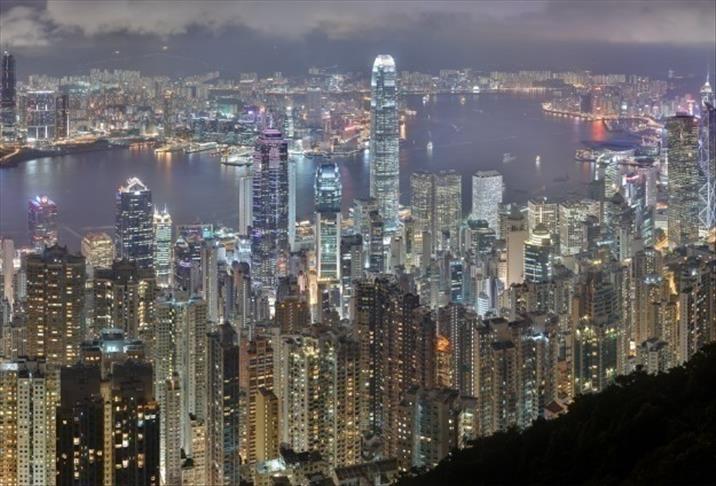
A Chinese government newspaper claimed Saturday that the 2017 election of the Hong Kong chief executive by "universal suffrage" was a "great undertaking" and the hope of the territory's people.
Beijing has promised to allow Hongkongers "universal suffrage" for the election of the territory's top official, but what it offered last year has been criticized by opponents as being more North Korean in style.
Published to mark the 25th anniversary of the Basic Law - the territory's mini-constitution - the front page commentary in the overseas edition of People's Daily said the election of the chief executive was the way for Hong Kong to achieve progress in democracy.
"As long as Hong Kong residents obey the Chinese Constitution and the Basic Law, as well as the election principles decreed by the country's top legislature, the National People's Congress Standing Committee, historic democratic development will be realized in Hong Kong," the article said.
The National People's Congress - China's rubber-stamp legislature - said last year it would screen candidates who want to run for the top job.
The Aug. 31 decision sparked months of protests and the blockade of major roads. Some of the protests turned violent.
Beijing has repeatedly said it won't change the framework it has proposed for the election.
A draft resolution on the electoral package is expected to be submitted to the Legislative Council this month, with voting on it to take place in June, China Daily reported this week.
If the package is passed, observers again expect large-scale protests.
"China's constitution, along with the Basic Law, constitutes the constitutional basis of Hong Kong, and the latter should never be isolated from the former at any time," the commentary said.
The article added that the Basic Law was key to maintaining Hong Kong's long-lasting prosperity and stability.
China's parliament boss said last month that the ruling on screening candidates who want to be chosen as Hong Kong's top official in 2017 was correct.
That signifies that Beijing has no intention of reformulating its offer to Hong Kong.
Beijing has exercised sovereignty over the former British colony since 1997 through a "one country, two systems" formula that affords its residents freedoms not enjoyed on the mainland.
Frustration in Hong Kong with mainland tourists shopping in the territory has also sparked protests in malls in recent months.
"Efforts should be made to better deal with adhering to the one country principle and respecting the two systems' differences and ensuring the central authority's power to govern Hong Kong and protecting the special region's high degree of autonomy," the commentary added.